6 Construction Failures, and What We Learned From Them
TL;DR
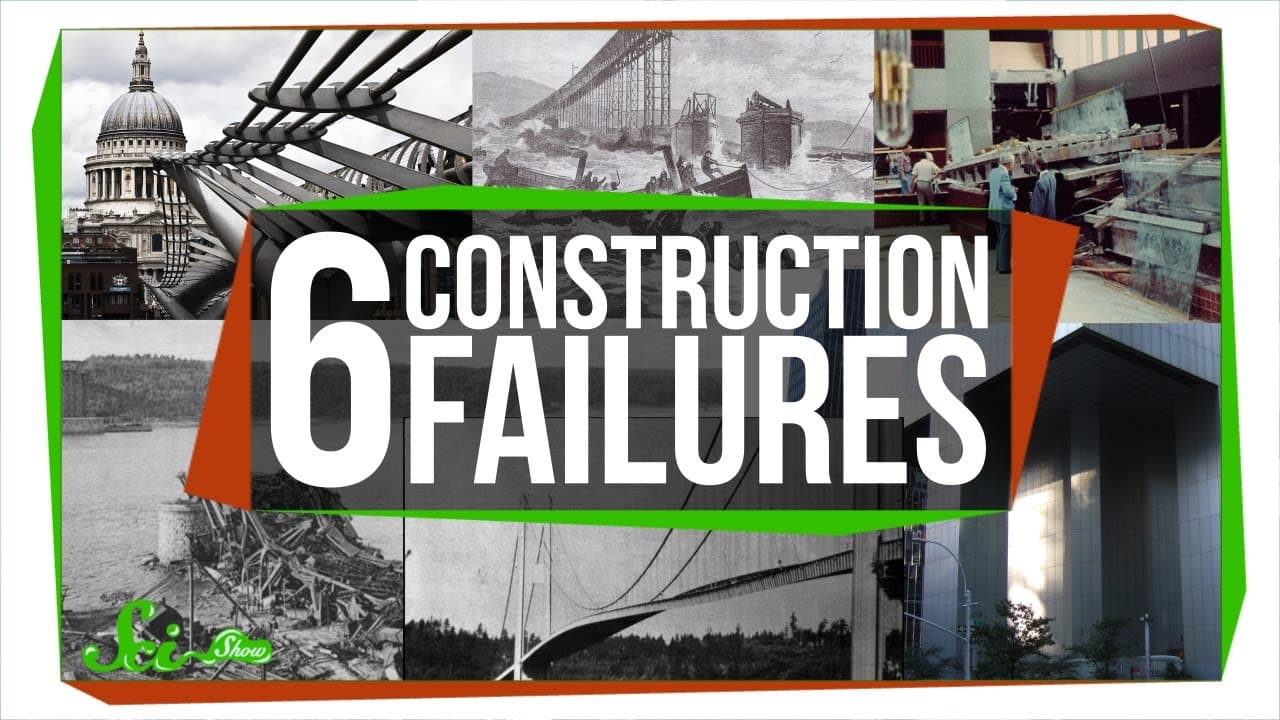
This content discusses various engineering failures throughout history, including the Tay Bridge, the Quebec Bridge, the Tacoma Narrows Bridge, the Hyatt Regency Hotel, the Citicorp Tower, and the Millennium Bridge, highlighting the importance of careful design and construction.
Transcript
Scientists sometimes get a little excited when an experiment doesn't work the way they expect it to. It's an opportunity to learn something new about the world, and they can always change the expriment a bit to try again next time. Engineering... is a little bit different. Desginers and engineers generally prefer to find out something's wrong befor... Read More
Key Insights
- 👻 Engineering failures are valuable learning opportunities, allowing engineers to discover flaws and improve future designs and construction.
- 📽️ Thorough inspections and rigorous testing are essential to identify potential weaknesses in infrastructure projects.
- 🧑🏭 Unexpected factors, such as weather conditions and human behavior, can significantly impact the stability and safety of structures.
- 🧔 Minor design alterations or unapproved changes can have catastrophic consequences on load-bearing capacity.
- 🥺 Historical failures have led to advancements in mathematical techniques, computer programs, and construction practices to prevent similar disasters.
- 🧑🏭 The importance of resilience, structural stability, and considering all potential factors in engineering projects cannot be overstated.
- 👨🔬 Ongoing research and continuous improvement are crucial to avoid disasters and ensure the safety of future structures.
Install to Summarize YouTube Videos and Get Transcripts
Explore YouTube Video Summarizer or Get YouTube Transcript Extractor
Questions & Answers
Q: What were the main flaws in the Tay Bridge's construction and design?
The Tay Bridge had weak components, such as insufficiently strong bridge columns and surviving components unable to withstand required pressure. The collapse was likely exacerbated by storm conditions and potential train oscillations.
Q: How did the Quebec Bridge's failures shape future construction practices?
The Quebec Bridge collapsed twice due to weak components and insufficient reinforcement. The disasters prompted changes in design and construction techniques to ensure structural integrity and adherence to weight-bearing requirements.
Q: Why did the Tacoma Narrows Bridge collapse, and what was the underlying cause?
The Tacoma Narrows Bridge collapsed due to aeroelastic flutter caused by a snapped cable, leading to twisting motions. As the twisting accumulated, the middle section broke off. The bridge failed because of resonance and inadequate measures to counteract the oscillations.
Q: What caused the skywalks at the Hyatt Regency Hotel to collapse?
The skywalks collapsed due to an unapproved design change, which shifted the load from separate supports to the 4th floor skywalk, overburdening the connections. The weakened building materials and additional weight from party attendees led to the fatal collapse.
Q: How did the Citicorp Tower's design pose a potential disaster, and how was it mitigated?
The Citicorp Tower's unusual design featured stilts in the middle of the sides. The architects added extra weight to counteract winds, but subsequent calculations revealed its instability. The building was reinforced nightly, preventing a catastrophe.
Q: Why did the Millennium Bridge close shortly after opening, and how was the issue resolved?
The Millennium Bridge experienced excessive swaying caused by pedestrians' synchronized movements, leading to resonance. The bridge was closed, and dampers were installed over the next two years to absorb the forces from foot traffic, allowing its safe reopening.
Summary & Key Takeaways
-
The Tay Bridge, designed by Thomas Bouch, collapsed in 1879 due to construction and design flaws, leading to a thorough investigation and significant changes in bridge inspections.
-
The Quebec Bridge collapsed twice during construction due to weak components and lack of reinforcement, resulting in changes in design and construction practices.
-
The Tacoma Narrows Bridge failed due to aeroelastic flutter caused by improper cable support, leading to greater emphasis on structural stability.
-
The Hyatt Regency Hotel's skywalks collapsed due to an unapproved design change, demonstrating the consequences of minor alterations on load-bearing capacity.
-
The Citicorp Tower's stilts were moved to the center for a church, compromising its stability until last-minute modifications prevented a potential disaster.
-
The Millennium Bridge experienced excessive swaying due to resonance caused by pedestrian movements, leading to its closure and subsequent structural modifications.
Read in Other Languages (beta)
Share This Summary 📚
Summarize YouTube Videos and Get Video Transcripts with 1-Click
Try YouTube Summary with ChatGPT & Claude or YouTube Transcript Generator
Explore More Summaries from SciShow 📚


Summarize YouTube Videos and Get Video Transcripts with 1-Click
Try YouTube Summary with ChatGPT & Claude or YouTube Transcript Generator