What Causes Eating Disorders and Coercive Behaviors?
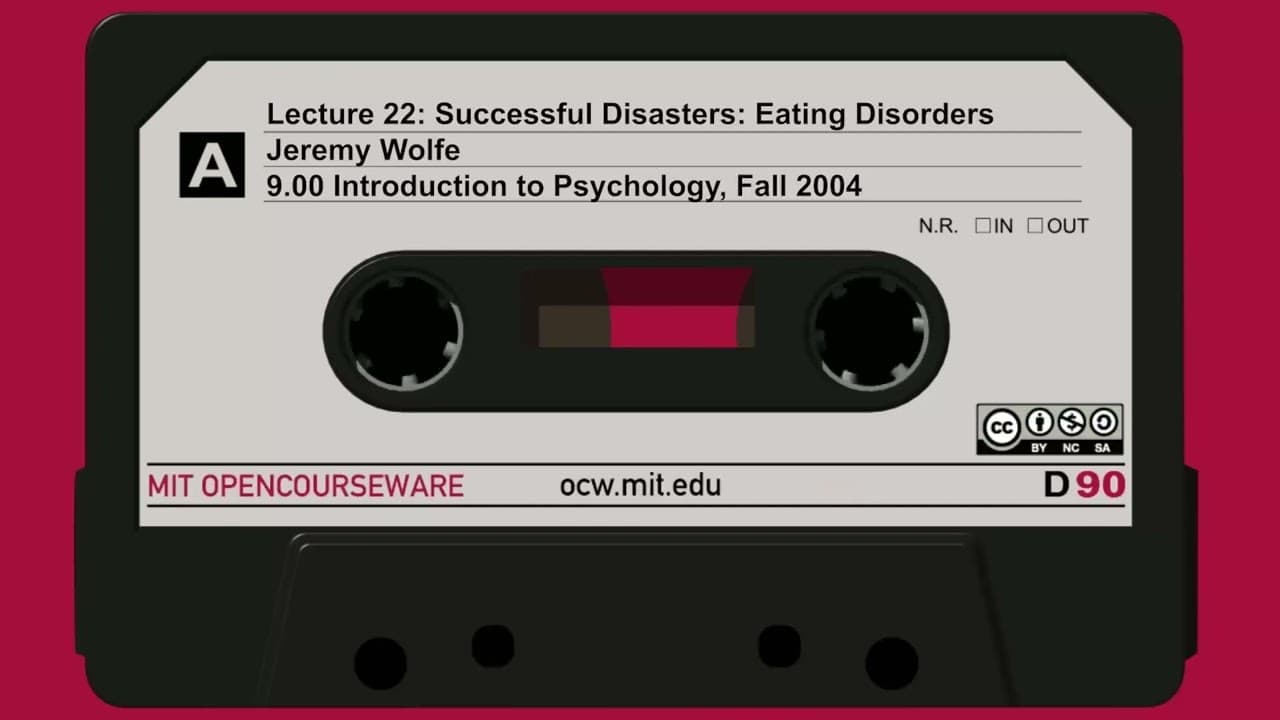
TL;DR
Eating disorders, such as anorexia and bulimia, stem from a mix of societal pressures, family dynamics, and individual characteristics. They often manifest through distorted body image and unhealthy eating patterns, especially among adolescent girls. Coercive sexual behaviors are also linked to social influences and psychological aspects, highlighting the need for comprehensive treatment strategies for both issues.
Transcript
The following content is provided by MIT OpenCourseWare under a Creative Commons license. Additional information about our license and MIT OpenCourseWare in general is available at ocw.mit.edu. JEREMY WOLFE: I have what I think of as a couple of fascinating questions that I will use to occupy us for the last couple of lectures of the course. In the... Read More
Key Insights
- 😅 Eating disorders and coercive sexual behavior are complex issues influenced by individual, social, and cultural factors.
- 😅 Treatment for eating disorders often requires a multi-disciplinary approach, including therapy, medication, and nutritional support.
- ❓ Coercive sexual behavior is prevalent in society and requires addressing underlying psychological issues and trauma.
Install to Summarize YouTube Videos and Get Transcripts
Explore YouTube Video Summarizer or Get YouTube Transcript Extractor
Questions & Answers
Q: What are some common risk factors for developing eating disorders?
Eating disorders can arise from a combination of genetic, psychological, and social factors. Common risk factors include genetic predispositions, perfectionism, low self-esteem, and societal pressure to conform to unrealistic body ideals.
Q: How do societal pressures contribute to the development of eating disorders?
Societal pressures, such as unrealistic beauty standards, can contribute to body dissatisfaction and drive individuals to pursue extreme measures to attain a specific body type. This can lead to the development of eating disorders as individuals strive to fit into the societal mold.
Q: Can you provide an overview of the treatment options for eating disorders?
Treatment for eating disorders often involves a combination of therapies, including nutritional counseling, psychotherapy, and medication management. In severe cases, hospitalization may be necessary. The goal is to address underlying psychological issues, establish healthy eating patterns, and, in some cases, restore weight to a healthy range.
Q: Is there a relationship between eating disorders and coercive sexual behavior?
While there is overlap between the two, it is important to note that not all individuals with eating disorders engage in coercive sexual behavior, and not all individuals who engage in coercive sexual behavior have eating disorders. However, there may be underlying psychological factors and unresolved trauma that contribute to both behaviors in some individuals.
Summary & Key Takeaways
-
Eating disorders and coercive sexual behavior are both complex issues influenced by societal, cultural, and individual factors.
-
Anorexia nervosa is a disorder characterized by extreme weight loss and distorted body image, primarily affecting females.
-
Bulimia nervosa involves a pattern of binge-eating followed by compensatory behaviors such as vomiting or excessive exercise.
-
Coercive sexual behavior refers to non-consensual or manipulative sexual acts.
Read in Other Languages (beta)
Share This Summary 📚
Summarize YouTube Videos and Get Video Transcripts with 1-Click
Try YouTube Summary with ChatGPT & Claude or YouTube Transcript Generator
Explore More Summaries from MIT OpenCourseWare 📚



Summarize YouTube Videos and Get Video Transcripts with 1-Click
Try YouTube Summary with ChatGPT & Claude or YouTube Transcript Generator