How Does Climate Change Affect Mental Health?
TL;DR
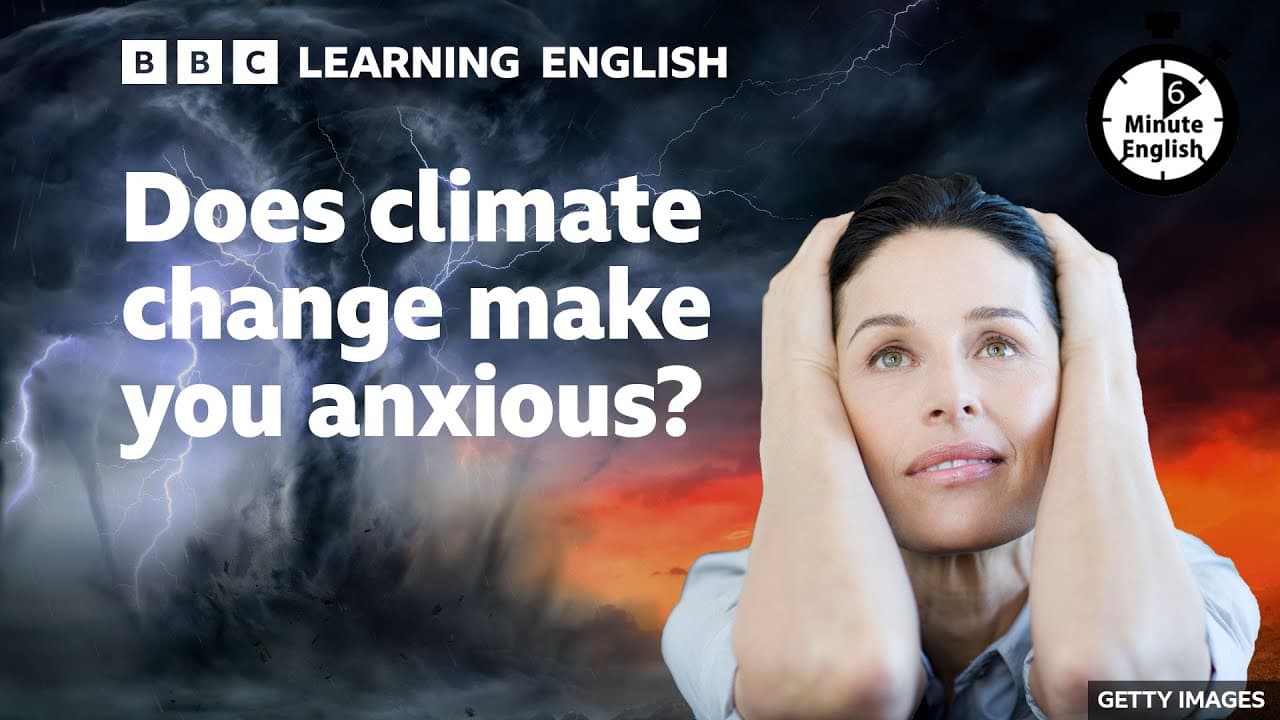
Climate change significantly impacts mental health, leading to anxiety and stress disorders. Studies show that events like natural disasters can result in conditions such as PTSD, while even those without direct experiences feel the distress known as climate anxiety. Addressing climate issues can simultaneously improve mental health by fostering better air quality and creating urban greenspaces.
Transcript
Hello. This is 6 Minute English from BBC Learning English. I’m Rob. And I’m Sam. When we talk about climate change, we usually talk about the effects on the planet, or the economic consequences. But all the damage being done by climate change is also having an effect on our minds, our mental health. Fires, heat waves, floods, hurricanes, drought... Read More
Key Insights
- Climate change not only impacts the environment but also significantly affects mental health, leading to anxiety and stress disorders.
- Natural disasters like floods and heatwaves increase the risk of mental health issues such as PTSD and anxiety disorders.
- Climate anxiety, a low-level distress about climate change, affects even those without direct experience of climate events.
- Young people are particularly worried about climate change, with 84% expressing concern according to a Greenpeace survey.
- Improving air quality by reducing fossil fuel use can have positive effects on mental health.
- Activities like walking and cycling not only reduce fossil fuel emissions but also improve mental well-being.
- Urban greenspaces are beneficial for mental health, providing areas for relaxation and interaction with nature.
- Creative solutions integrating environmental and mental health benefits can help future generations live on a healthier planet.
Install to Summarize YouTube Videos and Get Transcripts
Explore YouTube Video Summarizer or Get YouTube Transcript Extractor
Questions & Answers
Q: How does climate change affect mental health?
Climate change affects mental health by increasing the incidence of disorders such as anxiety and PTSD. Natural disasters like floods, fires, and heatwaves lead to stress and trauma, affecting both those directly impacted and others who worry about future climate events.
Q: What is climate anxiety?
Climate anxiety refers to a low-level distress or nervousness about the consequences of climate change. It affects people who are worried about the future of the planet, even if they haven't directly experienced climate-related disasters.
Q: What percentage of young people are worried about climate change?
According to a Greenpeace survey, 84% of young people worldwide report feeling worried about climate change. This high percentage reflects the concern among younger generations about the future impacts of climate change.
Q: How can reducing fossil fuel use benefit mental health?
Reducing fossil fuel use can improve air quality, which is beneficial for mental health. Cleaner air reduces respiratory issues and other health problems, thereby enhancing overall well-being and reducing anxiety related to health concerns.
Q: What role do urban greenspaces play in mental health?
Urban greenspaces provide areas for relaxation and interaction with nature, which are beneficial for mental health. They offer a respite from urban stress, promote physical activity, and enhance community well-being, contributing positively to mental health.
Q: Why are activities like walking and cycling recommended?
Walking and cycling are recommended because they reduce fossil fuel emissions and improve air quality, benefiting the environment. Additionally, these activities enhance physical fitness and mental well-being, providing a holistic approach to health and environmental sustainability.
Q: What is the significance of the phrase 'per se' in the context of climate change?
The phrase 'per se' means 'in itself' and is used to describe qualities considered on their own. In the context of climate change, it highlights how certain actions, like walking, are beneficial not only for environmental reasons but also for their intrinsic health benefits.
Q: What solutions are suggested for addressing climate-related mental health issues?
Solutions include reducing fossil fuel use, promoting physical activities like walking and cycling, and creating urban greenspaces. These actions improve air quality and provide mental health benefits, addressing climate-related anxiety and stress in a comprehensive manner.
Summary & Key Takeaways
-
The discussion highlights how climate change impacts mental health, causing disorders like anxiety and PTSD. Dr. Gesche Huebner explains the link between climate events and mental health issues, emphasizing the need for solutions.
-
Young people worldwide are increasingly anxious about climate change, with 84% expressing concern. The program suggests that reducing fossil fuels and promoting activities like walking can improve mental health.
-
Urban greenspaces are emphasized as beneficial for mental health, alongside efforts to combat climate change. The program concludes with vocabulary related to the topic, including 'doom and gloom' and 'climate anxiety'.
Read in Other Languages (beta)
Share This Summary 📚
Summarize YouTube Videos and Get Video Transcripts with 1-Click
Try YouTube Summary with ChatGPT & Claude or YouTube Transcript Generator
Explore More Summaries from BBC Learning English 📚

Summarize YouTube Videos and Get Video Transcripts with 1-Click
Try YouTube Summary with ChatGPT & Claude or YouTube Transcript Generator