How Did Copernicus Propose the Heliocentric Model?
TL;DR
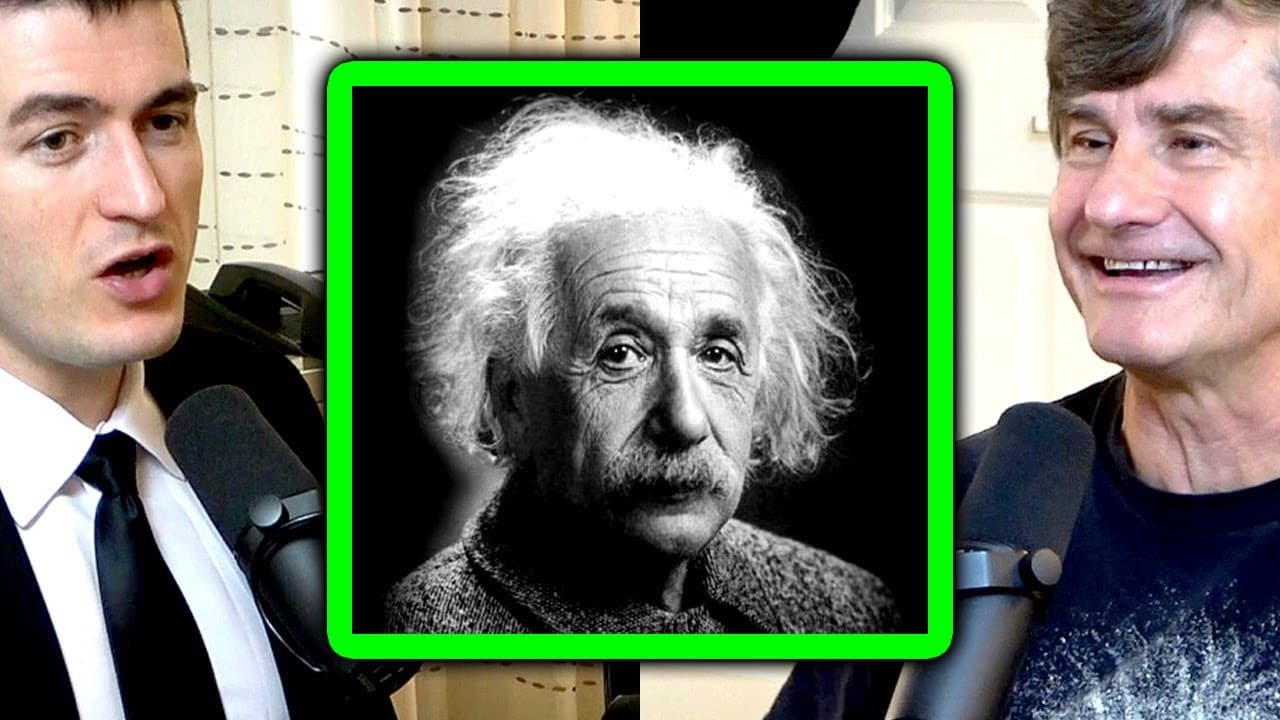
Copernicus challenged the prevailing geocentric view by proposing that the sun, not the Earth, is the center of our solar system, driven by philosophical insights and his observations of the sun's prominence. Despite lacking solid evidence at the time, his ideas laid the groundwork for scientific advancements that later included Kepler's discovery of elliptical orbits and Galileo's crucial observations of Venus and Jupiter's moons.
Transcript
how do you put yourself in the mindset of somebody that or majority of the scientific community or majority of people believe that the earth everything rotates around earth how do you put yourself in that mindset and then take a leap to uh propose a model that the sun is in fact at the center of the the solar system sure i mean so that puts us back... Read More
Key Insights
- ❓ Copernicus's proposal of a heliocentric model was motivated by both philosophical preference and empirical evidence.
- 🖤 The geocentric model provided accurate predictions but lacked a strong theoretical foundation.
- 🖐️ Kepler's discovery of elliptical orbits and Galileo's observations of Venus's phases and Jupiter's moons played crucial roles in validating the heliocentric model.
- ❓ The acceptance of the heliocentric model required a combination of data analysis, experimentation, and the ability to challenge established beliefs.
- 🤗 Open-mindedness and a willingness to consider unconventional ideas are essential for scientific progress.
- 🏘️ The historical context, including Copernicus's dedication to the Pope and Galileo's house arrest, influenced the dissemination of their findings.
- 🤔 Scientific theories are not solely derived from abstract thought experiments but are deeply rooted in observational data.
Install to Summarize YouTube Videos and Get Transcripts
Explore YouTube Video Summarizer or Get YouTube Transcript Extractor
Questions & Answers
Q: How did Copernicus justify proposing the sun-centered solar system?
Copernicus believed in the philosophical preference for the sun being the dominant body, considering its role as the source of light and heat. He also recognized that the sun appeared bigger than the moon, indicating its larger size.
Q: Why did the observational evidence initially support the geocentric model?
At the time, Ptolemy's geocentric system provided accurate predictions of planetary positions. The measured positions of planets did not significantly favor Copernicus's heliocentric system, leading to initial skepticism.
Q: How did Kepler's work contribute to the acceptance of the heliocentric model?
Kepler demonstrated that planetary orbits are generally elliptical, not circular, aligning with the heliocentric hypothesis. His observations and data analysis refined Copernicus's model and distinguished it from Ptolemy's system.
Q: What are the key observations by Galileo that supported the heliocentric model?
Galileo observed the phases of Venus, which could only be explained by its orbit around the sun. He also observed Jupiter's moons, showing that celestial objects could have orbiting bodies, supporting the idea of Earth's motion.
Summary & Key Takeaways
-
Copernicus proposed the heliocentric model of the solar system, believing that the sun was the dominant body, based on his philosophical preference and the sun being the source of light and heat.
-
The observational evidence at the time did not significantly support Copernicus's heliocentric system over Ptolemy's geocentric system, which had been accurate for 1500 years.
-
Kepler later showed that orbits are generally elliptical, supporting the heliocentric hypothesis, and Galileo's observations of Venus's phases and Jupiter's moons further reinforced the heliocentric model.
Read in Other Languages (beta)
Share This Summary 📚
Summarize YouTube Videos and Get Video Transcripts with 1-Click
Try YouTube Summary with ChatGPT & Claude or YouTube Transcript Generator
Explore More Summaries from Lex Clips 📚
Summarize YouTube Videos and Get Video Transcripts with 1-Click
Try YouTube Summary with ChatGPT & Claude or YouTube Transcript Generator