How to Illustrate Quilted Fabrics Effectively
TL;DR
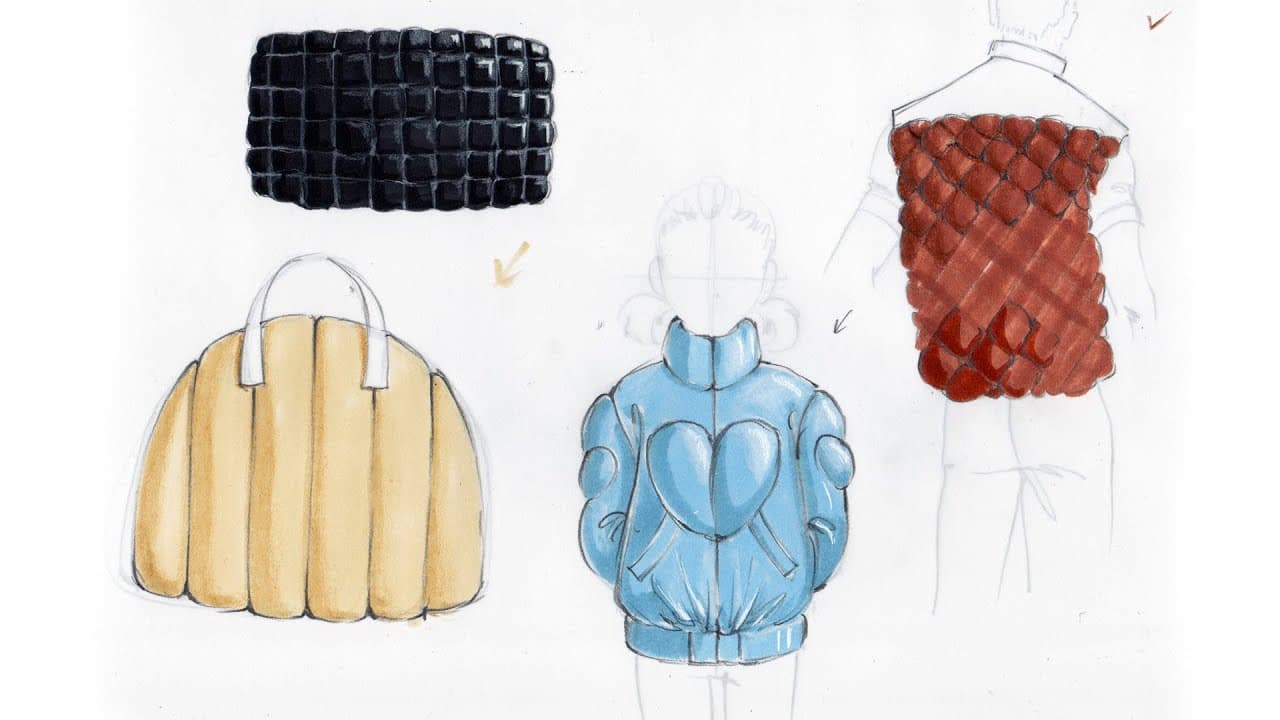
To effectively illustrate quilted fabrics, begin by lightly sketching the basic garment shape, then fill in the quilted pattern while adjusting for puffiness based on fabric type. Emphasize shadows and highlights according to light source and fabric texture to create a realistic 3D effect, and consider top stitching details for added depth.
Transcript
hey guys because it is so freaking cold in my studio like all the time like I have the most drafty loft in the whole wide world my mind has been going towards warmer things and so today I'm going to teach you guys how to illustrate quilted fabrics everything from a fishing vest to nylon parkas to Chanel handbags quilting is everywhere and some are ... Read More
Key Insights
- 🧡 Quilting can be found in a wide range of fabrics, including nylons, leathers, suedes, and cottons, each offering unique textures and styles.
- 🖐️ Shadows and highlights play a crucial role in creating the illusion of puffiness and shine in quilted fabrics.
- 🤍 Adding a white highlight can effectively mimic the shine of shiny quilted fabrics.
- 🙂 Varying the size and shape of shadows and highlights based on the fabric and light source can enhance the overall 3D effect of the illustration.
- ✏️ Using different tools and techniques, such as color pencils or markers, can help achieve different textures and effects in the illustration.
- 🪜 Attention to detail, such as top stitching and fabric texture, can add depth and realism to the quilted garments.
- 🥰 Practice and experimentation are key to mastering the art of illustrating quilted fabrics.
Install to Summarize YouTube Videos and Get Transcripts
Explore YouTube Video Summarizer or Get YouTube Transcript Extractor
Questions & Answers
Q: What are some examples of fabrics that can be quilted?
Quilting can be done on a range of fabrics including nylons, leathers, suedes, and cottons. These fabrics offer different textures and styles for quilted garments.
Q: How do you create the illusion of puffiness in quilted fabrics?
To make the quilted fabric appear puffy, focus on adding shadows with rounder shapes. The closer the quilted piece is to the light source, the smaller the shadows should be.
Q: How can you render shiny quilted fabrics?
For shiny quilted fabrics, you can use a simple method by filling in the base fabric color, adding shadow color, and then including a white highlight to mimic the shine.
Q: How can you emphasize the quilted shapes in the illustration?
To make the quilted shapes stand out, use a color pencil or marker in the top stitch color to outline and enhance each shape, giving them a more defined and 3D appearance.
Summary & Key Takeaways
-
Quilting is found in a variety of fabrics, from fishing vests to Chanel handbags, and can be done with different textures and fillings.
-
The first step is to lightly draw the basic shape of the garment, and then fill it in with the quilted pattern.
-
Pay attention to the puffiness of the quilting and the fabric shine when adding shadows, highlights, and top stitching.
Read in Other Languages (beta)
Share This Summary 📚
Summarize YouTube Videos and Get Video Transcripts with 1-Click
Try YouTube Summary with ChatGPT & Claude or YouTube Transcript Generator
Explore More Summaries from Zoe Hong 📚

Summarize YouTube Videos and Get Video Transcripts with 1-Click
Try YouTube Summary with ChatGPT & Claude or YouTube Transcript Generator