What Was Unbelief Like in Medieval Europe?
TL;DR
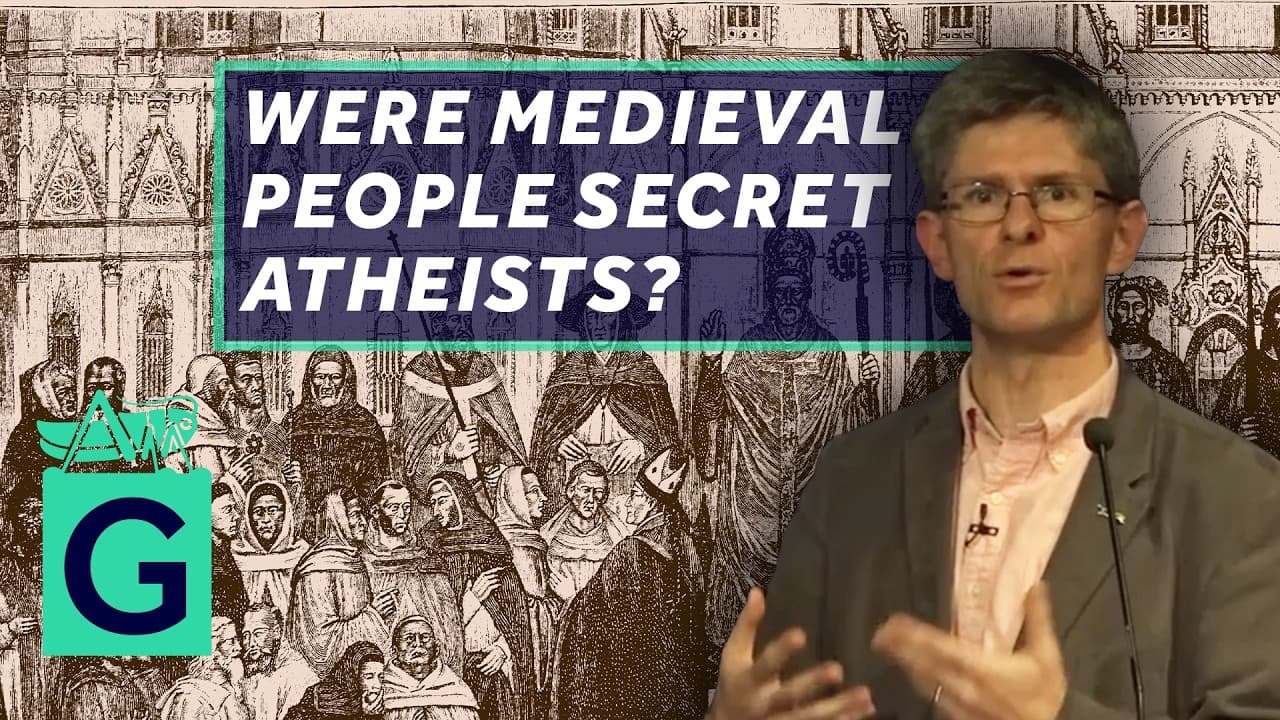
Unbelief in medieval Europe existed before philosophical atheism emerged, manifesting as practical atheism where individuals lived as though they did not believe in God without outright denial. This era saw expressions of doubt intertwined with societal norms, with the Renaissance later fostering a more skeptical stance that influenced religious beliefs. While these sentiments hinted at a shift, they did not immediately threaten the established religious order.
Transcript
my agenda for this series of lectures is summed up by the Catholic philosopher Charles Taylor who asks why was it virtually impossible not to believe in God in say 1500 in our Western society while in 2000 few years before he wrote many of us find this not only easy but even inescapable I think the fact of that shift the fact that in Europe and in ... Read More
Key Insights
- 🥺 Unbelief existed in practice before it existed in theory in medieval Europe, challenging the notion that the Enlightenment and scientific revolution led to atheism.
- 💁 Medieval unbelief often took the form of practical atheism, where individuals lived as if they did not believe in God, without necessarily denying God's existence.
- 👶 The Renaissance, with its interest in ancient philosophy and secularism, brought new challenges to religious beliefs and emphasized ethics over doctrine in Christianity.
- ❓ The influence of the Renaissance on skepticism and unbelief, while significant, did not pose an immediate threat to the religious establishment.
Install to Summarize YouTube Videos and Get Transcripts
Explore YouTube Video Summarizer or Get YouTube Transcript Extractor
Questions & Answers
Q: Who were some notable individuals in medieval Europe who expressed doubts or unbelief in God?
One example is Frederick II, Holy Roman Emperor, who was accused of calling Moses, Jesus Christ, and Muhammad charlatans and deceivers. Another example is Piero della Vania, who allegedly wrote a book arguing that Moses, Christ, and Mohammed were frauds.
Q: Are there instances of atheism in pre-modern times?
Atheism as a denial of the existence of God did not exist as a concept in pre-modern times, but there were instances of practical atheism, where individuals lived as if they did not believe in God.
Q: Did unbelief in medieval Europe pose a significant threat to the religious establishment?
Unbelief, whether in the form of doubts, skepticism, or practical atheism, was not a significant threat to the religious establishment. It often reinforced religious beliefs and served as a form of rebellion against the clergy rather than a rejection of the entire religious framework.
Q: How did the Renaissance contribute to the development of skepticism and unbelief?
The Renaissance, with its revived interest in ancient Greek and Roman texts, brought ideas of skepticism and secularism to the forefront. Scholars like Machiavelli openly questioned religious beliefs and argued for the manipulation of religion for political ends.
Summary & Key Takeaways
-
The lecture discusses the shift from belief to unbelief in Western society, where unbelief is now the cultural default and religious practice is countercultural.
-
It challenges the commonly held belief that the Enlightenment and scientific revolution of the 18th and 19th centuries led to widespread atheism, presenting evidence of unbelief existing before it existed in theory.
-
Unbelief in medieval Europe often involved practical atheism, where individuals lived as if they did not believe in God, but did not necessarily deny God's existence.
Read in Other Languages (beta)
Share This Summary 📚
Summarize YouTube Videos and Get Video Transcripts with 1-Click
Try YouTube Summary with ChatGPT & Claude or YouTube Transcript Generator
Explore More Summaries from Gresham College 📚

Summarize YouTube Videos and Get Video Transcripts with 1-Click
Try YouTube Summary with ChatGPT & Claude or YouTube Transcript Generator