Forgotten History: the Romani (Gypsy) Migration from India to Europe
TL;DR
Romani people migrated from India to Europe due to invasions.
Transcript
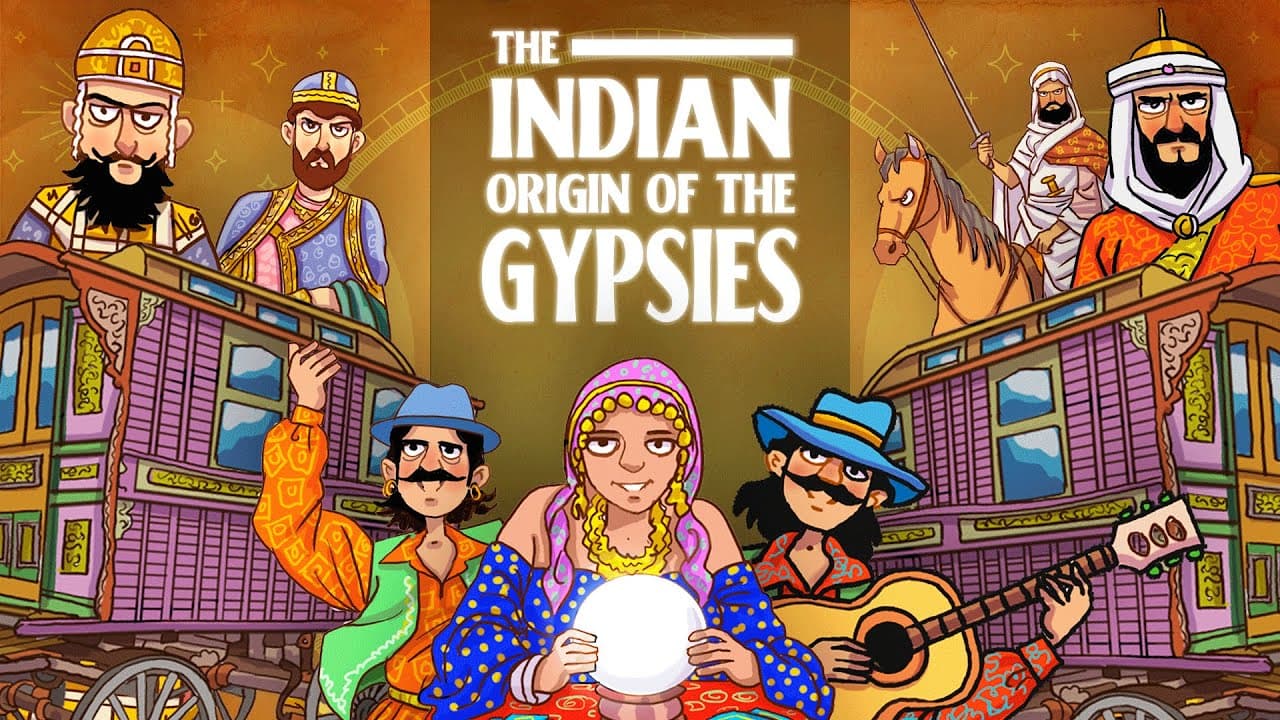
when you think of medieval Europe you probably think of a scene like this but what if I told you that late medieval Europe was absolutely chock-full of Indians that's right meet the Romani or gypsies the itinerant peoples of Europe here's the thing they're originally from India Romani have long been seen as Outsiders and out... Read More
Key Insights
- The Romani, also known as Gypsies, originally migrated from India to Europe around a thousand years ago due to invasions and upheavals in the Indian subcontinent.
- The Romani are divided into distinct groups, notably the Roma and the Sinti, each with unique migration histories and cultural practices.
- The Sinti migrated due to the Umayyad Caliphate's expansion and settled briefly in Armenia, gaining a reputation for magical abilities in Byzantine records.
- The Roma migrated due to Turkic invasions by the Ghaznavids, providing military support and establishing connections in Persia before moving into Europe.
- Romani culture, with its itinerant lifestyle and distinct traditions, faced severe discrimination and persecution in Europe, including enslavement and accusations of espionage.
- Despite facing prejudice, Romani communities contributed significantly to European societies, particularly through blacksmithing and entertainment.
- The Romani's Indian cultural legacy, preserved through communal insularity, made them appear foreign in Europe, leading to widespread victimization.
- In contrast to Europe, the Romani were treated relatively well in Persia, where their cultural contributions were appreciated and celebrated in poetry.
Install to Summarize YouTube Videos and Get Transcripts
Explore YouTube Video Summarizer or Get YouTube Transcript Extractor
Questions & Answers
Q: What triggered the initial migration of the Romani people from India?
The initial migration of the Romani people from India was triggered by catastrophic upheavals due to Muslim invasions. The Umayyad Caliphate and later the Ghaznavid Empire launched brutal campaigns into the Indian subcontinent, causing widespread devastation, slavery, and famine. These conditions forced itinerant communities like the Sinti and Roma to seek better opportunities and safety elsewhere, leading them to migrate westward towards the Middle East and eventually Europe.
Q: How did the Romani contribute to societies in Europe and the Middle East?
The Romani contributed to societies in Europe and the Middle East through various services, such as blacksmithing, craft making, horse dealing, and performance art. They were highly skilled blacksmiths, providing quality metalwork and tools, which were essential for both civilian and military purposes. Additionally, their musical talents and entertainment skills had a significant cultural impact, particularly in Persia, where they were celebrated in poetry. Despite these contributions, their itinerant lifestyle and cultural differences often led to discrimination and persecution.
Q: What were the main reasons for the persecution of the Romani in Europe?
The main reasons for the persecution of the Romani in Europe included their distinct cultural practices, itinerant lifestyle, and perceived foreignness. Their communal insularity preserved their Indian cultural and genetic legacy, making them appear alien to Europeans. Additionally, their success in trades like blacksmithing threatened local guilds, leading to economic resentment. Stereotypes and myths, such as being spies or practicing heretical magic, further fueled discrimination, resulting in severe abuses, including enslavement and violence.
Q: Why did the Romani choose to migrate westward instead of deeper into the Indian subcontinent?
The Romani chose to migrate westward instead of deeper into the Indian subcontinent due to competition and hostility from other itinerant communities in India. The subcontinent was already populated with similar communities practicing comparable trades, leading to stiff competition. Additionally, the westward migration offered opportunities to provide valuable services to empires like the Ghaznavids, where they could serve as military support and entertainers. The geopolitical dynamics and economic opportunities in the Middle East and Europe made westward migration a more viable option.
Q: How did the Byzantine Empire perceive and interact with the Sinti and Roma?
The Byzantine Empire had a complex relationship with the Sinti and Roma, perceiving them as both valuable and heretical. They were referred to as 'Athingani,' meaning untouchable, due to their cultural practices centered on ritual purity. The Byzantines valued their supposed magical abilities and employed them in military and political affairs, as seen when Emperor Nicephorus sought their assistance in suppressing a rebellion. However, their practices were often viewed as heretical by the Orthodox Church, leading to social and legal restrictions.
Q: What role did the Romani play in the Ottoman Empire?
In the Ottoman Empire, the Romani faced pressures similar to those under previous empires. They were subject to conversion pressure and the jizya tax, a levy on non-Muslims. Some Romani converted to Islam to avoid the tax and assimilated into Turkish culture. Despite these challenges, the Romani continued to provide valuable services, such as blacksmithing and entertainment, contributing to the Ottoman economy and society. However, many Romani chose to migrate further into Europe to escape the oppressive conditions, continuing their itinerant lifestyle.
Q: How did the Romani maintain their cultural identity despite widespread persecution?
The Romani maintained their cultural identity despite widespread persecution through communal insularity and strong adherence to their traditions. Their itinerant lifestyle allowed them to preserve their distinct cultural practices, language, and social structures, including systems of ritual purity and caste subdivisions. By maintaining close-knit communities and passing down oral traditions, they were able to keep their Indian cultural legacy alive. This insularity, while preserving their identity, also contributed to their perception as outsiders, leading to further discrimination.
Q: What impact did the Romani have on European perceptions of itinerant communities?
The Romani had a significant impact on European perceptions of itinerant communities, often reinforcing negative stereotypes and fears. Their distinct cultural practices and itinerant lifestyle were seen as alien and threatening, leading to widespread suspicion and scapegoating. Europeans associated itinerancy with criminality and moral degradation, viewing the Romani as easy targets for blame in times of social unrest. This perception contributed to the marginalization of itinerant communities across Europe, reinforcing societal biases against nomadic lifestyles.
Summary & Key Takeaways
-
The Romani people, originating from India, migrated to Europe due to invasions by Muslim dynasties. The Sinti and Roma, two main groups, faced challenges adapting to new cultures while maintaining their distinct traditions.
-
The Sinti settled briefly in Armenia, gaining a reputation for magical abilities, while the Roma established connections in Persia before moving into Europe, contributing to societies through blacksmithing and entertainment.
-
Despite significant contributions, the Romani faced severe discrimination in Europe due to their itinerant lifestyle and cultural differences, contrasting their relatively better treatment in Persia.
Read in Other Languages (beta)
Share This Summary 📚
Summarize YouTube Videos and Get Video Transcripts with 1-Click
Try YouTube Summary with ChatGPT & Claude or YouTube Transcript Generator
Explore More Summaries from Odd Compass 📚

Summarize YouTube Videos and Get Video Transcripts with 1-Click
Try YouTube Summary with ChatGPT & Claude or YouTube Transcript Generator