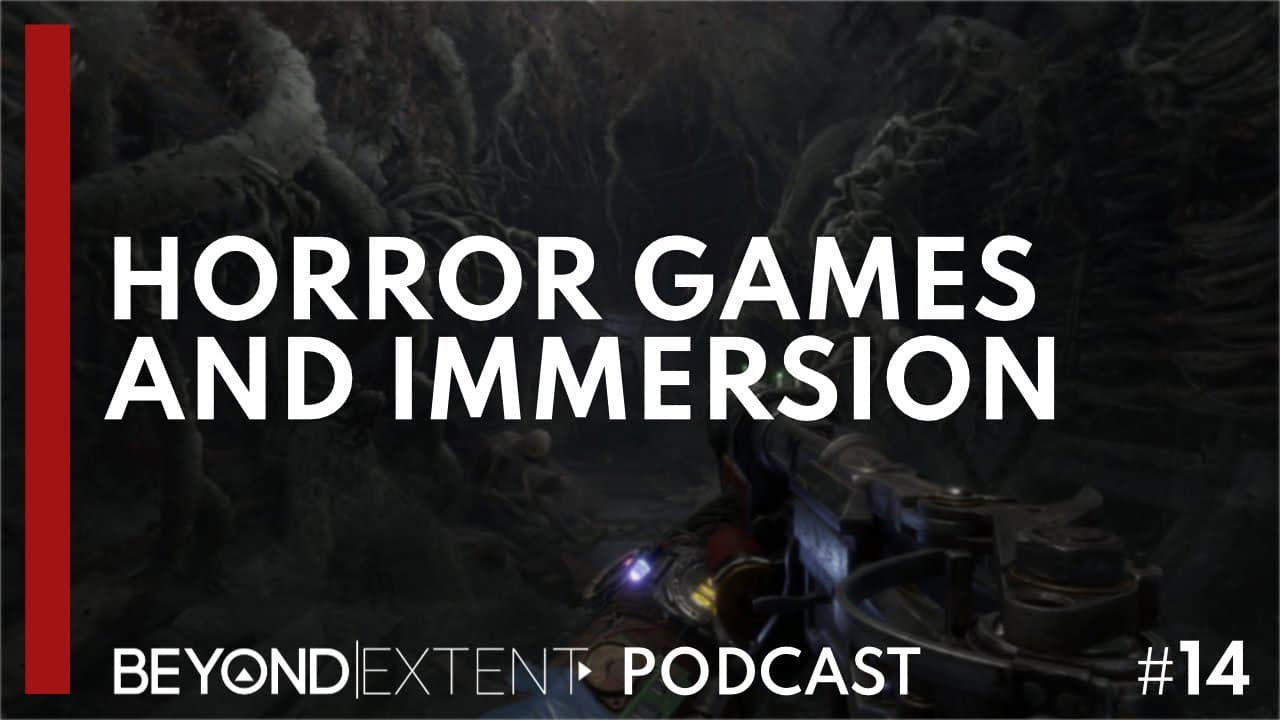
Horror games and immersion
TL;DR
This podcast episode discusses the back-and-forth nature of the environment artist's workflow, highlighting the constant problem-solving and iteration required to create visually cohesive and accurate models.
Transcript
hey everyone welcome to the beyond extend podcast a podcast dedicated to a chat between two environment artists discussing everything about the industry working i'm timothy and i'm joined by william who is a friend and fellow colleague of mine in this episode we were planning to talk about something completely different but then jumped into the top... Read More
Key Insights
- 🎮 Gamers Inside: The hosts discuss their love for horror games and how their experiences with them have evolved over time. They also express excitement for upcoming games like Ghost of Tsushima.
- 🎙️ Podcast Reflection: The hosts acknowledge that this episode is more focused on their personal interests and less on educational content, but they still hope the audience enjoys it.
- 💤 Rested and Refreshed: The hosts discuss their relaxation plans, including taking time off, playing video games, and enjoying their days off.
- 📚 Childhood Game Creation: The hosts reminisce about their childhood experiences of creating pen and paper games for their friends and express excitement about the possibility of a samurai-themed game like Ghost of Tsushima.
- 🎥 Influences from Movies: The hosts mention movies like Mulan and the Bourne series as inspirations for their interest in creating and playing games.
- 👻 Horror Game Preferences: The hosts discuss the differences between slow burn and jump scare horror games, as well as their personal preferences in the genre.
- 🌍 Immersive Worlds: The hosts express their love for exploring game worlds, particularly in open-world games like Red Dead Redemption 2 and Metro Exodus.
- 😱 Scary Games and Immersion: The hosts discuss their experiences with scary games like Dead Space and Metro Exodus, highlighting the immersion and psychological impact these games can have.
- 🤝 Bonding Through Gaming: The hosts share their mutual love for games and how gaming has connected them both personally and professionally.
- ⚙️ Workflow Challenges: The hosts outline the challenges in the workflow of environment artists, including the need for backtracking and fixing models to achieve the desired visual outcome.
Install to Summarize YouTube Videos and Get Transcripts
Explore YouTube Video Summarizer or Get YouTube Transcript Extractor
Questions & Answers
Q: What are the differences between slow burn horror games and jump scare horror games?
Slow burn horror games focus on building tension and suspense over time, relying on atmospheric elements, storytelling, and psychological fear. On the other hand, jump scare horror games rely on sudden and unexpected frights to create scares, often using loud noises and sudden appearances of grotesque or frightening creatures to startle players. Both approaches aim to evoke fear but do so in different ways.
Q: How do experienced environment artists handle the constant back-and-forth nature of the workflow?
Experienced environment artists are accustomed to the iterative nature of their work, understanding that it often involves multiple rounds of modeling, sculpting, texturing, and fixing errors. They are patient problem solvers, analyzing their models and textures critically and making necessary adjustments to achieve their desired visual outcome. They see this back-and-forth as a natural part of the creative process and an opportunity for growth and improvement.
Q: Why is it important for artists to explore new techniques and workflows in their personal projects?
Exploring new techniques and workflows in personal projects allows artists to push their creative boundaries and discover new ways of achieving their artistic vision. It encourages experimentation, fosters innovation, and helps artists develop their unique style. By stepping outside their comfort zones and trying new approaches, artists can continue to grow and evolve their skills.
Q: How can artists overcome the fear of failure and embrace the learning process?
Failure is an essential part of the learning process and should be seen as an opportunity for growth. Artists can overcome the fear of failure by shifting their perspective and understanding that mistakes are a natural part of the creative journey. Embracing the learning process involves being open to experimentation, taking risks, and being willing to learn from both successes and failures. Confidence comes with experience and a willingness to continuously learn and improve.
Summary & Key Takeaways
-
The podcast discusses the challenges of creating horror games and reflects on the evolution of horror experiences in the gaming industry.
-
The hosts talk about their personal experiences and preferences when it comes to playing and creating horror games, sharing their thoughts on slow burns versus jump scare games.
-
They also touch on the topic of standardizing workflows in personal projects and the importance of embracing experimentation and learning from mistakes.
Read in Other Languages (beta)
Share This Summary 📚
Summarize YouTube Videos and Get Video Transcripts with 1-Click
Try YouTube Summary with ChatGPT & Claude or YouTube Transcript Generator
Explore More Summaries from Beyond Extent 📚
Summarize YouTube Videos and Get Video Transcripts with 1-Click
Try YouTube Summary with ChatGPT & Claude or YouTube Transcript Generator