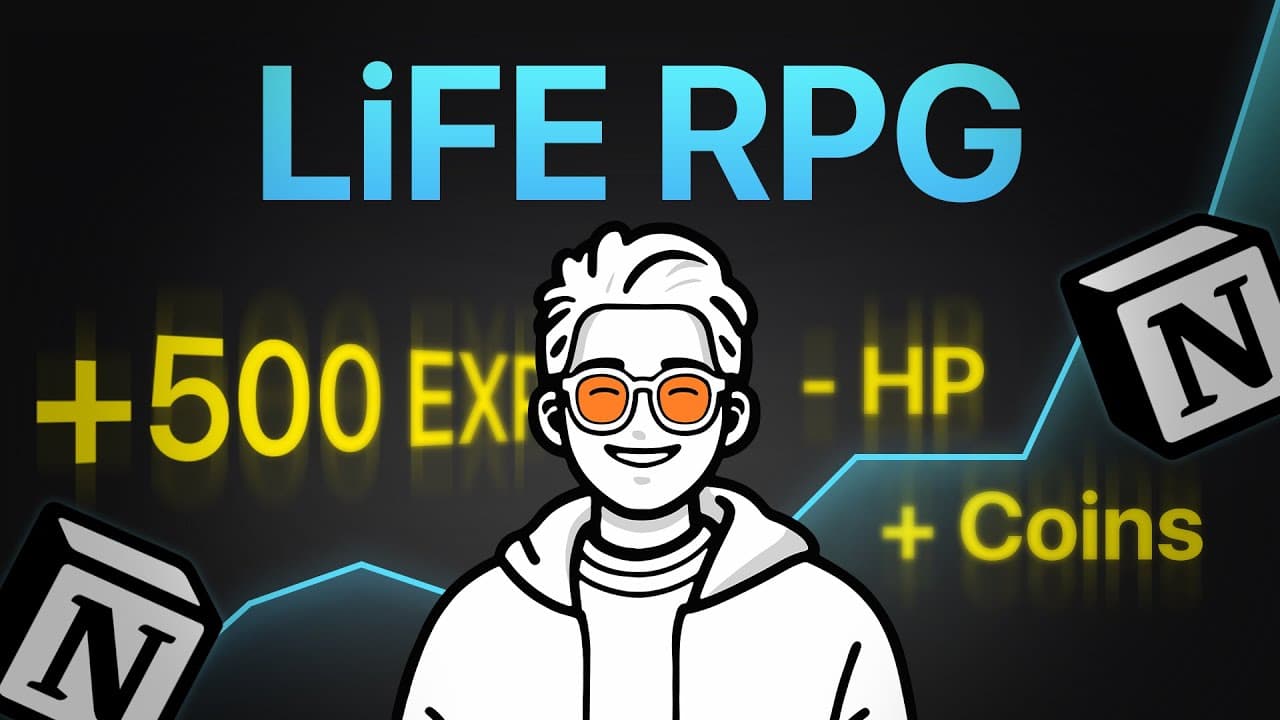
I built a real life RPG game to manage my life in Notion
TL;DR
Transform daily tasks into a fun RPG using Notion.
Transcript
we often do things we don't like so why not make them fun imagine life as a game filled with rewarding mechanisms that drive us to take action effortlessly finding joy even in the boring tasks games have ways to grow, quests to complete and rewards to earn, life does too question how do we run our lives like a game Yu Kai Chou, author of Ac... Read More
Key Insights
- The concept of gamifying life is based on the Octalysis Framework, which identifies eight core drives that make games engaging and can be applied to real life.
- Creating a life RPG involves setting clear goals, similar to quests in games, to provide direction and motivation in daily tasks.
- The system uses a character feature where users can invest in their avatars, fostering a sense of responsibility and ownership over their progress.
- A skill tree mechanism is employed to enhance personal growth by rewarding the completion of specific tasks with experience points.
- The PARA method is integrated as a task manager, categorizing tasks into projects, areas, resources, and archives, aligning with the skill tree system.
- The game includes a marketplace where users earn coins by completing tasks, which can be used to purchase items, reinforcing the reward mechanism.
- Social aspects are incorporated through a built-in chat room in Notion, allowing users to share achievements and motivate each other.
- The project is in its beta phase, with ongoing developments to improve user friendliness and incorporate elements of unpredictability.
Install to Summarize YouTube Videos and Get Transcripts
Explore YouTube Video Summarizer or Get YouTube Transcript Extractor
Questions & Answers
Q: What is the Octalysis Framework and how is it applied in the video?
The Octalysis Framework is a gamification concept that identifies eight core drives to engage users. In the video, it's applied to create a life RPG in Notion, transforming daily tasks into quests and incorporating elements like skill trees and marketplaces to motivate and engage users in personal growth.
Q: How does the character feature enhance user engagement in the system?
The character feature allows users to create and invest in their avatars, fostering a sense of responsibility and ownership. By tracking progress and leveling up, users are motivated to improve their skills and complete tasks, making the process enjoyable and engaging, similar to character development in games.
Q: What role does the PARA method play in the system?
The PARA method serves as a task management system, categorizing tasks into projects, areas, resources, and archives. It aligns with the skill tree mechanism, helping users manage long-term responsibilities and projects, similar to quests in a game, thus enhancing the structure and organization of tasks.
Q: How is social interaction integrated into the Notion RPG system?
Social interaction is integrated through a built-in chat room within Notion, allowing users to share their achievements, discuss struggles, and motivate each other. This feature adds a community aspect, encouraging collaboration and competition, which enhances user engagement and motivation to reach personal goals.
Q: What challenges does the creator face in making the system user-friendly?
The creator faces challenges in simplifying the database and account setup process, making it easier for users to input character information. Additionally, integrating unpredictability elements and ensuring the system is intuitive and accessible are ongoing challenges that the creator is working to address in the beta phase.
Q: What is the significance of the marketplace in the life RPG system?
The marketplace allows users to earn coins by completing tasks, which can be used to purchase items. This feature reinforces the reward mechanism, motivating users to complete tasks and achieve goals. It mirrors in-game economies, where players earn and spend currency, adding an engaging and rewarding dimension to the system.
Q: How does the system address bad habits and penalties?
The system treats overcoming bad habits as battles, where indulging in a bad habit results in a loss of health points. Characters can die if health points reach zero, enforcing a penalty system. Additional real-world penalties are suggested to ensure consequences for failure, motivating users to maintain good habits.
Q: What future developments are planned for the Notion RPG system?
Future developments include improving user-friendliness by creating a 'create an account' page, adding a 'settings' page for personalized skill trees, and integrating elements of unpredictability. The creator seeks feedback and ideas to enhance the system, aiming to make it more intuitive and engaging for users.
Summary & Key Takeaways
-
The video discusses creating a real-life RPG using Notion, based on the Octalysis Framework's gamification principles. It transforms daily tasks into quests, with features like skill trees and marketplaces to engage users and promote personal growth.
-
The system emphasizes autonomy and responsibility by allowing users to invest in their avatars, track progress, and earn rewards. It also incorporates social elements to enhance motivation through community interaction.
-
Currently in beta, the project aims to improve user experience by simplifying account setup and integrating unpredictability elements. The creator invites feedback and ideas to enhance the system further.
Read in Other Languages (beta)
Share This Summary 📚
Summarize YouTube Videos and Get Video Transcripts with 1-Click
Try YouTube Summary with ChatGPT & Claude or YouTube Transcript Generator