Roasting Superbowl EV Ads From Tesla’s “Competition”
TL;DR
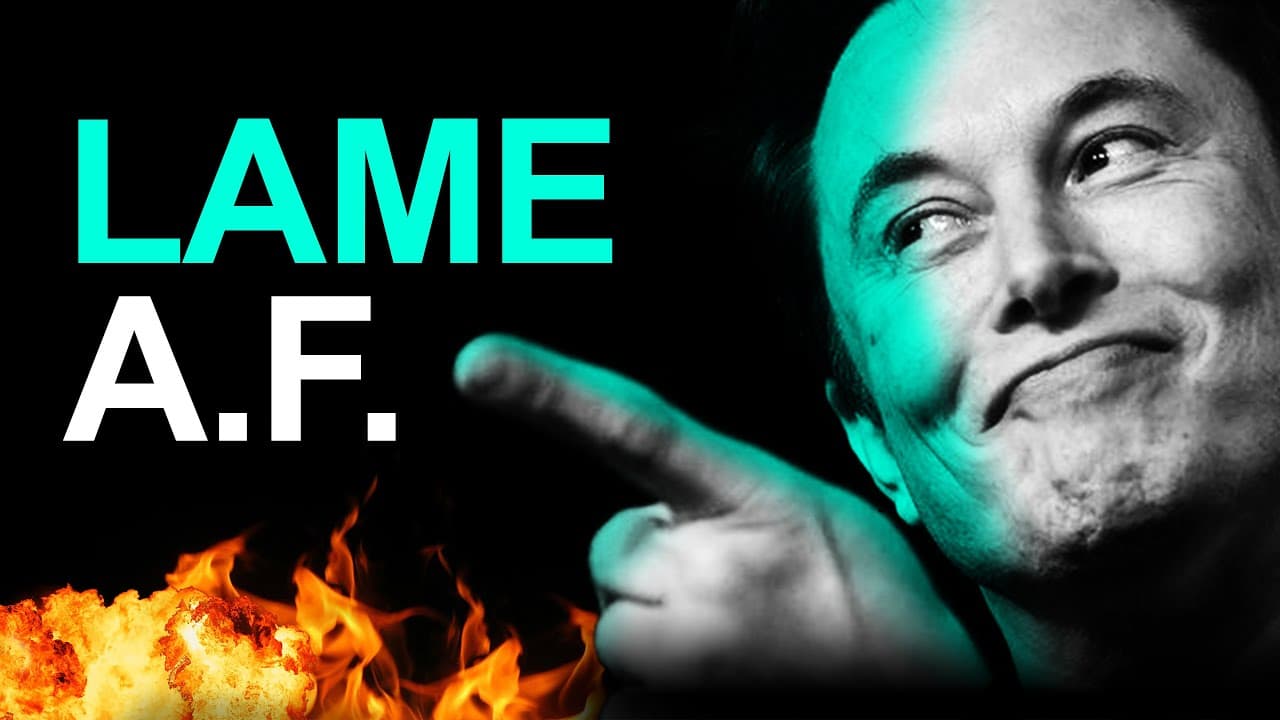
Tesla's competitors spent millions on Super Bowl ads for non-existent products, but failed to disclose important details like range and specs. The ads were seen as cheap attempts at greenwashing, while Tesla saw a surge in orders as a result.
Transcript
during last year's Super Bowl many of Tesla's alleged competitors attempted to trick consumers into thinking hey they give a f b they're moving towards electric vehicles and C you definitely want to buy one of our future potential products which are computer rendering right now and an idea not an actual final product instead of a Tesla vehicle as a... Read More
Key Insights
- 🫠 Tesla's competitors' Super Bowl ads lacked transparency and failed to provide important details like range and specifications.
- 🫠 The ads were seen as greenwashing attempts, trying to appear environmentally conscious without genuine commitment.
- 🪈 Consumers recognized the manipulation and turned to Tesla, resulting in a surge in orders for the company.
- 👍 Tesla's strategy of producing compelling electric vehicles that sell themselves rather than manipulating consumers proved successful.
- 🫠 The competitors' ads backfired, exposing their desperation and inability to deliver competitive products.
- 🚙 Tesla's success highlights the importance of transparency, genuine commitment, and delivering quality products in the electric vehicle market.
- ❓ Educated consumers made informed decisions by comparing available options and recognized Tesla as the superior choice.
Install to Summarize YouTube Videos and Get Transcripts
Explore YouTube Video Summarizer or Get YouTube Transcript Extractor
Questions & Answers
Q: Why did Tesla's competitors spend millions on ads for non-existent products during the Super Bowl?
The competitors hoped to deceive consumers into thinking they were serious about electric vehicles and to score points with eco-conscious buyers. However, their lack of transparency and failure to provide important details backfired.
Q: How did consumers respond to the competitors' ads?
Educated consumers saw through the manipulation and realized that the advertised products were not actual options. Many turned to Tesla instead, leading to a surge in orders for the company.
Q: What are some key drawbacks of the competitors' ads?
The competitors failed to disclose range and specifications for their products, raising doubts about their credibility. Additionally, the ads were seen as attempts at greenwashing, lacking genuine environmental concern.
Q: Why did Tesla benefit from the Super Bowl ads?
As consumers compared the competitors' non-existent products to Tesla's available vehicles, they recognized the superior quality and performance of Tesla. This led to an increase in orders for Tesla vehicles.
Summary & Key Takeaways
-
During the Super Bowl, Tesla's competitors attempted to sell non-existent electric vehicles, spending millions on ads that lacked crucial information like range and specifications.
-
The ads were criticized for their lack of transparency and for being a form of greenwashing, trying to make consumers believe the companies care about the environment.
-
In contrast, Tesla experienced a spike in orders as educated consumers saw through the competitors' tactics and recognized the superior quality of Tesla vehicles.
Read in Other Languages (beta)
Share This Summary 📚
Summarize YouTube Videos and Get Video Transcripts with 1-Click
Try YouTube Summary with ChatGPT & Claude or YouTube Transcript Generator
Explore More Summaries from Solving The Money Problem 📚

Summarize YouTube Videos and Get Video Transcripts with 1-Click
Try YouTube Summary with ChatGPT & Claude or YouTube Transcript Generator