Why Europe Doesn't Build Skyscrapers
TL;DR
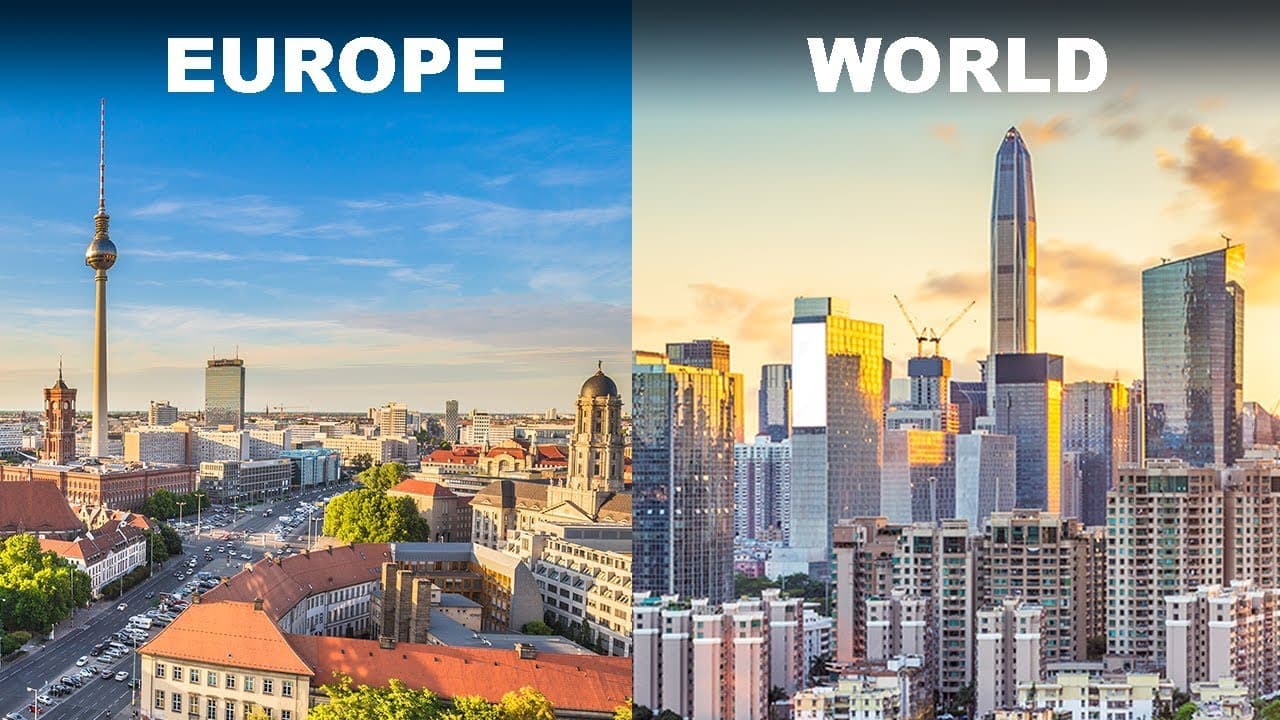
Europe has fewer skyscrapers compared to Asia and North America due to historic preservation, cultural rivalry, zoning regulations, and a focus on sustainability, but with increasing urbanization and the need for residential space, Europe may experience a skyscraper boom in the future.
Transcript
why aren't there many skyscrapers in europe despite being one of the most developed densely populated and economically prosperous continents europe has surprisingly few skyscrapers particularly when compared to asia and north america of the 218 skyscrapers constructed on the continent to date 66 percent of them are located in just five cities londo... Read More
Key Insights
- 🏙️ Despite Europe being developed and densely populated, it has fewer skyscrapers compared to Asia and North America, with 66% of them located in London, Paris, Frankfurt, Moscow, and Istanbul. The lack of inner urban space and floor areas has limited the adoption of skyscrapers.
- 🏰 Europe's firmly established grand historic buildings and public spaces in the 19th century left little room for large new structures. The cultural rivalry between Europe and North America also deterred the adoption of skyscrapers as Europeans sought to preserve their heritage.
- 🌇 After World War II, European cities prioritized restoring destroyed landmarks instead of modernizing with skyscrapers. In Eastern Europe, the rise of mid-rise repetitive structures served to re-house the population, while Europe saw its first skyscrapers rise due to the Soviet Union's desire to showcase power and influence.
- 🏢 Brussels played a role in the lack of skyscrapers in Europe due to indiscriminate redevelopment in the 1960s. This led to the introduction of planning laws that limited the scale of new buildings, restored historic facades, and preserved the cultural fabric of cities. Many European cities adopted similar regulations.
- 🌍 Europe's attitudes toward tall buildings have softened in the 21st century, with major financial centers like London, Paris, Moscow, Istanbul, and Frankfurt witnessing more skyscrapers rise due to increased demand for commercial space. Smaller European cities focus on sustainability and improving living standards.
- 🌆 Residential skyscrapers are rising in prominence globally, driven by urbanization and migration into cities. Europe is not immune to this trend and may witness a skyscraper boom in the future as it seeks to keep up with the progress and economic growth of China and the US.
- 🏛️ The challenge for future skyscraper construction in Europe lies in balancing the preservation of historical significance and architecture with the desire for progress and economic growth. Europe's emphasis on retaining culture and architectural value may limit the construction of skyscrapers.
- 📺 Subscribe to the B1M, the definitive video channel for construction, to get more insights and information on construction-related topics.
Install to Summarize YouTube Videos and Get Transcripts
Explore YouTube Video Summarizer or Get YouTube Transcript Extractor
Questions & Answers
Q: Why didn't skyscrapers catch on in Europe initially?
Skyscrapers didn't catch on in Europe initially due to the presence of historic buildings, cultural rivalry with North America, and a desire to preserve heritage. Europe focused on maintaining traditions and heritage, while North America embraced skyscraper construction as a symbol of progress.
Q: How did zoning regulations in Brussels influence skyscraper construction in Europe?
In the 1960s, Brussels experienced widespread demolition to make way for large modern structures, leading to the term "brusselization." The negative impact of this redevelopment led to the introduction of zoning laws requiring the restoration of historic facades, which influenced other European cities to adopt similar regulations.
Q: Why have smaller European cities focused on sustainability rather than skyscraper construction?
Smaller European cities, particularly in Scandinavia and Central Europe, have prioritized the environment and improving quality of life for residents. They have consistently ranked highly in sustainability and happiness indexes while still maintaining economic importance. This focus on sustainability has shifted their attention away from skyscraper construction.
Q: How has the demand for residential space influenced the construction of skyscrapers in Europe?
As urbanization continues and industries become automated, there is a significant migration of people into cities, driving the need for residential space. Europe, like other continents, is experiencing this phenomenon, leading to an increase in residential skyscrapers in major urban areas.
Q: What challenges does Europe face regarding future skyscraper construction?
Europe faces the challenge of balancing the desire to retain culture and architectural heritage with the need for progress and economic growth. The declaration of entire urban centers as historically significant poses obstacles to future skyscraper construction while attempting to preserve the past.
Q: How does Europe compare to Asia and North America in terms of skyscraper development?
Europe has fewer skyscrapers compared to Asia and North America. The dominant skyscraper cities in Europe are London, Paris, Frankfurt, Moscow, and Istanbul, accounting for 66% of all skyscrapers on the continent. Major financial centers have seen more recent skyscraper development, but the overall numbers are lower.
Summary & Key Takeaways
-
Skyscrapers didn't catch on in Europe initially due to established historic buildings, cultural rivalry, and a desire to preserve heritage.
-
After World War II, western Europe focused on restoring damaged landmarks and lacked the population demand for skyscrapers.
-
Zoning regulations in cities like Brussels led to a dislike for modern buildings, but attitudes have softened, and major financial centers have seen the rise of skyscrapers.
Read in Other Languages (beta)
Share This Summary 📚
Summarize YouTube Videos and Get Video Transcripts with 1-Click
Try YouTube Summary with ChatGPT & Claude or YouTube Transcript Generator
Explore More Summaries from The B1M 📚





Summarize YouTube Videos and Get Video Transcripts with 1-Click
Try YouTube Summary with ChatGPT & Claude or YouTube Transcript Generator