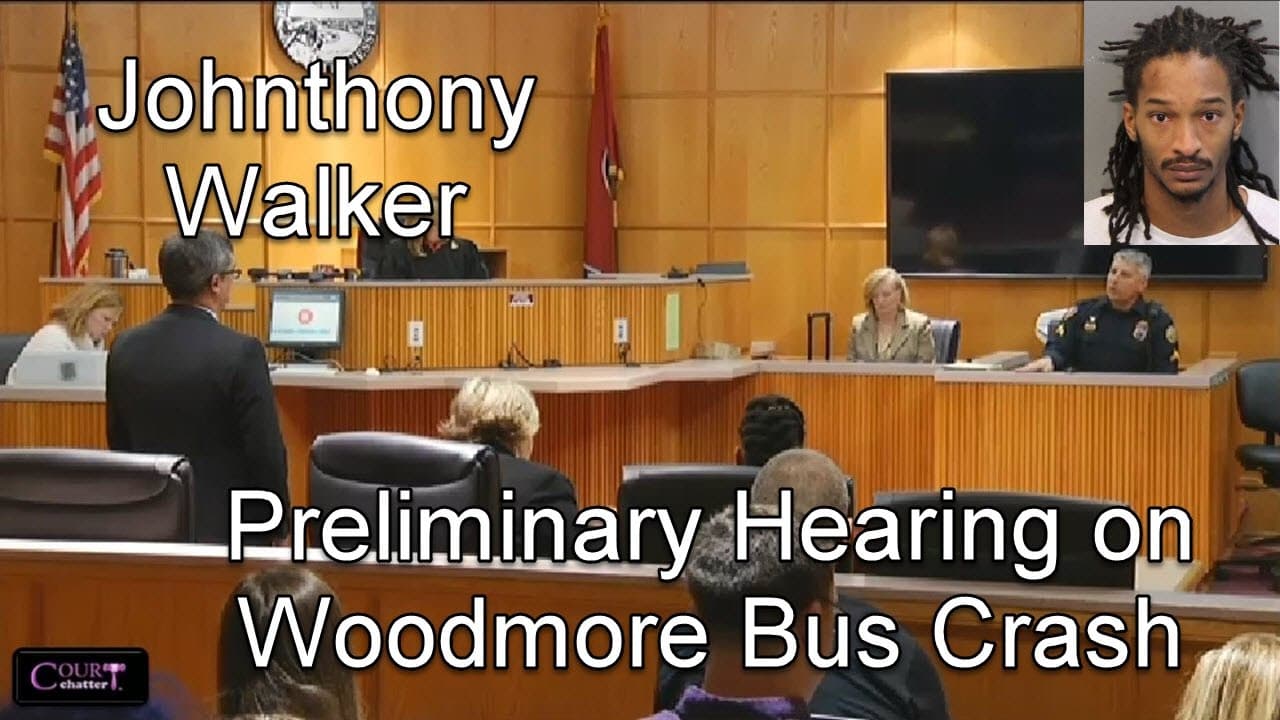
Johnthony Walker Preliminary Hearing 12/15/16
TL;DR
A bus crash investigation reveals details about the factors involved in the accident, including tire marks, GPS data, and video footage.
Transcript
the motor factors the forties and fifties we've actually determined using the laws of physics ERISA clues Wallace emotions basically how it interacts with the roadway with retirement and where vehicles have been controlling the entire Marsh was breaking what he what a big wads of another available energy is transferred basically use tire marks goug... Read More
Key Insights
- 🎮 The investigation relied on multiple sources of data, including tire marks, engine control module data, and video footage.
- 🚄 The tire marks indicated that the bus was negotiating a curve at a high speed, leading to a loss of control.
- 💁 The engine control module data did not provide accurate information about the crash events.
- 👨💼 Video footage from the bus cameras helped reconstruct the sequence of events leading up to the crash, including the speed of the bus.
- ℹ️ The investigation highlighted the importance of using multiple sources of data to determine the cause of a crash.
- 🚒 The engine control module data, while useful for maintenance purposes, was not reliable for crash analysis.
- 😪 The investigation also revealed the role of tire marks in determining the speed and trajectory of a vehicle before a crash.
Install to Summarize YouTube Videos and Get Transcripts
Explore YouTube Video Summarizer or Get YouTube Transcript Extractor
Questions & Answers
Q: How were the tire marks used in the investigation?
The tire marks on the road indicated that the bus was negotiating a curve at a high speed, causing the tires to slide. This information helped determine the speed and trajectory of the bus prior to the crash.
Q: What information did the engine control module provide?
The engine control module recorded sudden deceleration events, but the data did not correlate with the crash analysis. It did not indicate a sudden decrease in speed during the crash.
Q: How did the video footage contribute to the investigation?
The video footage from cameras on the bus helped reconstruct the events leading up to the crash. It provided visual evidence of the bus's speed and movements, confirming other findings from the investigation.
Q: Why wasn't the engine control module data reliable?
The engine control module data did not correlate with the crash analysis because it was primarily designed for maintenance purposes and not for reporting crashes or sudden decelerations. It did not accurately capture the events of the crash.
Summary & Key Takeaways
-
The investigation relied on various factors to determine the cause of the bus crash, including tire marks, gouge marks, and damage to the vehicle.
-
Three sources of information were used: tire marks, engine control module data, and video footage from cameras mounted on the bus.
-
The tire marks indicated that the bus was negotiating a curve at a high speed, causing the tires to slide and leave distinct marks on the road.
-
The engine control module provided data on sudden deceleration events, but the information did not correlate with the crash analysis.
-
Video footage from the bus cameras helped reconstruct the events leading up to the crash, including the speed of the bus.
Read in Other Languages (beta)
Share This Summary 📚
Summarize YouTube Videos and Get Video Transcripts with 1-Click
Try YouTube Summary with ChatGPT & Claude or YouTube Transcript Generator
Explore More Summaries from Law&Crime Network 📚



Summarize YouTube Videos and Get Video Transcripts with 1-Click
Try YouTube Summary with ChatGPT & Claude or YouTube Transcript Generator