How Does International Trade Affect Monopolies?
TL;DR
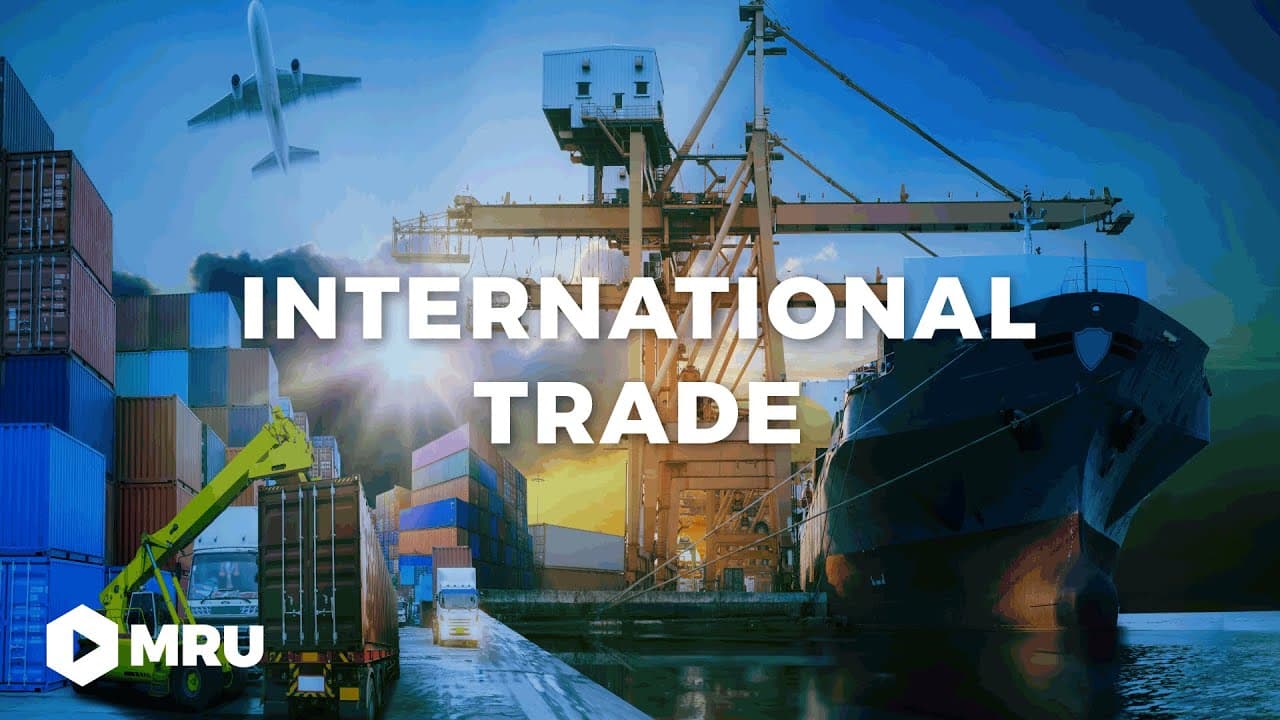
International trade disciplines monopolies, compelling them to operate similarly to competitive industries, which significantly increases welfare gains, especially for small countries. The shift from monopoly to free trade results in larger benefits compared to transitioning from a competitive industry, due to the initial inefficiencies of monopolies.
Transcript
today we're gonna make a very basic but important point we'll make it briefly if international trade is good when your domestic industry is competitive it's great when your domestic industry is a monopoly let's take a look with some diagrams okay let's recap very quickly here is our usual situation domestic supply curve here is the demand curve her... Read More
Key Insights
- International trade enhances welfare by increasing gains from trade and resource savings, particularly when shifting from high-cost domestic production to lower-cost world production.
- In a competitive domestic industry, international trade increases domestic demand and reduces domestic production, leading to benefits such as increased imports and resource savings.
- Monopolies typically result in higher prices and lower production compared to competitive industries, leading to worse no-trade equilibria.
- International free trade forces monopolies to behave like competitive industries, equalizing the free trade equilibrium for both scenarios.
- The welfare gains from moving a monopoly to free trade are larger than those from moving a competitive industry to free trade, due to the initial inefficiencies of monopolies.
- For small countries, which often have more monopolies due to natural monopolies and economies of scale, international trade offers even greater benefits.
- International trade disciplines monopolists by compelling them to produce at competitive levels, thus enhancing overall economic welfare.
- The transition from monopoly to free trade leads to a significant increase in the quantity demanded and supplied, alongside resource savings.
Install to Summarize YouTube Videos and Get Transcripts
Explore YouTube Video Summarizer or Get YouTube Transcript Extractor
Questions & Answers
Q: How does international trade affect monopolies?
International trade forces monopolies to behave as if they were competitive industries, leading to the same free trade equilibrium as with competitive industries. This results in larger welfare gains and increased economic efficiency, as monopolies typically produce less and charge more than competitive industries.
Q: Why are the gains from trade larger for monopolies?
The gains from trade are larger for monopolies because they start from a less efficient position, with higher prices and lower production levels. International trade disciplines monopolists, compelling them to produce more efficiently, thereby enhancing welfare and maximizing trade gains.
Q: What role does international trade play in small countries with monopolies?
In small countries, international trade is crucial as these countries often have more monopolies due to natural monopolies and economies of scale. Trade compels monopolists to operate more competitively, offering greater benefits and improving economic welfare in these countries.
Q: How does international trade impact the no-trade equilibrium in monopolies?
International trade alters the no-trade equilibrium in monopolies by forcing them to match the competitive industry's free trade equilibrium. This results in lower prices, higher production levels, and increased imports, ultimately improving welfare and reducing the inefficiencies associated with monopolies.
Q: What are the resource savings associated with international trade?
Resource savings occur when production shifts from high-cost domestic industries to lower-cost world industries. In monopolies, these savings are initially smaller due to reduced production, but the transition to free trade increases efficiency and maximizes these savings, contributing to overall welfare gains.
Q: Why is international trade more beneficial for monopolies than competitive industries?
International trade is more beneficial for monopolies because it addresses their inefficiencies, such as higher prices and lower production. By forcing monopolies to behave competitively, trade maximizes welfare gains and resource savings, which are initially limited in monopolistic settings.
Q: What is the impact of international trade on domestic demand and production?
International trade increases domestic demand and reduces domestic production by allowing access to lower-cost world markets. This leads to increased imports, enhanced gains from trade, and resource savings, benefiting both competitive industries and monopolies by promoting economic efficiency.
Q: How does international trade discipline monopolists?
International trade disciplines monopolists by compelling them to produce as if they were competitive industries. This results in the same free trade equilibrium as competitive industries, reducing prices, increasing production, and maximizing welfare gains, thus addressing the inefficiencies inherent in monopolistic markets.
Summary & Key Takeaways
-
The video explains how international trade can discipline monopolies, compelling them to operate as if they were competitive industries. This results in increased welfare gains from trade, particularly for small countries with more monopolies.
-
International trade benefits are larger when transitioning from a monopoly to a free trade equilibrium compared to a competitive domestic industry. This is due to the initial inefficiencies associated with monopolies, which trade helps to mitigate.
-
For small countries, international trade is particularly beneficial as it addresses the prevalence of monopolies and enhances trade gains. The video highlights the importance of trade in disciplining monopolists and promoting economic efficiency.
Read in Other Languages (beta)
Share This Summary 📚
Summarize YouTube Videos and Get Video Transcripts with 1-Click
Try YouTube Summary with ChatGPT & Claude or YouTube Transcript Generator
Explore More Summaries from Marginal Revolution University 📚

Summarize YouTube Videos and Get Video Transcripts with 1-Click
Try YouTube Summary with ChatGPT & Claude or YouTube Transcript Generator