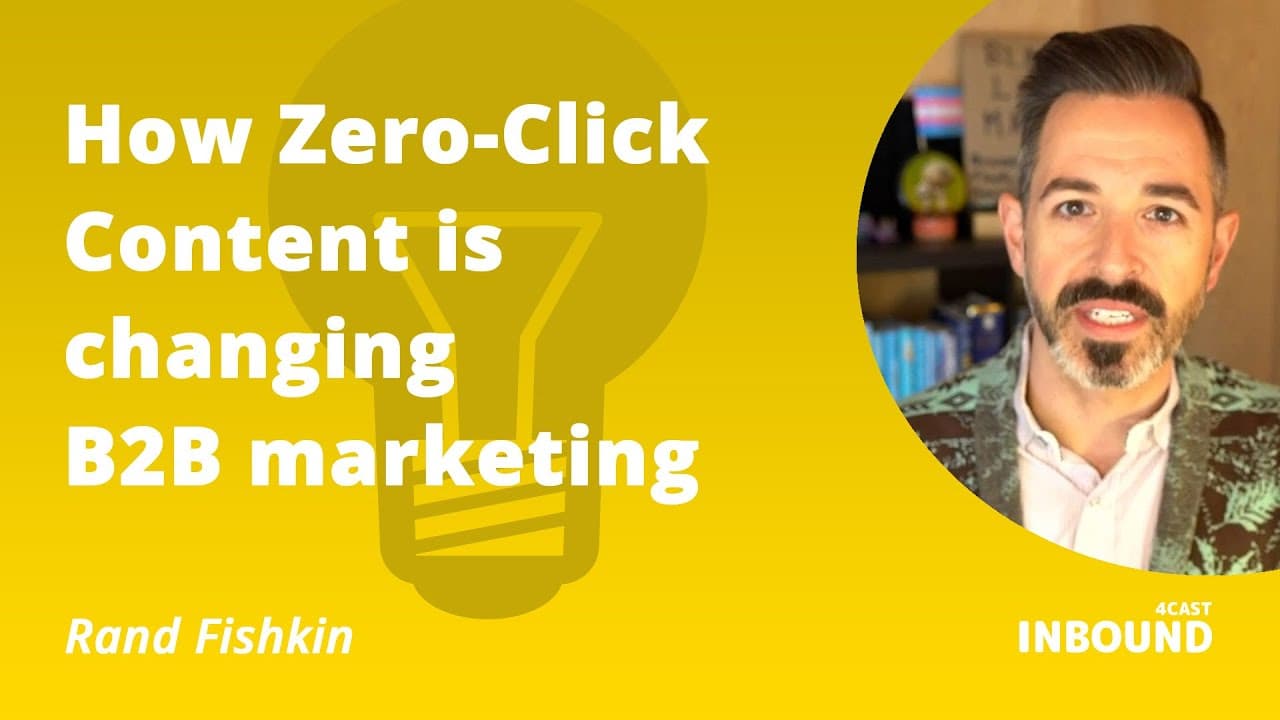
Rand Fishkin - How zero-click content is changing B2B marketing
TL;DR
The prevalence of zero click content on platforms like Google, LinkedIn, and social media networks is reshaping B2B marketing strategies, forcing companies to rely more on indirect methods for driving traffic and engagement.
Transcript
if you look at your Google search console account from today and five years ago and if you could 10 years ago there's not a single keyword that you can point to where the click-through rate has gone up they have all gone down every single one you are not getting as many clicks per search as you were five years ago 10 years ago and that number is no... Read More
Key Insights
- 🔍 The click-through rate for keywords in Google search has significantly decreased over the past five to ten years, signaling a trend of decreased organic traffic. This phenomenon is known as zero-click content.
- 🔊 Podcasts are a popular platform for discussing zero-click content and its impact on inbound marketing and organic growth for B2B companies.
- 💡 SparkToro, a company specializing in audience research software, takes a unique approach to marketing. They focus less on SEO-driven website traffic and more on zero-click content distribution through various platforms.
- 🤔 Zero-click content refers to content that keeps visitors on platforms, such as social media, instead of directing them to external websites. This is done to increase platform revenue and leverage behavioral data for targeted advertising.
- 🌐 Platforms such as Google, LinkedIn, Twitter, Facebook, and YouTube prioritize zero-click content to keep users engaged on their platforms for longer periods. This trend has significantly transformed Google search, which now keeps more clicks within its own ecosystem.
- 😕 Consumers tend to prefer the familiar UI and UX of platforms like Google and LinkedIn, which makes short-term engagement on these platforms more convenient. However, this dominance of a few platforms can lead to less innovation and income inequality in the long run.
- 🔮 Zero-click content presents both opportunities and challenges for content creators. On platforms such as LinkedIn, native content and zero-click approaches can enhance the reach and engagement of a post. However, the ultimate goal remains to drive traffic to one's own platform.
- 📈 The efficacy and effectiveness of marketing can increase with zero-click content strategies, despite the difficulty of measuring direct attribution. Branded search volume and raw traffic to a website can serve as key performance indicators to determine the success of zero-click content efforts.
- 👥 B2B companies need to adapt their marketing strategies to suit their unique goals, audience, and industry. Depending on factors such as keyword search volume, competition, and target market behavior, companies should consider a mix of SEO-driven website content and zero-click content efforts for a comprehensive marketing approach.
- 🔮 The future of marketing will continue to evolve, and the success of different tactics will vary across industries. Companies should stay updated on trends, experiment with various strategies, and closely monitor their metrics to determine the most effective marketing mix for their specific objectives.
Install to Summarize YouTube Videos and Get Transcripts
Explore YouTube Video Summarizer or Get YouTube Transcript Extractor
Questions & Answers
Q: How has the prevalence of zero click content affected B2B marketing strategies?
The rise of zero click content has forced B2B companies to shift their focus towards distribution on other platforms, such as social media, in order to reach their audiences and drive engagement. By relying more on indirect methods for driving traffic, B2B marketers have had to think creatively about how to capture the attention of their target audience and build brand recognition.
Q: What are some strategies B2B companies can use to adapt to the rise of zero click content?
B2B companies can experiment with distributing content on platforms like LinkedIn without direct links, using short videos and comments with links to engage the audience, collaborating with influencers, participating in podcasts and webinars, and leveraging newsletters to build brand recognition and capture potential leads' attention.
Q: How does zero click content affect SEO efforts for B2B companies?
Zero click content has made it more challenging for B2B companies to drive traffic and measure the direct impact of their SEO efforts. With platforms like Google increasingly favoring their own properties and content, companies have had to find alternative ways to reach their target audience and generate brand awareness.
Q: Can zero click content still contribute to branding goals for B2B companies?
While zero click content may not directly generate a significant number of leads or conversions, it can contribute to branding goals by increasing brand recognition, familiarizing the audience with the company's offerings, and building trust. Zero click content can serve as a means to drip valuable information to potential customers, reinforcing the brand's message over time.
Q: What metrics should B2B companies focus on when measuring the effectiveness of zero click content strategies?
B2B companies should focus on metrics such as branded search volume, type-in traffic, engagement, reach, and social media shares to gauge the success of their zero click content strategies. These metrics provide insights into brand awareness, audience interest, and potential conversions, even if direct attribution is challenging.
Q: Are there any risks or downsides to relying heavily on zero click content?
While zero click content can be an effective strategy for reaching and engaging audiences, there is a risk of overreliance. Companies should carefully balance their distribution efforts to ensure they have a diverse marketing mix and avoid missing out on potential opportunities. Additionally, the inability to directly measure the impact of zero click content can pose challenges when reporting to stakeholders or evaluating marketing ROI.
Q: How has zero click content affected the current landscape of B2B marketing?
Zero click content has disrupted traditional marketing tactics and forced B2B marketers to adapt to the evolving preferences of major platforms. Companies now need to consider alternative methods of distribution and engagement, leveraging indirect channels and creative strategies to stand out in a highly competitive landscape.
Summary & Key Takeaways
-
Zero click content, a term coined by Amanda Natividad, refers to major platforms' preference for keeping users engaged on their ecosystem rather than sending them to external websites.
-
This trend has led to a decline in click-through rates and has made it harder for companies to measure the direct impact of their marketing efforts.
-
B2B companies, including SparkToro, have adapted by focusing on producing content for other platforms, collaborating with influencers, and using methods like short videos and comments with links as part of their distribution strategies.
Read in Other Languages (beta)
Share This Summary 📚
Summarize YouTube Videos and Get Video Transcripts with 1-Click
Try YouTube Summary with ChatGPT & Claude or YouTube Transcript Generator