Model United Nations: Moving Between Topics at Conference
TL;DR
This video explains how to move between topics during Model United Nations conferences, specifically focusing on the rules for MUNFW.
Transcript
Hi. This is Noah Zerbe. Welcome to my Model United Nations video series. This video series focuses on preparing students to be familiar with the rules of debate used at Model United Nations of the Far West, held every April in San Francisco. While the video focuses on rules for MUNFW, the basic concepts of parliamentary procedure are appl... Read More
Key Insights
- 🇺🇳 This video series focuses on preparing students for Model United Nations conferences, specifically the MUNFW in San Francisco.
- 🇺🇳 The rules and concepts discussed in this video can be applied to Model United Nations conferences in general.
- 👻 Moving between topics is necessary to allow time for the submission, processing, and printing of resolutions.
- 🥡 The P-28 motion enables committees to continue productive discussions while necessary processes are taking place.
- 🧭 A P-28 motion requires two speakers in favor and two against, with a simple majority needed for it to pass.
- ⌛ The motion should specify the time or conditions under which the committee will return to the initial topic of debate.
- ❓ Committees can move back and forth between topics using the P-28 motion during a conference.
Install to Summarize YouTube Videos and Get Transcripts
Explore YouTube Video Summarizer or Get YouTube Transcript Extractor
Questions & Answers
Q: Why is it sometimes necessary to temporarily stop consideration of one topic and move on to another in Model United Nations conferences?
Temporary stops in consideration of topics are usually required to allow time for the submission and processing of resolutions, ensuring that committees can effectively discuss and vote on each topic.
Q: What is the purpose of the motion for postponement of debate (P-28)?
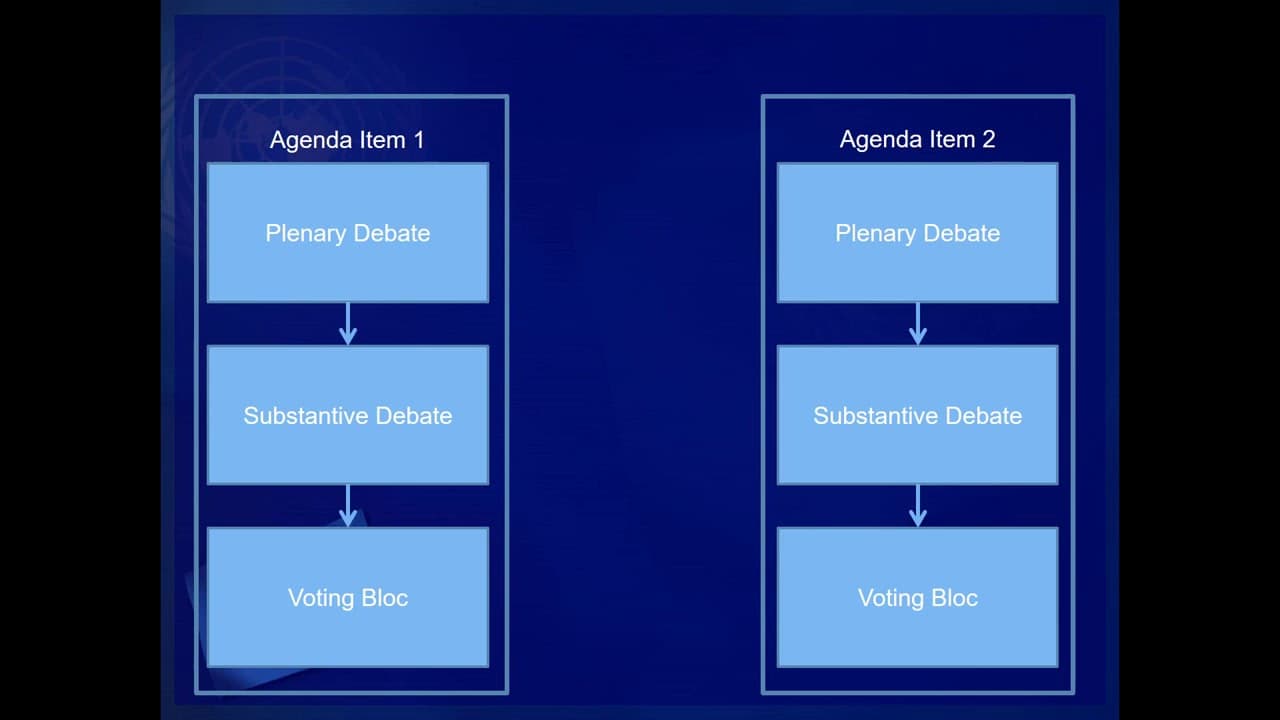
The P-28 motion allows a committee to move from substantive debate on one topic to general debate on another, providing a way to continue productive discussions while necessary processes, like the processing of resolutions, take place.
Q: What are the requirements for passing a P-28 motion?
A P-28 motion requires two speakers in favor and two against, and it must receive a simple majority to pass. The motion should specify either the time at which the committee will return to the debate on the original topic or the conditions under which it will do so.
Q: Can a committee move back and forth between topics using the P-28 motion during a conference?
Yes. It is common for a committee to temporarily postpone debate on the first topic during substantive debate, move to general debate on the second topic, postpone debate on the second topic, move to general debate on the third topic, and then return to substantive debate on the first topic once the conditions for the P-28 motion are met.
Summary & Key Takeaways
-
This video series helps students become familiar with the rules of debate used at Model United Nations of the Far West (MUNFW) in San Francisco.
-
Moving between topics is often necessary during conferences, mainly to allow time for the processing and printing of resolutions.
-
The process of moving between topics involves a motion for postponement of debate (P-28), which requires a simple majority to pass.
Read in Other Languages (beta)
Share This Summary 📚
Summarize YouTube Videos and Get Video Transcripts with 1-Click
Try YouTube Summary with ChatGPT & Claude or YouTube Transcript Generator
Explore More Summaries from Noah Zerbe 📚
Summarize YouTube Videos and Get Video Transcripts with 1-Click
Try YouTube Summary with ChatGPT & Claude or YouTube Transcript Generator