Black Holes | National Geographic
TL;DR
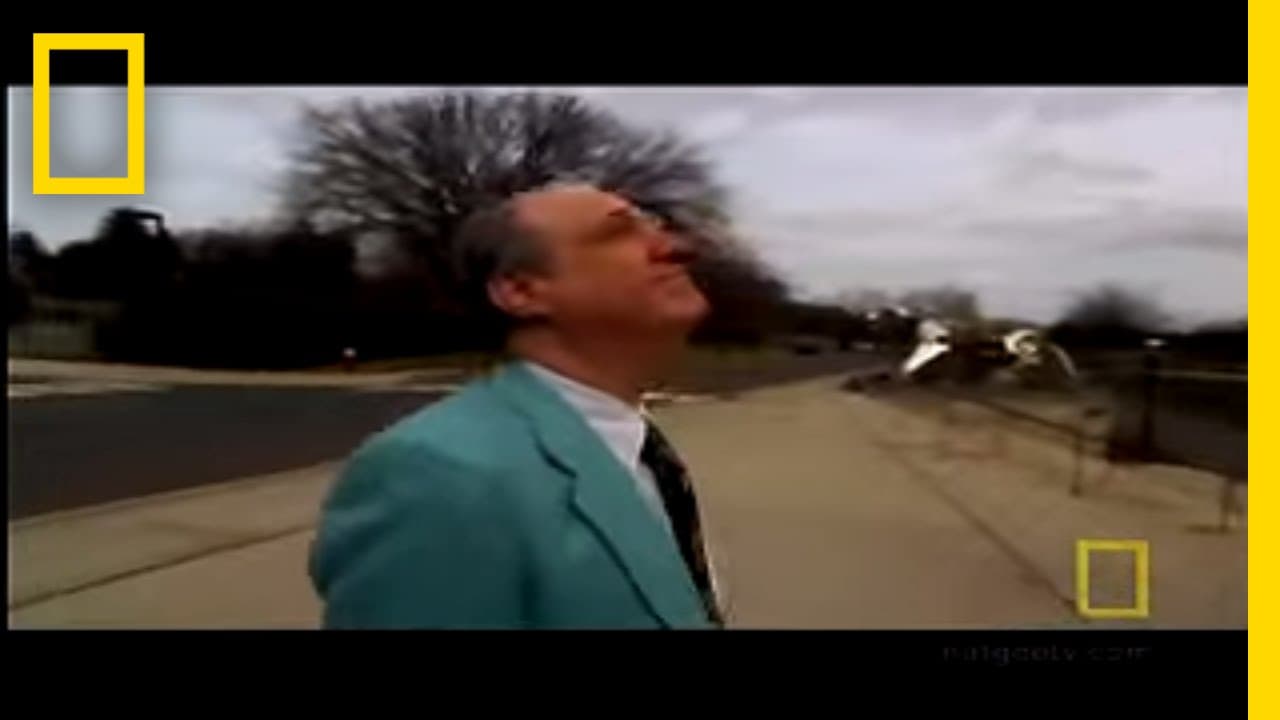
"Discover how cosmic strings, thin threads of energy leftover from the Big Bang, could potentially be used to create a time machine."
Transcript
there are places in the universe where gravity dramatically distorts space-time professor Stephen Hawking is renowned as a world expert on black holes back in the 1970s his groundbreaking research brought much attention to the then theoretical black hole the gravitational pull of a black hole stretches and warps space-time around it to an incredibl... Read More
Key Insights
- 👾 Black holes have a strong gravitational pull that distorts space-time around them.
- 🙂 Supermassive black holes have been found to rotate at close to the speed of light.
- 🤔 Cosmic strings, thin threads of energy, could potentially warp space-time as much as rotating black holes.
- 🗺️ The warped space-time created by passing cosmic strings may allow for faster-than-light travel and theoretical time travel.
- ⌛ This proposed time machine using cosmic strings has the limitation that the time travel region would be trapped inside a rotating black hole.
- 🫥 Time travel theories have been pushing the boundaries of science and blurring the line between imagination and reality.
- 🧑🔬 While time travel has only been achieved on a small scale, scientists remain undeterred in their quest to make it a reality.
Install to Summarize YouTube Videos and Get Transcripts
Explore YouTube Video Summarizer or Get YouTube Transcript Extractor
Questions & Answers
Q: What did Stephen Hawking's research reveal about black holes?
Stephen Hawking's research showed that black holes have a strong gravitational pull that stretches and warps space-time around them, forming a deep cone-shaped hole.
Q: What are cosmic strings?
Cosmic strings are thin threads of energy left over from the Big Bang that are extremely dense despite being no wider than an atom.
Q: How can cosmic strings potentially create a time machine?
When two cosmic strings pass each other at high speed, the warped space-time they create can be used to take a shortcut, allowing for faster-than-light travel and potential time travel.
Q: What is the limitation of the proposed time machine using cosmic strings?
The main limitation is that the region of space-time where time travel occurs would fall inside a black hole, making it impossible to escape.
Summary & Key Takeaways
-
Places in the universe with strong gravity can distort space-time, and black holes are known to rotate at close to the speed of light.
-
Cosmic strings, extremely dense threads of energy, have the potential to warp space-time as much as rotating black holes.
-
By using the warped space-time created by passing cosmic strings, it may be possible to take a shortcut and travel faster than the speed of light, theoretically creating a time machine.
Read in Other Languages (beta)
Share This Summary 📚
Summarize YouTube Videos and Get Video Transcripts with 1-Click
Try YouTube Summary with ChatGPT & Claude or YouTube Transcript Generator
Explore More Summaries from National Geographic 📚


Summarize YouTube Videos and Get Video Transcripts with 1-Click
Try YouTube Summary with ChatGPT & Claude or YouTube Transcript Generator