How to Sound Smart About Universal Basic Income
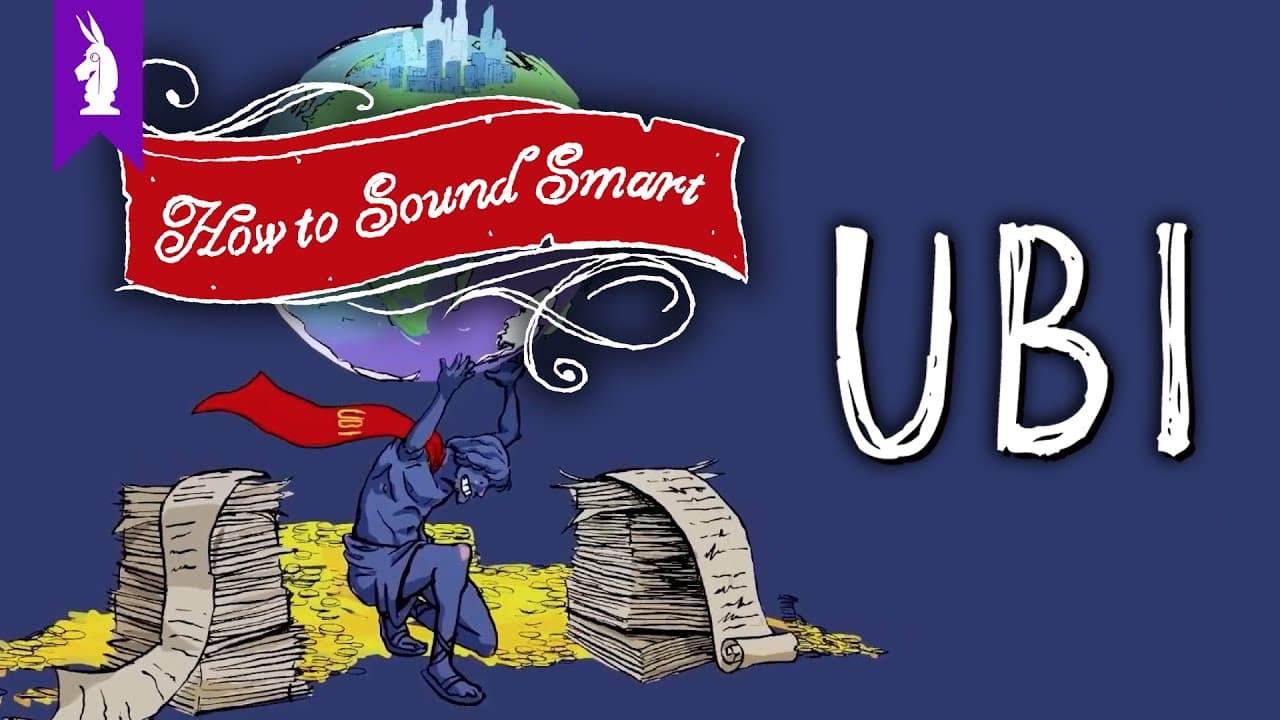
TL;DR
Universal Basic Income offers cash payments to residents, sparking debate on its effectiveness and implications.
Transcript
- [Narrator] You're two Chili's margaritas deep at "Girls Night" when your fake-friend Cassidy brings up Universal Basic Income. A dab of salsa still lingering on her freshly-waxed upper lip, Cassidy spouts off with the authority of a tipsy Nobel Laureate in economics. You take an extra-large bite of your Quesadilla Explosion Salad to stall. (beep)... Read More
Key Insights
- 🪡 Universal Basic Income is intended to provide financial security, aiming to cover basic needs and alleviate poverty.
- 🧍 Historical precedents for UBI illustrate its long-standing relevance, with various trials revealing both successes and challenges.
- ❓ Supporters believe UBI could reduce bureaucratic overhead and promote economic growth through increased consumer spending.
- 🤨 Critics of UBI raise concerns regarding its financial sustainability and potential to discourage work or exacerbate economic inequalities.
- 🤩 Autonomy in spending is a key argument for UBI, challenging views that recipients would misuse the funds.
- 🧡 UBI has garnered interest from a wide range of political ideologies, showing its versatility as a potential solution.
- 🥺 Studies indicate that UBI may lead to improved overall community welfare, including better health and education outcomes.
Install to Summarize YouTube Videos and Get Transcripts
Explore YouTube Video Summarizer or Get YouTube Transcript Extractor
Questions & Answers
Q: What is Universal Basic Income and how does it work?
Universal Basic Income (UBI) is a program that provides periodic cash payments to individuals, aiming to guarantee a basic level of financial security. Unlike traditional welfare programs, which are needs-based, UBI payments are usually given unconditionally, allowing recipients to decided how to spend the funds. This approach is designed to help cover essential expenses like food and housing, providing a financial floor rather than a safety net.
Q: Who has historically supported UBI, and why?
UBI has attracted support from a diverse range of figures across the political spectrum, including Thomas Paine, Milton Friedman, and Martin Luther King Jr. These proponents see UBI as a means to empower individuals economically, reduce poverty, and even stimulate economic growth. The appeal lies in its promise of financial autonomy, which allows people to decide how to spend their money rather than relying solely on government assistance.
Q: What are some real-world examples of UBI experiments?
Various UBI pilot programs have been conducted worldwide, including those in Alaska, Finland, and Namibia. For instance, in Finland, participants reported improved well-being and reduced stress. In Namibia, UBI led to increased nutrition and school attendance. Similarly, a small American experiment resulted in over a third of participants achieving permanent housing. These examples showcase the potential benefits of UBI in improving quality of life.
Q: What are some common criticisms of UBI?
Critics argue that UBI could be too expensive to implement sustainably, potentially leading to higher taxes or increased government deficits. Others claim it may disincentivize work, leading to a reduction in the labor force. There are also concerns about whether UBI would adequately address the nuanced needs of the poorest populations versus a more targeted welfare approach.
Q: How do proponents of UBI respond to concerns about spending behaviors?
Proponents argue that individuals should have the autonomy to spend UBI as they see fit, and evidence suggests that recipients generally prioritize essential needs such as food, housing, and healthcare over luxuries. Studies consistently show that basic income recipients do not typically use the funds for frivolous expenditures, countering the notion that UBI promotes irresponsible spending.
Q: How would UBI impact the economy if widely implemented?
Economists suggest that implementing UBI could stimulate the economy by increasing consumer spending. When people have guaranteed income, they are more likely to spend money on goods and services, which can drive demand and, in turn, boost GDP. Critics, however, warn of potential drawbacks, like increased inflation or budgetary issues for governments, if not properly managed.
Q: Can UBI coexist with existing welfare programs?
Yes, UBI is designed to supplement existing welfare systems rather than replace them. Proponents believe that a basic income can provide a financial floor that ensures people do not fall into extreme poverty, while traditional welfare programs can still address specific needs and provide additional support where necessary. This dual approach may help make the welfare system more efficient and less bureaucratic.
Q: What future do advocates foresee for UBI?
Advocates envision a future where UBI becomes a standard part of social safety nets worldwide, adapting to the needs of modern economies where job security is increasingly precarious due to automation and gig economies. They believe that UBI could help prepare society for changes in employment landscapes, ensuring basic human rights are met in the face of economic uncertainty.
Summary & Key Takeaways
-
Universal Basic Income (UBI) involves direct cash payments to residents to ensure their basic needs are met, such as food and housing.
-
The concept of UBI is not new; it has historical roots and has been experimented with in various regions globally with mixed outcomes.
-
Supporters argue UBI could alleviate poverty and simplify welfare systems, while critics question its feasibility and potential effects on work motivation.
Read in Other Languages (beta)
Share This Summary 📚
Summarize YouTube Videos and Get Video Transcripts with 1-Click
Try YouTube Summary with ChatGPT & Claude or YouTube Transcript Generator