7 Organs You Don't Actually Need
TL;DR
Despite the complexity of the human body, it can adapt to the loss of certain organs, such as the brain, lung, stomach, spleen, liver, gallbladder, and kidney.
Transcript
[♪ INTRO] The human body is an incredibly complex machine made up of systems of organs all working together to keep things humming along smoothly. So you’d think that taking anything out would make the whole thing break down. But of course, lots of people live without some of their organs. Like, you’re better off without an appendix if it’s giving ... Read More
Key Insights
- 🧠 The brain can adapt to the loss of half its hemisphere, allowing individuals with certain brain disorders to live relatively seizure-free lives.
- 🫁 The body can function with just one lung, with the remaining lung compensating for the lost functionality.
- ❓ The digestive process remains largely intact after the removal of the stomach, although dietary adjustments are necessary.
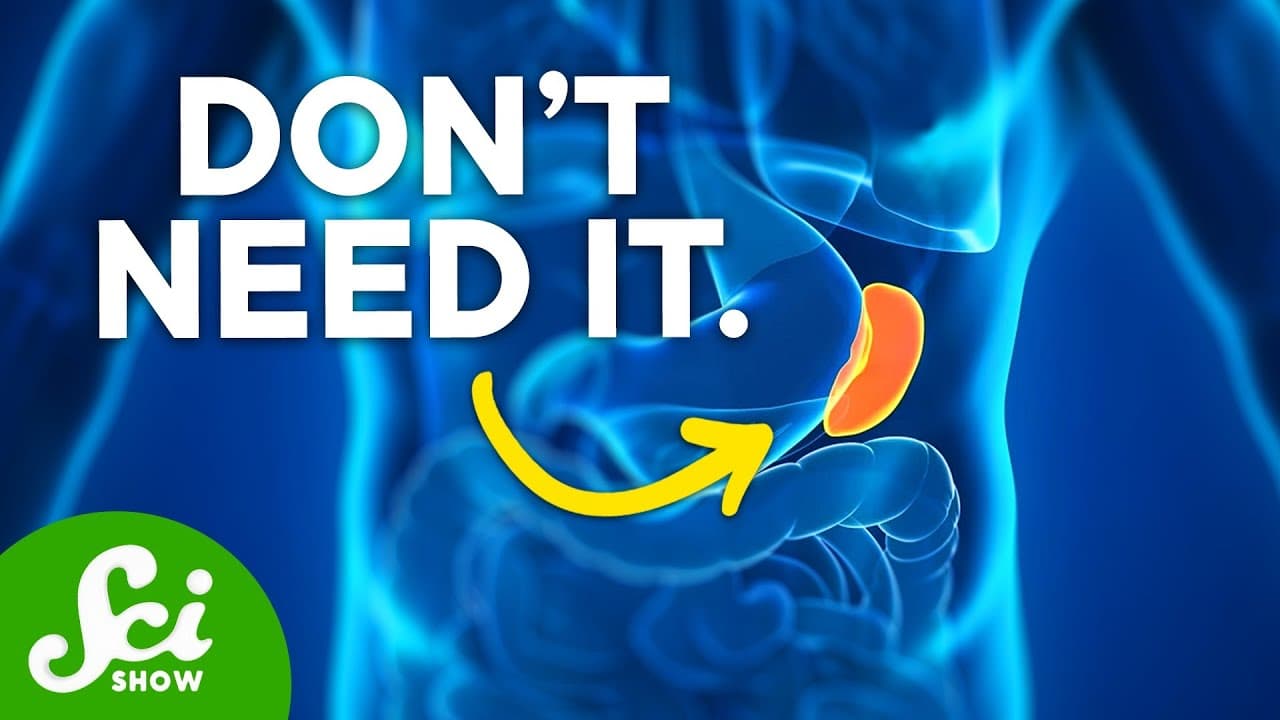
- 🚚 The immune system is not completely compromised by the removal of the spleen, with the liver helping to filter blood.
- 🚚 The liver has the remarkable ability to regenerate, allowing for live liver donations.
- ❓ Removal of the gallbladder does not significantly impact digestion, although indigestion may occur.
- 🌸 The body can effectively function with one kidney, with the remaining kidney compensating for the loss.
Install to Summarize YouTube Videos and Get Transcripts
Explore YouTube Video Summarizer or Get YouTube Transcript Extractor
Questions & Answers
Q: Can the brain function with only one hemisphere?
Yes, in cases of certain brain disorders or one-sided seizures, a hemispherectomy may be recommended to remove part or all of the affected hemisphere. Successful surgeries can result in a relatively normal life, with 50-90% of patients becoming seizure-free.
Q: How does the body compensate for the loss of a lung?
The remaining lung can expand and grow new alveoli, allowing it to perform approximately 70-80% of the functions of two lungs. Children may have the capacity to regenerate lung tissue more efficiently.
Q: What happens after a total gastrectomy?
Most of the digestion process occurs in the small intestine, so the absence of a stomach does not significantly impact digestion. However, individuals may need to eat smaller, more frequent meals and may require vitamin supplements. Dumping syndrome, characterized by unpleasant symptoms after a meal, can occur but can be managed through dietary adjustments.
Q: What are the risks and implications of liver donation?
Liver donation is possible as the liver can regenerate within a year. While there are risks and potential complications, individuals in good health can donate more than half of their liver to help those with liver disease.
Q: What is the purpose of the gallbladder, and what happens after its removal?
The gallbladder stores bile produced by the liver, which aids in the digestion of fats and fat-soluble vitamins. Removal of the gallbladder, through a cholecystectomy, does not significantly impact digestion, but individuals may experience slight indigestion.
Q: Can the body function with one kidney?
Yes, with one healthy kidney, an individual's body can effectively filter waste and fluids. In the case of kidney failure, a transplant can be performed, and recipients may live with a total of three kidneys, although only one is functional.
Summary & Key Takeaways
-
The brain can function with just one hemisphere, allowing individuals with certain brain disorders to live relatively normal lives after a hemispherectomy.
-
One lung is able to perform 70-80% of the functions of two lungs, allowing individuals who have had a pneumonectomy to engage in everyday activities.
-
The digestive process remains largely unaffected after a total gastrectomy, although dietary adjustments may be necessary.
-
The spleen can be removed through a splenectomy, but individuals without a spleen are more prone to infections and need to take preventative measures.
-
The liver is capable of regenerating, allowing for liver donations and the growth of a fully functioning liver within a year.
-
The gallbladder can be removed through a cholecystectomy without major impacts on digestion.
-
One kidney is sufficient for the body, and individuals can live with multiple kidneys, even if some are faulty.
Read in Other Languages (beta)
Share This Summary 📚
Summarize YouTube Videos and Get Video Transcripts with 1-Click
Try YouTube Summary with ChatGPT & Claude or YouTube Transcript Generator
Explore More Summaries from SciShow 📚


Summarize YouTube Videos and Get Video Transcripts with 1-Click
Try YouTube Summary with ChatGPT & Claude or YouTube Transcript Generator