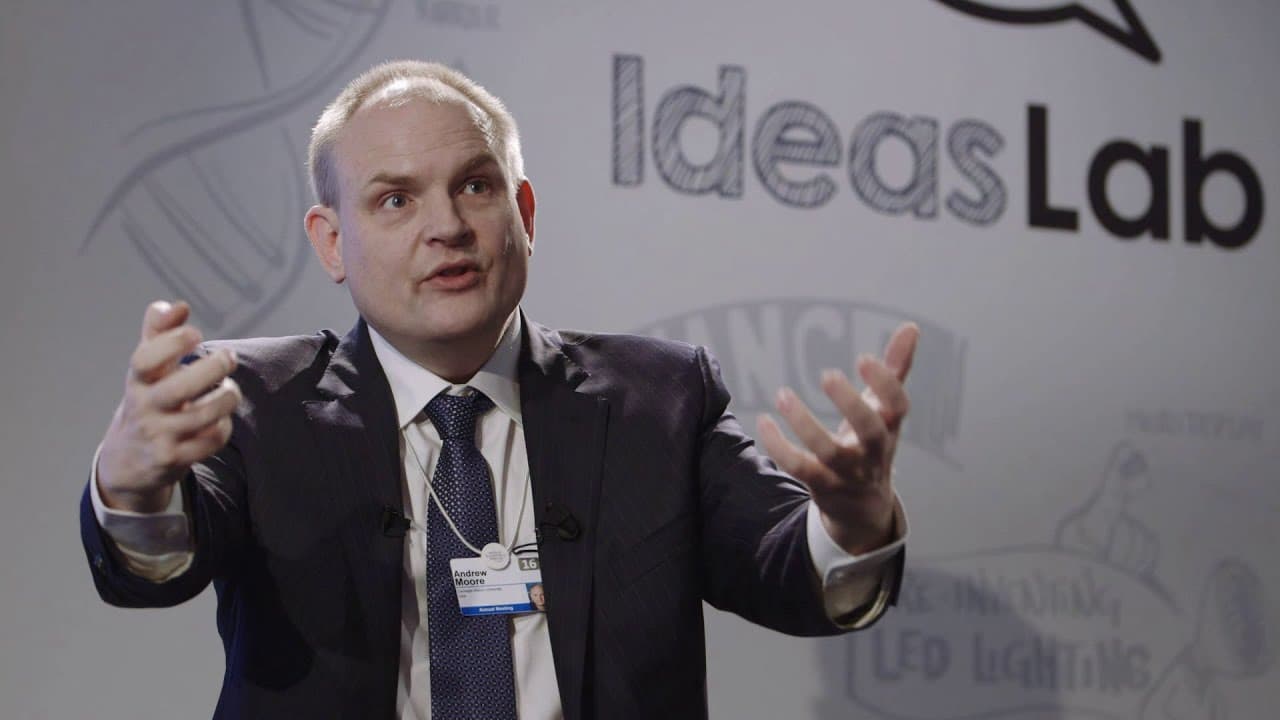
Verifying and validating machine intelligence | Andrew Moore
TL;DR
The speaker emphasizes the importance of AI safety and calls for collaborative efforts in policy-making and verification to ensure the safe deployment of autonomous systems.
Transcript
I'm responsible for the setteth success of the school of computer science at Carnegie Mellon where we happen to be a place which has more than 500 faculty and students earnestly working towards making AI real and useful and one of the things which has swept through the whole college over the last 18 months really has changed a lot of people's direc... Read More
Key Insights
- 🏑 AI safety has become a significant concern in the field of computer science and is a priority at Carnegie Mellon University.
- 🦺 Policy-making is crucial in establishing regulations and guidelines for the safe development and deployment of AI systems.
- 😀 Verification is essential to ensure the safety of autonomous systems, and engineers face challenges in testing their complexity effectively.
- 👨💻 Ethical questions, such as the value of human lives versus animals, arise when coding for critical decision-making in autonomous vehicles.
- 🧑🔬 Collaboration among policy makers, AI labs, and scientists is necessary to address AI safety concerns.
- 👔 Testing methods for AI systems are evolving, with formal proof methods being advocated alongside traditional testing approaches.
- 😷 Company executives should prioritize AI safety by asking about testing methods when considering the deployment of autonomous systems.
Install to Summarize YouTube Videos and Get Transcripts
Explore YouTube Video Summarizer or Get YouTube Transcript Extractor
Questions & Answers
Q: What is the main focus of the speaker's talk?
The speaker's main focus is on the urgency of AI safety and the need for policy-making and verification to address potential risks and ensure the safe deployment of autonomous systems.
Q: What are the challenges in coding autonomous vehicles?
One of the challenges is making decisions in critical situations, such as when an accident is imminent and the vehicle needs to decide whether to hit an animal or swerve and potentially harm the driver. Determining the value of human lives and animals is a difficult ethical question.
Q: How is policy-making in AI safety addressed?
The speaker stresses that policy-making requires collaboration among stakeholders, including policy makers, AI labs, and scientists. The goal is to establish regulations and guidelines to ensure the safe development and deployment of autonomous systems.
Q: How is verification important in AI safety?
Verification involves engineers demonstrating that the autonomous systems they build are safe. This can be challenging due to the complexity of AI systems and the need for new testing methods. Some researchers advocate for formal proof methods to ensure mathematical safety guarantees.
Summary & Key Takeaways
-
The school of computer science at Carnegie Mellon is focused on AI safety, which has become a significant concern in the past 18 months.
-
The speaker discusses the two main aspects of AI safety: policy-making, which requires collaboration among stakeholders, and verification, which involves engineers ensuring the safety of autonomous systems.
-
The speaker highlights specific challenges in coding autonomous vehicles, such as determining the value of human lives and making split-second decisions in critical situations.
Read in Other Languages (beta)
Share This Summary 📚
Summarize YouTube Videos and Get Video Transcripts with 1-Click
Try YouTube Summary with ChatGPT & Claude or YouTube Transcript Generator
Explore More Summaries from World Economic Forum 📚
Summarize YouTube Videos and Get Video Transcripts with 1-Click
Try YouTube Summary with ChatGPT & Claude or YouTube Transcript Generator