Francis Collins letter to Anthony Fauci | Jay Bhattacharya and Lex Fridman
TL;DR
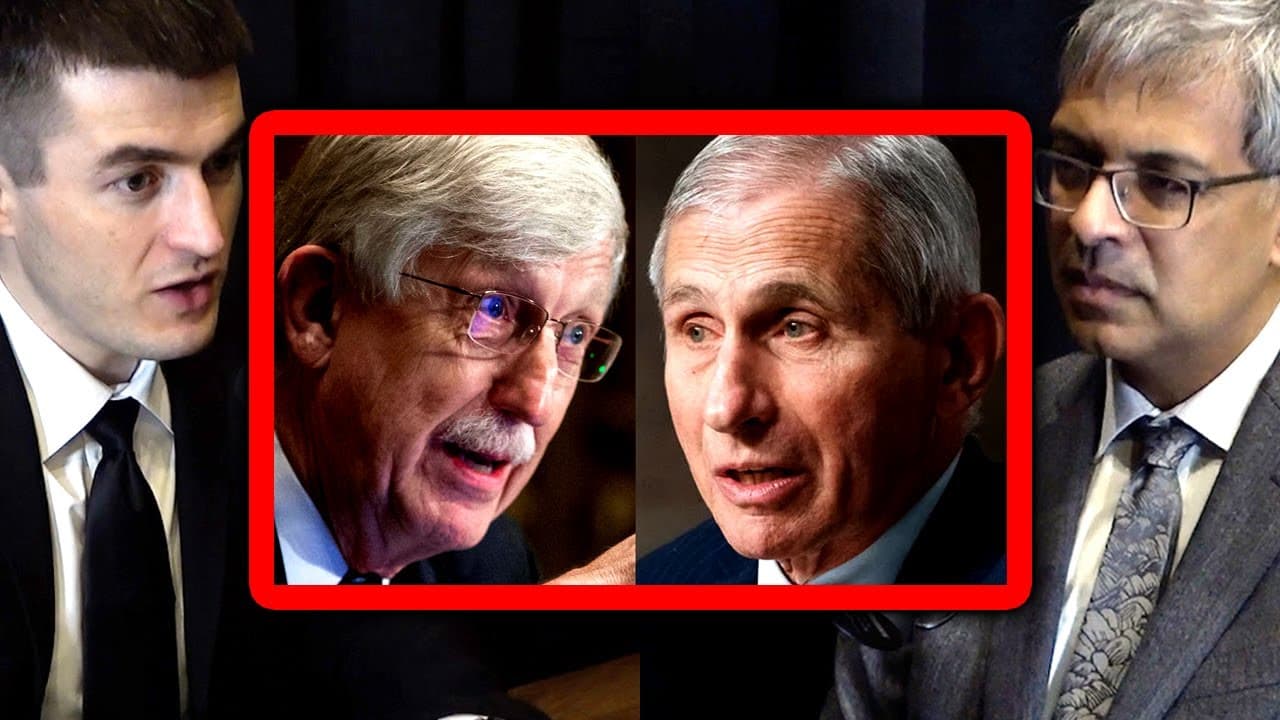
Francis Collins, director of the NIH, sent an email criticizing the Great Barrington Declaration, revealing a level of arrogance and an institutional failure in scientific policy-making.
Transcript
francis collins wrote a letter in october 2020 to anthony fauci anything somebody else i have um the letter oh it's not a letter email i apologize uh hi tony and cliff c gb declaration.org this proposal this is the great barrington declaration that you're a co-author on this proposal from the three fringe epidemiologists who met with the secretary ... Read More
Key Insights
- 🤗 The institutional failure and conflict of interest in scientific policy-making can lead to biased decision-making and hinder open discussions on alternative approaches.
- 🤗 Arrogance within the scientific community undermines the principles of science, which should be based on evidence, data, and open discussion.
- ❓ Humility is essential in scientific leadership and fosters progress in finding better solutions to complex problems.
- ❤️🩹 Francis Collins' career, with notable achievements like the Human Genome Project, ended on a disappointing note due to his involvement in biased policy-making.
- 🛄 The Great Barrington Declaration aimed to shift the focus to protecting the vulnerable population during the pandemic, but was met with mischaracterization and backlash.
Install to Summarize YouTube Videos and Get Transcripts
Explore YouTube Video Summarizer or Get YouTube Transcript Extractor
Questions & Answers
Q: What was the purpose of the Great Barrington Declaration?
The declaration aimed to present an alternative approach to the lockdown policy and urged better protection measures for the vulnerable population during the pandemic.
Q: How did Francis Collins' email impact the perception of the Great Barrington Declaration?
The email, criticizing the declaration and calling for a "devastating takedown," led to a propagandist mischaracterization of the document by newspapers, causing backlash and biased portrayals of the declaration's authors.
Q: What conflict of interest was present in Francis Collins' position?
Collins, as the head of the NIH, had a conflict of interest when he involved himself in scientific policy-making regarding the pandemic. This dual role compromised his objectivity and hindered open discussion.
Q: How did the arrogance in the scientific community affect the perception of alternative approaches during the pandemic?
The arrogance displayed by some scientists, as seen in Collins' email and in discussions on platforms like Clubhouse, suppressed open dialogue and created division rather than unity. This hindered progress and limited the consideration of alternative viewpoints.
Summary & Key Takeaways
-
Francis Collins sent an email criticizing the Great Barrington Declaration, a document that challenges the lockdown policy proposed by Dr. Collins and Dr. Fauci during the Covid-19 pandemic.
-
The Great Barrington Declaration called for a focus on protecting the vulnerable population instead of enforcing widespread lockdowns.
-
The email demonstrated a lack of humility and a conflict of interest as Collins held dual roles as the head of the NIH and a scientific policy-maker.
Read in Other Languages (beta)
Share This Summary 📚
Summarize YouTube Videos and Get Video Transcripts with 1-Click
Try YouTube Summary with ChatGPT & Claude or YouTube Transcript Generator
Explore More Summaries from Lex Clips 📚


Summarize YouTube Videos and Get Video Transcripts with 1-Click
Try YouTube Summary with ChatGPT & Claude or YouTube Transcript Generator