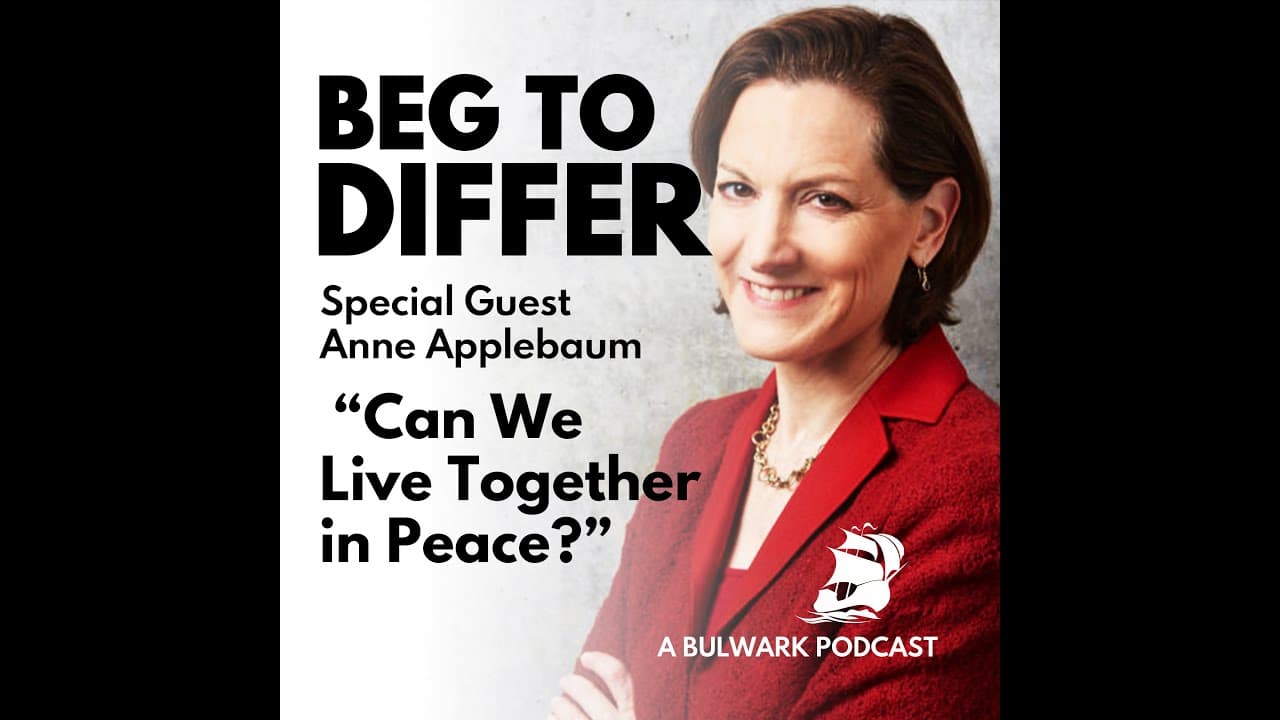
Can We Live Together in Peace?
TL;DR
The discussion touched upon the importance of coexistence, conflict resolution, and the role of trusted messengers in a divided society.
Transcript
welcome to beg to differ the bulwark's weekly roundtable discussion featuring civil conversation across the political spectrum from center left to center right i'm mona charon syndicated columnist and policy editor at the bulwark and i'm joined by our regulars bill gallston of the brookings institution in the wall street journal linda chavez of the... Read More
Key Insights
- 📽️ Coexistence should be prioritized in a divided society, focusing on common projects and issues unrelated to political divides.
- 🌉 Drawing from examples of conflict resolution in other countries, techniques such as finding trusted messengers and avoiding divisive arguments can help bridge gaps between opposing factions.
- ✊ The role of individuals like Alexei Navalny in inspiring movements against corruption showcases the power of bravery and personal accountability in driving political change.
- 🦔 The internet and social media can be a double-edged sword, both mobilizing positive movements and contributing to instability through the spread of misinformation.
- 🧑⚕️ Addressing vaccine hesitancy among healthcare workers requires targeted education and addressing concerns about safety and efficacy.
Install to Summarize YouTube Videos and Get Transcripts
Explore YouTube Video Summarizer or Get YouTube Transcript Extractor
Questions & Answers
Q: How can coexistence be achieved in a society with severe internal strains?
Coexistence can be achieved by focusing on common projects and issues of mutual benefit, avoiding divisive political arguments, and finding trusted messengers to communicate with individuals who do not trust mainstream sources.
Q: How can the example of Alexei Navalny inspire others to stand against corruption?
Navalny's act of bravery in exposing corruption and his willingness to face the consequences inspired many individuals who believe in political change to protest and voice their concerns against a system they perceive as unfair and corrupt.
Q: What role does the internet and social media play in mobilizing movements and creating instability?
The internet and social media platforms have the power to mobilize populations and create unity or unrest based on the narratives shared. While it can be a force for positive change, it can also contribute to the dissemination of misinformation and conspiracy theories, leading to destabilization.
Q: How can frontline healthcare workers and first responders' reluctance to get vaccinated be addressed?
Efforts should be made to educate and provide accurate information to frontline workers about the safety and importance of vaccination to address their concerns. It is crucial to overcome misinformation and promote the benefits of vaccination to protect public health.
Summary & Key Takeaways
-
The discussion focused on the idea of coexistence in a post-insurrection world and the need for finding ways to get along without resorting to violence.
-
Examples from past conflicts in Northern Ireland and Colombia were used to illustrate potential techniques for peace building and conflict resolution.
-
It was suggested that focusing on common projects unrelated to political and ideological divides can help foster unity and bridge the gap between opposing factions.
Read in Other Languages (beta)
Share This Summary 📚
Summarize YouTube Videos and Get Video Transcripts with 1-Click
Try YouTube Summary with ChatGPT & Claude or YouTube Transcript Generator
Explore More Summaries from The Bulwark 📚

Summarize YouTube Videos and Get Video Transcripts with 1-Click
Try YouTube Summary with ChatGPT & Claude or YouTube Transcript Generator