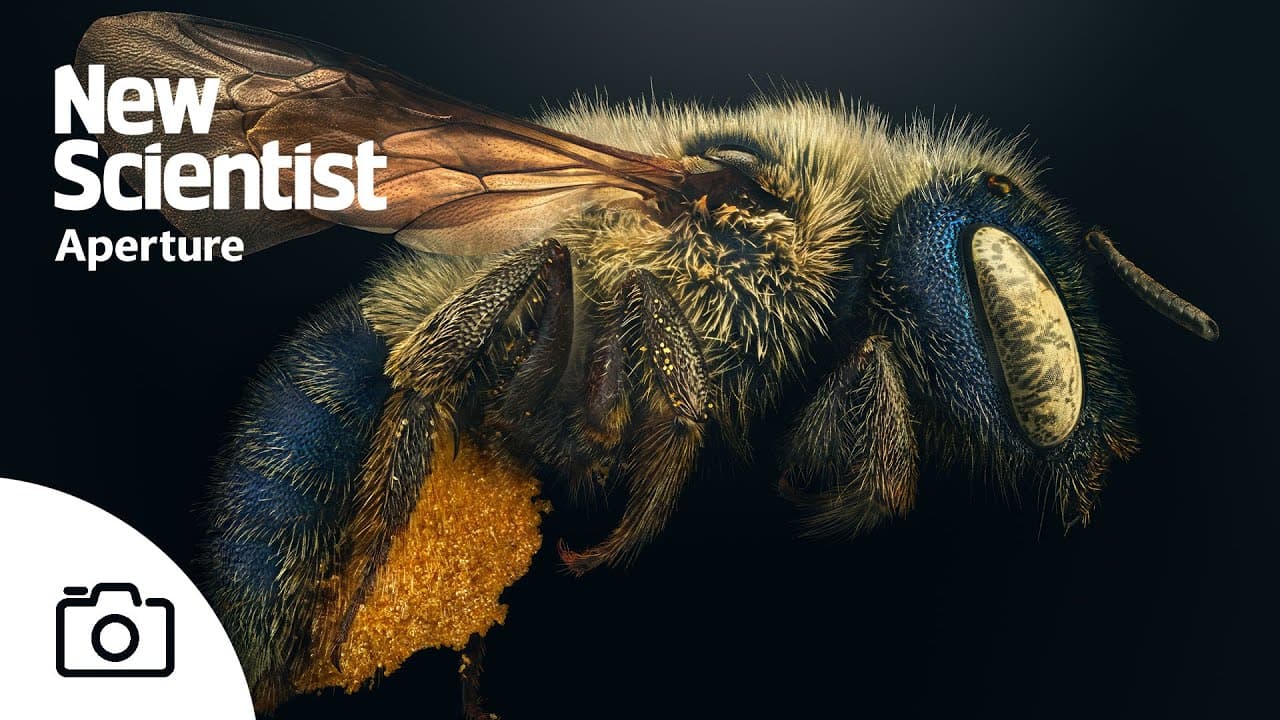
Endangered insects photographed in unprecedented detail
TL;DR
A photographer uses high magnification photography to showcase the impacts of insect decline and biodiversity loss.
Transcript
I'm not a great fan of using microscopes because you're hunched over you've got a focus wheel so you can only see one part of the insect in focus at a time I've been shooting this kind of high magnification photography for over 10 maybe 12 years now with my images you've got a three meter print on the wall in perfect clarity perfect Focus from fron... Read More
Key Insights
- ✋ High magnification photography enables the public to visualize the impacts of insect decline and biodiversity loss.
- 🥳 The collaboration with the American Museum of Natural History allows for the celebration and consumption of their extensive insect collections.
- 👏 The photographer aims to use his images as educational tools in schools and museums to raise awareness about insect decline.
- ❓ Insect decline is not just a threat to insects; it also has significant ramifications for human survival.
- 🌸 Recognizable insect species are included in the project to emphasize their vulnerability and the potential loss.
- 🫵 The photographer's images capture the attention of viewers by presenting insects in unique perspectives.
- 👻 The process of photo stacking allows for detailed images that showcase every tiny feature of the specimens.
Install to Summarize YouTube Videos and Get Transcripts
Explore YouTube Video Summarizer or Get YouTube Transcript Extractor
Questions & Answers
Q: How does high magnification photography help educate the public about insect decline?
High magnification photography allows viewers to see the intricate details of insects affected by decline, creating a visual impact that raises awareness about the issue.
Q: What is the significance of using specimens from the American Museum of Natural History?
The collaboration enables the museum to highlight insect decline, while the photographer helps bridge the gap between the museum's collections and the public, allowing them to experience the specimens in a unique way.
Q: How does photo stacking work in high magnification photography?
Photo stacking involves taking numerous shots of a specimen, with each shot focused on a different depth plane. These shots are then merged to create one image with perfect focus and clarity throughout.
Q: What are the main causes of insect decline?
Human activities such as pesticide use, loss of habitat, aggressive agriculture, and climate change are the primary factors contributing to insect decline.
Summary & Key Takeaways
-
The photographer has been capturing high magnification insect photography for over a decade, focusing on educating the public about insect decline and biodiversity loss.
-
The latest project, "Extinct and Endangered," showcases 40 specimens from the American Museum of Natural History's collections, ranging from extinct species to those in breeding programs.
-
The process of photo stacking involves taking over 10,000 shots to create detailed images that highlight the intricate features of the specimens.
Read in Other Languages (beta)
Share This Summary 📚
Summarize YouTube Videos and Get Video Transcripts with 1-Click
Try YouTube Summary with ChatGPT & Claude or YouTube Transcript Generator
Explore More Summaries from New Scientist 📚


Summarize YouTube Videos and Get Video Transcripts with 1-Click
Try YouTube Summary with ChatGPT & Claude or YouTube Transcript Generator