Maths Elementary Shapes part 1 (Introduction) CBSE Class 6 Mathematics VI
TL;DR
This video explains the concept of elementary shapes, including line segments, angles, triangles, and quadrilaterals, and how they form the basis of all other shapes.
Transcript
hello friends this video on understanding elementary shapes part one is brought to you by example.com no more fear from exam topics to be covered in this lesson are introduction line segments angles wherein we will discuss about measurement of angles various types of angles like acute angle right angle obtuse angle straight angle reflex angle and c... Read More
Key Insights
- 🔺 Elementary shapes like line segments, angles, triangles, and quadrilaterals are the foundation of geometry.
- 💠 Elementary shapes have distinct characteristics such as size, pattern, and structure that differentiate them from each other.
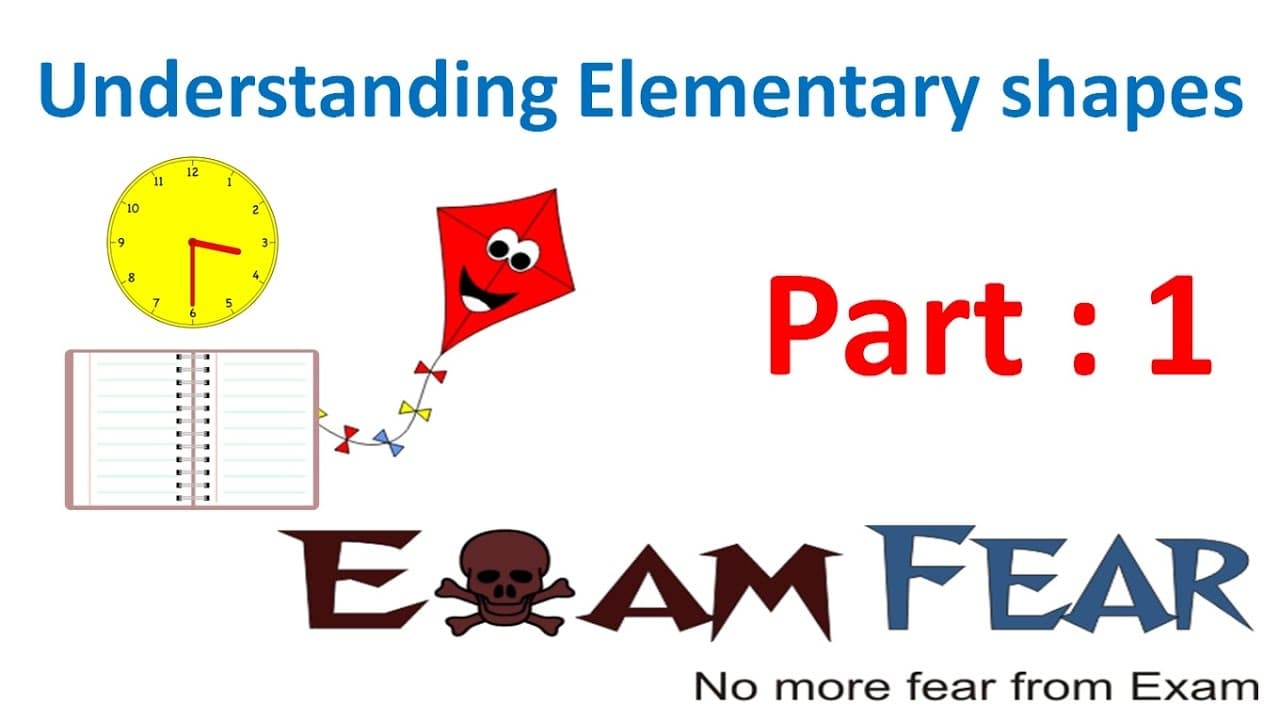
- ⏰ Various everyday objects, such as notebooks, torches, doors, and clocks, can be categorized as elementary shapes.
- 💠 Understanding elementary shapes is essential as they form the basis for creating more complex shapes.
- 💠 By combining or manipulating elementary shapes, we can create a wide variety of shapes.
- 🛟 The video highlights specific examples of elementary shapes found in everyday life, like triangles, rectangles, and circles.
- 🏑 Elementary shapes are used in different fields, including architecture, design, and engineering.
Install to Summarize YouTube Videos and Get Transcripts
Explore YouTube Video Summarizer or Get YouTube Transcript Extractor
Questions & Answers
Q: What are elementary shapes?
Elementary shapes are basic geometric shapes such as line segments, angles, triangles, and quadrilaterals that serve as building blocks for all other shapes.
Q: How are elementary shapes different from each other?
Elementary shapes differ in terms of their size, pattern, and structure, which make them distinct from one another.
Q: How are line segments related to elementary shapes?
Line segments are also elementary shapes. They are straight lines connecting two points, and they form the basis for other geometric shapes.
Q: Can you provide examples of everyday objects that are shaped like elementary shapes?
Yes, some examples include notebooks (rectangles), torches (rays of light), doors (rectangles), kites (quadrilaterals), wall clocks (circles), and bangles (circles).
Summary & Key Takeaways
-
The video introduces elementary shapes such as line segments, angles, triangles, and quadrilaterals.
-
It emphasizes that these shapes are different from each other based on their size, pattern, and structure.
-
The video highlights specific examples of elementary shapes in everyday objects like notebooks, torches, doors, kites, clocks, and bangles.
Read in Other Languages (beta)
Share This Summary 📚
Summarize YouTube Videos and Get Video Transcripts with 1-Click
Try YouTube Summary with ChatGPT & Claude or YouTube Transcript Generator
Explore More Summaries from LearnoHub - Class 11, 12 📚


Summarize YouTube Videos and Get Video Transcripts with 1-Click
Try YouTube Summary with ChatGPT & Claude or YouTube Transcript Generator