Ethically, Should You Have a Baby?
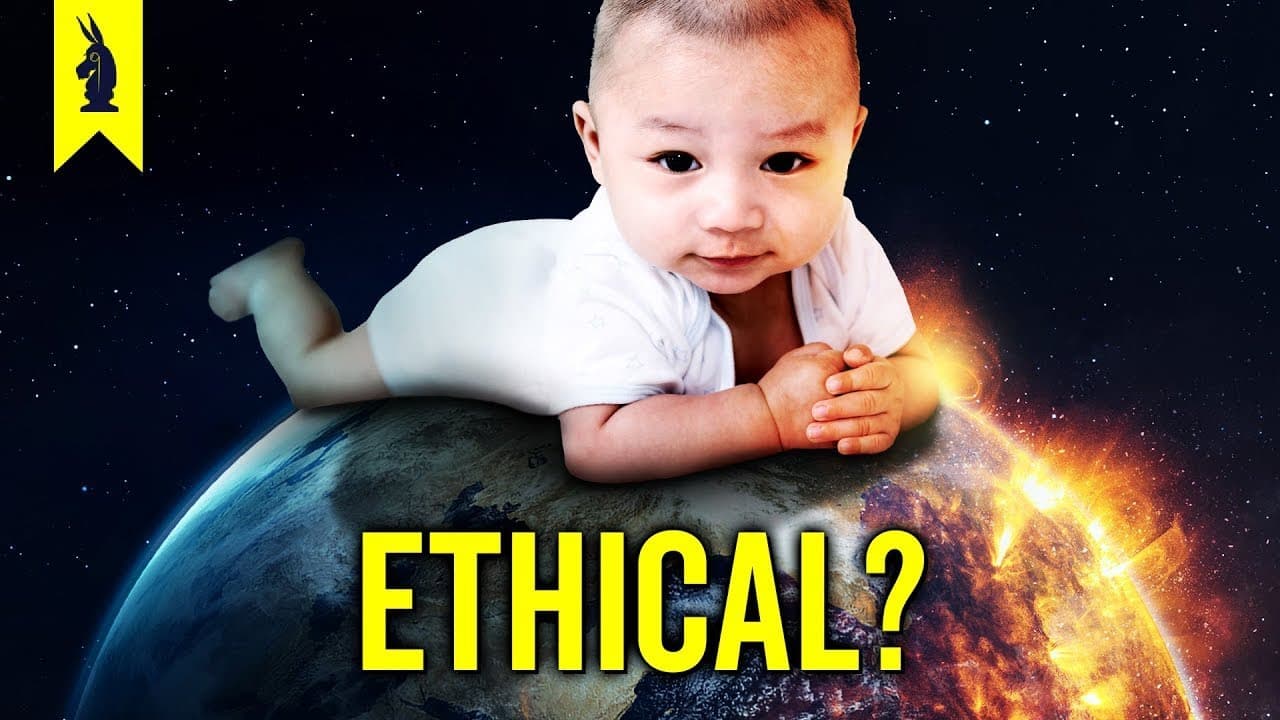
TL;DR
The morality of having children is scrutinized in light of environmental and philosophical concerns.
Transcript
(electronic music) - What's up guys, Michael here to talk about people, but make them small and bald. That's right, babies. And specifically, is it good to have them? Because increasingly, people are starting to think, "Not so much." Recently, public figures like Prince Harry and Meghan Markle or Alexandria Ocasio-Cortez are starting to argue that ... Read More
Key Insights
- 🥶 The rise of child-free lifestyles is influenced by moral considerations regarding overpopulation and environmental degradation.
- ❓ Philosophers such as Schopenhauer and Benatar offer critical insights on the ethics of reproduction, emphasizing the potential suffering inherent in existence.
- 🤨 Antinatalism raises challenging questions about the implications of bringing new lives into a world filled with hardships.
- 🤞 Opposing viewpoints highlight the potential of new generations to enact change, framing parenthood as an opportunity for hope and progress.
- 👶 Data suggests that having fewer children significantly reduces individual carbon emissions, addressing climate concerns.
- 🫵 Cultural shifts towards smaller families challenge traditional views on procreation, reflecting societal changes in perspectives on motherhood and fatherhood.
- 😨 Current parental responsibilities are compounded by fears of an uncertain future shaped by climate change and social issues.
Install to Summarize YouTube Videos and Get Transcripts
Explore YouTube Video Summarizer or Get YouTube Transcript Extractor
Questions & Answers
Q: What are some contemporary reasons people choose not to have children?
Many individuals and couples cite concerns about climate change and overpopulation as critical reasons for opting against parenthood. Reports indicate that one in four child-free Americans has decided to remain childless specifically due to the environmental impact of an increasing population and individual carbon footprints, acknowledging their role in contributing to climate issues.
Q: How do philosophers like David Benatar view the act of having children?
David Benatar advocates for antinatalism, arguing that bringing new beings into existence is inherently immoral due to the asymmetry between pleasure and pain. He claims that even bringing a child into a world without suffering is selfish, as life’s potential for pain outweighs its pleasures. Benatar believes that existence, in any form, exposes individuals to inevitable suffering.
Q: What does Hannah Arendt’s concept of natality entail?
Hannah Arendt’s concept of natality symbolizes the hopefulness of birth and the idea that every new child represents a fresh beginning. She argues that while humans may seemingly repeat past mistakes, children have the potential to make different choices. This belief posits that new generations can drive progress and change, offering a counter-narrative to more pessimistic views on procreation.
Q: What are the environmental impacts of having children according to the video?
The video emphasizes that having fewer children is one of the most significant actions individuals can take to reduce their carbon footprint. Studies indicate that while various lifestyle changes can lessen carbon emissions, the most substantial impact comes from parental decisions. The average carbon emissions saved by not having one child could equal nearly 58.6 tons a year.
Q: How does the video present the conflict between personal desire for children and societal concerns?
The video addresses the inner turmoil experienced by individuals desiring to have children while grappling with the moral and ethical implications of child-rearing in today's world. It juxtaposes the fulfillment and joy of parenthood with arguments surrounding sustainability and responsibility, prompting viewers to weigh personal dreams against the broader challenges of future generations.
Summary & Key Takeaways
-
The content discusses the ethical implications of having children, highlighting the growing voices advocating for smaller families or remaining child-free due to moral and environmental reasons.
-
Philosophers like Schopenhauer and Benatar have questioned the ethics of bringing new life into a world full of suffering, proposing that creating life may be selfish and irresponsible.
-
Counterarguments from thinkers like Hannah Arendt suggest that new generations hold the potential for positive change, presenting procreation as an act of hope rather than selfishness.
Read in Other Languages (beta)
Share This Summary 📚
Summarize YouTube Videos and Get Video Transcripts with 1-Click
Try YouTube Summary with ChatGPT & Claude or YouTube Transcript Generator