What is the GDP? - Explained for beginners!
TL;DR
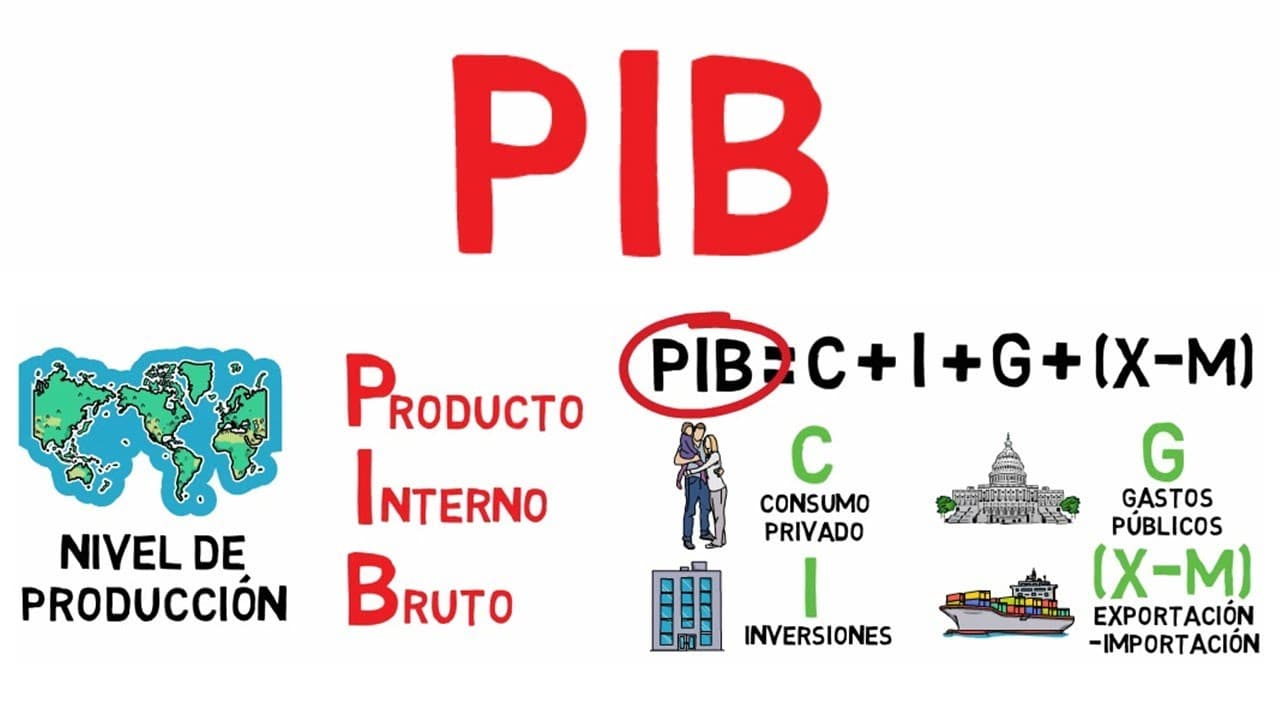
GDP measures a country's economic production and impacts personal and national growth.
Transcript
Economic growth must stop being our highest priority so as not to worsen the overconsumption of resources. Then, why doesn't it stop? The level of production in your country, my country or any country, is measured with the initials GDP. Gross Domestic Product. The economist Simon Kuznets was the one who created it in 1937 to capture in a si... Read More
Key Insights
- GDP, or Gross Domestic Product, measures the total economic production of a country, including production by foreign entities within its borders.
- The formula for GDP is GDP = C + I + G + (X-M), representing private consumption, investments, public expenditure, and net exports.
- GDP per capita is derived by dividing total GDP by the population, indicating the average economic output per person.
- GDP is crucial for assessing a country's economic health, growth, and comparison with other nations over time.
- Increasing GDP typically correlates with rising income, wages, and expenditures, fostering economic growth.
- Long-term GDP trends show continuous growth, driven by infinite human needs and demand for production.
- There is a growing concern that the benefits of GDP growth are being offset by negative environmental impacts.
- Despite the ecological concerns, individual and national interests often prioritize economic growth over sustainability.
Install to Summarize YouTube Videos and Get Transcripts
Explore YouTube Video Summarizer or Get YouTube Transcript Extractor
Questions & Answers
Q: What is GDP and why is it important?
GDP, or Gross Domestic Product, is a comprehensive measure of a country's economic production, including all goods and services produced within its borders, regardless of who produces them. It is important because it provides a clear picture of a nation's economic health, growth, and productivity, allowing for comparison over time and with other countries.
Q: How is GDP calculated?
GDP is calculated using the formula GDP = C + I + G + (X-M), where C represents private consumption, I stands for investments, G is public expenditure, and (X-M) denotes net exports, which is exports minus imports. This formula aggregates all economic activities within a country to provide a total economic output.
Q: What does GDP per capita indicate?
GDP per capita is an economic metric that divides a country's total GDP by its population, providing an average economic output per person. It is used to estimate the standard of living and economic productivity of individuals within a country, offering a more personal perspective on national economic performance.
Q: Why is GDP growth considered positive?
GDP growth is generally seen as positive because it indicates an increase in national income, which can lead to higher wages, increased consumer spending, and overall economic expansion. This growth cycle fosters improved living standards and economic prosperity, contributing to a nation's development and global competitiveness.
Q: What are the long-term trends of GDP?
Long-term trends of GDP typically show continuous growth, driven by the perpetual human desire for improved living standards and economic prosperity. This growth is fueled by increasing consumption, investment, and production to meet the infinite needs and demands of individuals and societies worldwide.
Q: What are the environmental concerns related to GDP growth?
The environmental concerns related to GDP growth stem from the overconsumption of resources and the ecological damage caused by relentless economic expansion. As GDP increases, so does the exploitation of natural resources, leading to environmental degradation and challenging the sustainability of continued economic growth.
Q: Why does economic growth remain a priority despite ecological concerns?
Economic growth remains a priority because it directly impacts living standards, employment, and national prosperity. Individuals and nations prioritize economic advancement to improve quality of life, often at the expense of environmental sustainability, due to the inherent competition and desire for better living conditions.
Q: How does GDP impact individual lives?
GDP impacts individual lives by influencing national income, wages, and economic opportunities. As GDP grows, it often leads to better job prospects, higher salaries, and increased consumer spending power, directly affecting personal and household economic well-being and contributing to the overall quality of life.
Summary & Key Takeaways
-
Gross Domestic Product (GDP) is a key economic indicator that measures a country's total production, including contributions from foreign entities operating domestically. It provides insights into national income, economic health, and growth trends, essential for comparing economic performance over time and against other countries.
-
The GDP formula, GDP = C + I + G + (X-M), represents private consumption, investments, public expenditure, and net exports. GDP per capita, calculated by dividing GDP by the population, offers an average measure of individual economic output, reflecting the standard of living in a country.
-
While GDP growth is often seen as positive, it raises concerns about resource overconsumption and environmental impact. Despite this, economic growth continues to be prioritized due to infinite human needs and the desire for improved living standards, highlighting the ongoing tension between economic and ecological interests.
Read in Other Languages (beta)
Share This Summary 📚
Summarize YouTube Videos and Get Video Transcripts with 1-Click
Try YouTube Summary with ChatGPT & Claude or YouTube Transcript Generator
Explore More Summaries from Kotaro en Español 📚
Summarize YouTube Videos and Get Video Transcripts with 1-Click
Try YouTube Summary with ChatGPT & Claude or YouTube Transcript Generator