How to Restore and Use an Antique Microscope
TL;DR
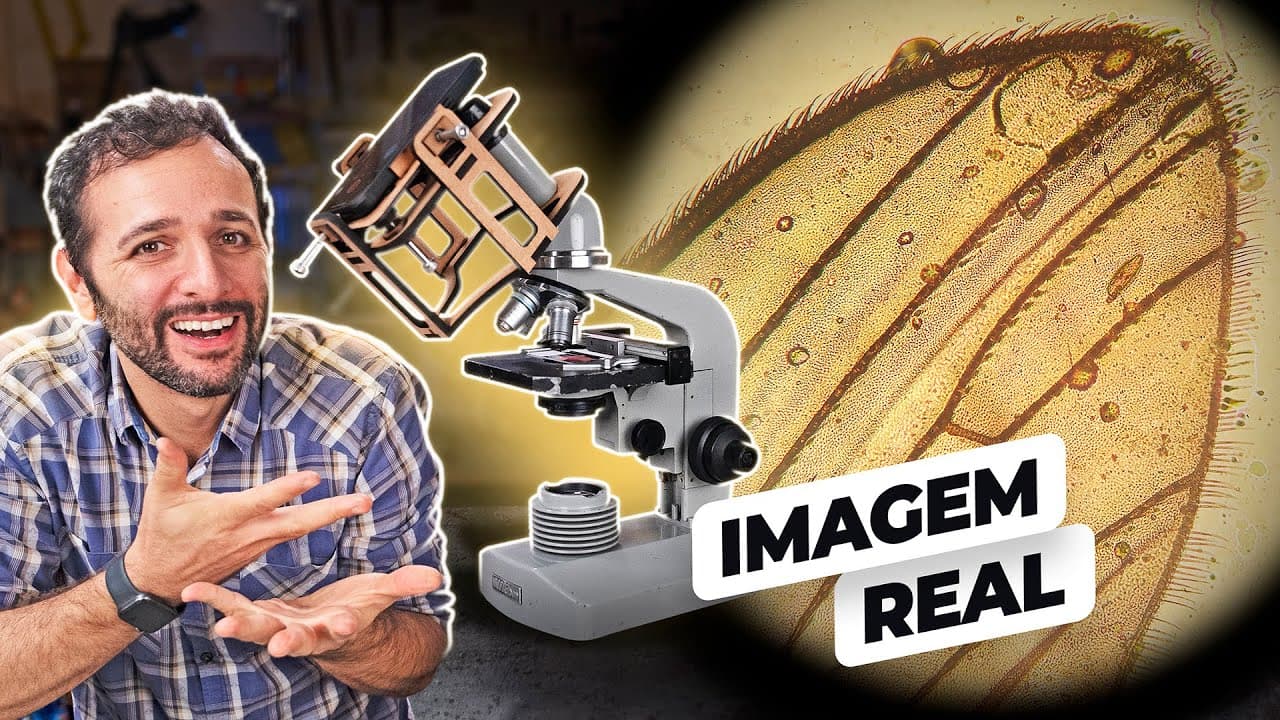
Restoring an antique microscope involves cleaning lenses, tightening screws, and replacing parts like the bulb. The refurbished microscope can reveal intricate details of various samples such as paper fibers, plant cells, and mosquito bristles. Proper maintenance and adjustments ensure optimal performance, allowing for detailed microscopic observations.
Transcript
Today we are going to restore a microscope from the good old days. I need to tell you that I've loved microscopes since I was a little kid. My brothers and I had a children's microscope and then we got a kit where you could assemble various optical instruments, like a spyglass, a kaleidoscope and even a microscope. There's a VHS video that my fathe... Read More
Key Insights
- Restoring a microscope requires thorough cleaning and part replacement.
- Microscope lenses need careful cleaning to ensure clear viewing.
- Replacing the bulb can be costly; alternatives like sewing machine bulbs may work.
- Fine and coarse adjustments are crucial for focusing on samples.
- Building a phone mount enables easy recording of microscope observations.
- Proper sample preparation is vital for clear microscopic viewing.
- Microscopes can reveal details like cell structures and insect anatomy.
- Light adjustments significantly impact the visibility of microscopic samples.
Install to Summarize YouTube Videos and Get Transcripts
Explore YouTube Video Summarizer or Get YouTube Transcript Extractor
Questions & Answers
Q: How to restore an antique microscope?
Restoring an antique microscope involves disassembling it to clean lenses and internal parts, tightening loose screws, and replacing broken or missing components like the bulb. Ensuring the lenses are clean and properly aligned is crucial for clear viewing. Regular maintenance helps keep the microscope in optimal condition.
Q: What are the key components of a microscope?
Key components of a microscope include the eyepiece, objective lenses, stage, light source, and focusing knobs. The eyepiece magnifies the image, while objective lenses provide different magnification levels. The stage holds the sample, and the light source illuminates it. Focusing knobs adjust the distance between the lenses and the sample.
Q: Why is light adjustment important in microscopy?
Light adjustment is crucial in microscopy because it affects the visibility and contrast of the sample being observed. Proper light intensity and direction enhance the clarity of details, making it easier to distinguish structures within the sample. Adjusting light helps in achieving optimal viewing conditions for different types of samples.
Q: How does a microscope magnify samples?
A microscope magnifies samples using a combination of lenses. The objective lens, positioned close to the sample, provides initial magnification. The eyepiece lens further magnifies this image, allowing for detailed observation. The total magnification is the product of the magnification levels of the objective and eyepiece lenses.
Q: What is the role of the condenser in a microscope?
The condenser in a microscope focuses and directs light onto the sample. It can include a diaphragm to adjust light intensity and filters to modify light color. Properly adjusting the condenser enhances image contrast and clarity, making it easier to observe fine details within the sample.
Q: How to prepare samples for microscopic observation?
To prepare samples for microscopic observation, place the specimen on a glass slide and cover it with a coverslip. This flattens the sample, allowing for even focus. Adding a drop of water can help spread the sample and reduce air bubbles. Proper preparation is essential for clear and detailed viewing.
Q: What can be observed under a microscope?
Under a microscope, one can observe a wide range of samples, including plant cells, insect anatomy, paper fibers, and even human cells like red blood cells. Microscopes reveal intricate details that are invisible to the naked eye, providing insights into the structure and function of various biological and non-biological materials.
Q: How to record microscope observations with a smartphone?
To record microscope observations with a smartphone, build a mount to securely attach the phone to the microscope's eyepiece. Ensure the phone's camera is aligned with the eyepiece lens. Adjust the focus and light settings on the microscope for optimal image quality. This setup allows for easy and precise recording of observations.
Summary & Key Takeaways
-
Restoring an antique microscope involves cleaning and replacing parts like lenses and bulbs. Proper adjustments enhance focus and viewing quality. A phone mount allows recording of observations. (50 words)
-
Microscope restoration reveals intricate details of samples such as plant cells and insect anatomy. Adjusting light and focus is crucial for clear viewing. Building a phone mount facilitates easy recording. (50 words)
-
The video demonstrates the restoration process, highlighting the importance of maintenance and adjustments. The refurbished microscope provides detailed insights into various samples, showcasing the beauty of microscopic observation. (50 words)
Read in Other Languages (beta)
Share This Summary 📚
Summarize YouTube Videos and Get Video Transcripts with 1-Click
Try YouTube Summary with ChatGPT & Claude or YouTube Transcript Generator
Explore More Summaries from Manual do Mundo 📚

Summarize YouTube Videos and Get Video Transcripts with 1-Click
Try YouTube Summary with ChatGPT & Claude or YouTube Transcript Generator