What are the White Crusts on Whales? You Won't Believe Your Eyes!
TL;DR
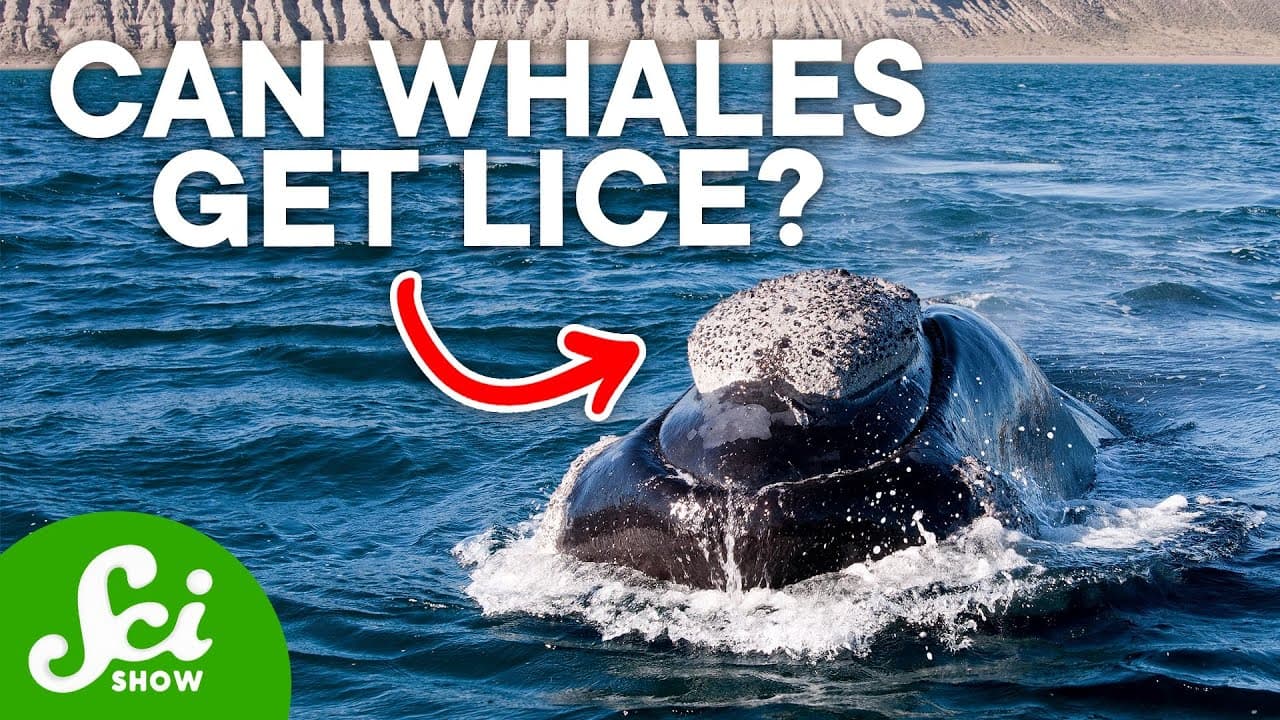
White patches on whales' heads actually contain crustaceans called cyamids, which can provide unique insights into whale populations and behavior.
Transcript
Thanks to Brilliant for supporting this episode of SciShow. Go to Brilliant.org/SciShow to check out their course on Statistics Fundamentals. {♫Intro♫} Look at pictures of whales -- especially right whales -- and you might notice characteristic white patches on their heads and faces. You might think these are just weird skin growths. Which, th... Read More
Key Insights
- 🐳 Callosities on right whales' heads are unique and act as identification markers for individual whales.
- 🐳 Cyamids, known as whale lice, live on these callosities and can provide valuable information about the whales.
- 🐳 Whale lice might help the host whale locate food through their movements on the sensory hairs within the callosities.
- 🐳 By studying the genetic variations of whale lice populations, scientists can infer the evolutionary history of different species of right whales.
- 🐳 The presence of different species of whale lice on a right whale can indicate its health status.
- 🐳 Callosities and whale lice provide important insights into the conservation and population monitoring of right whales.
- 🐳 Whale lice can be transferred between whales through close contact, such as mother to calf during nursing.
Install to Summarize YouTube Videos and Get Transcripts
Explore YouTube Video Summarizer or Get YouTube Transcript Extractor
Questions & Answers
Q: How do scientists use callosities to identify individual whales?
The unique patterns of callosities on a whale's head act like a fingerprint, allowing scientists to recognize and track individual whales over time.
Q: Are whale lice harmful to the host whales?
Whale lice don't seem to cause significant harm to their host whales. In fact, they might even provide benefits, such as potentially aiding in the whales' ability to locate food.
Q: What can the presence of orange cyamids on a right whale indicate?
Orange cyamids are typically found on young or sick right whales. Therefore, their presence can indicate the health status of a right whale.
Q: How do whale lice help scientists understand the genetic history of whales?
By studying the genetic variations among whale lice populations on different species of right whales, scientists can infer the history of the whales' evolution and divergence.
Summary & Key Takeaways
-
Right whales develop white patches called callosities on their heads, which are unique to each individual whale and help scientists identify them.
-
These callosities are covered in cyamids, a type of crustacean known as whale lice, which feed on the dead skin of whales.
-
Scientists are still trying to understand the relationship between the whales and the whale lice, including whether they help the whales locate food.
Read in Other Languages (beta)
Share This Summary 📚
Summarize YouTube Videos and Get Video Transcripts with 1-Click
Try YouTube Summary with ChatGPT & Claude or YouTube Transcript Generator
Explore More Summaries from SciShow 📚


Summarize YouTube Videos and Get Video Transcripts with 1-Click
Try YouTube Summary with ChatGPT & Claude or YouTube Transcript Generator