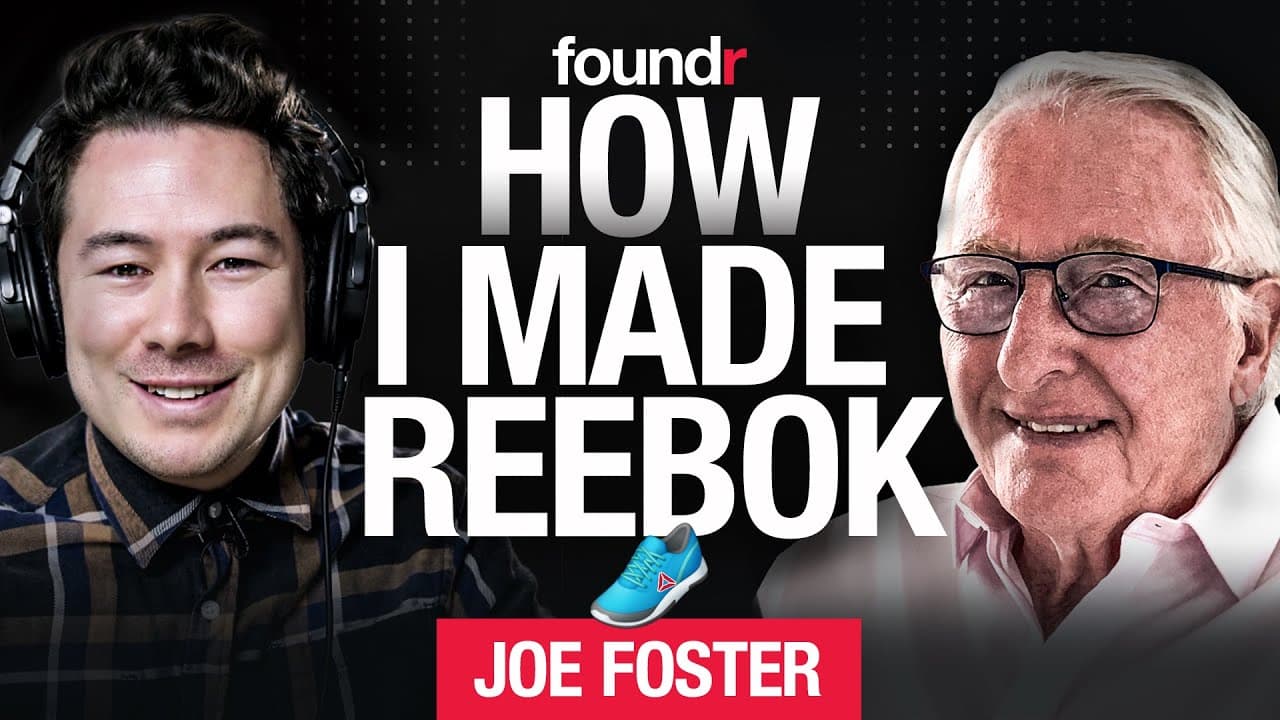
How Joe Foster Built Reebok Into a Global Brand
TL;DR
Joe Foster transformed his family business into Reebok, a global brand, by focusing on athletes and consumer demand. Starting in 1958, he navigated challenges like trademark issues and production setbacks, ultimately achieving success through innovation and strategic partnerships, particularly in the U.S. market with Paul Fireman.
Transcript
i realized then that i shouldn't be selling to a retailer i should be selling to a consumer i needed to sell to athletes those are my customers and uh if i if the customer wanted it they would ask for it and the retailer would have to stock it hey founder fam welcome back to the founder podcast if you're new here make sure you smash the like button... Read More
Key Insights
- Joe Foster realized the importance of selling directly to consumers, particularly athletes, rather than just retailers.
- Reebok's origin traces back to Joe's grandfather, who pioneered spiked running shoes in 1895.
- The brand name 'Reebok' was chosen for its uniqueness and was originally in the B section for trademarks.
- Reebok's breakthrough in the U.S. was facilitated by achieving a five-star rating from Runner's World magazine.
- The aerobics boom in the 1980s, particularly in Los Angeles, significantly accelerated Reebok's growth.
- Paul Fireman played a crucial role in distributing Reebok in the U.S., leading to exponential sales growth.
- Reebok became a household name through strategic marketing, including celebrity endorsements.
- Despite challenges, including production issues, Reebok's adaptability and focus on consumer needs drove its success.
Install to Summarize YouTube Videos and Get Transcripts
Explore YouTube Video Summarizer or Get YouTube Transcript Extractor
Questions & Answers
Q: How did Joe Foster start Reebok?
Joe Foster started Reebok in 1958 with his brother, transforming their family business by focusing on athletes and consumer demand. They initially faced challenges with trademark issues and production but eventually succeeded by innovating and securing strategic partnerships, particularly in the U.S. market.
Q: What was the key to Reebok's success in the U.S. market?
Reebok's success in the U.S. market was largely due to achieving a five-star rating from Runner's World magazine in 1979, which significantly boosted its credibility and demand. This success was further supported by strategic partnerships, particularly with Paul Fireman, who facilitated distribution and growth.
Q: How did the aerobics boom impact Reebok's growth?
The aerobics boom in the 1980s, especially in Los Angeles, significantly accelerated Reebok's growth. The brand capitalized on this trend by introducing a specialized aerobic shoe, which gained popularity among women and celebrities, further boosting Reebok's visibility and sales.
Q: What challenges did Reebok face during its growth?
Reebok faced several challenges, including trademark issues, production setbacks, and market competition. Despite these, the brand's adaptability, focus on consumer needs, and strategic marketing efforts, including celebrity endorsements, helped overcome these obstacles and drive global success.
Q: How did Reebok become a household name?
Reebok became a household name through strategic marketing efforts, including celebrity endorsements and participation in high-profile events. The brand's focus on innovation, consumer needs, and strategic partnerships, particularly in the U.S. market, also played a crucial role in its widespread recognition.
Q: Why was the name 'Reebok' chosen for the brand?
The name 'Reebok' was chosen for its uniqueness and was originally found in a Webster's American Dictionary by Joe Foster. The name, referring to a small South African gazelle, was appealing and free for registration, making it a distinctive choice for the brand.
Q: What role did Paul Fireman play in Reebok's growth?
Paul Fireman played a crucial role in Reebok's growth by facilitating its distribution in the U.S. market. His involvement helped secure a significant market presence and contributed to the brand's exponential sales growth, particularly after achieving a five-star rating from Runner's World magazine.
Q: How did Reebok address production challenges?
Reebok addressed production challenges by partnering with manufacturers like Barter and later sourcing from the Far East for better pricing and volume. Despite initial setbacks, such as issues with midsole materials, Reebok's strategic partnerships and adaptability helped overcome these challenges.
Summary & Key Takeaways
-
Joe Foster transformed a family business into Reebok, a global brand, by focusing on consumer demand and strategic partnerships. Starting in 1958, he navigated challenges like trademark issues and production setbacks, ultimately achieving success through innovation and a focus on athletes.
-
Reebok's major breakthrough came with a five-star rating from Runner's World magazine, leading to significant growth in the U.S. market. The aerobics boom in the 1980s further accelerated Reebok's growth, making it a household name.
-
Strategic marketing, including celebrity endorsements, played a crucial role in Reebok's success. Despite production challenges and market competition, Reebok's adaptability and focus on consumer needs drove its global success.
Read in Other Languages (beta)
Share This Summary 📚
Summarize YouTube Videos and Get Video Transcripts with 1-Click
Try YouTube Summary with ChatGPT & Claude or YouTube Transcript Generator
Explore More Summaries from Foundr 📚






Summarize YouTube Videos and Get Video Transcripts with 1-Click
Try YouTube Summary with ChatGPT & Claude or YouTube Transcript Generator