Design Principles for Fashion: REPETITION (McQueen Case Study)
TL;DR
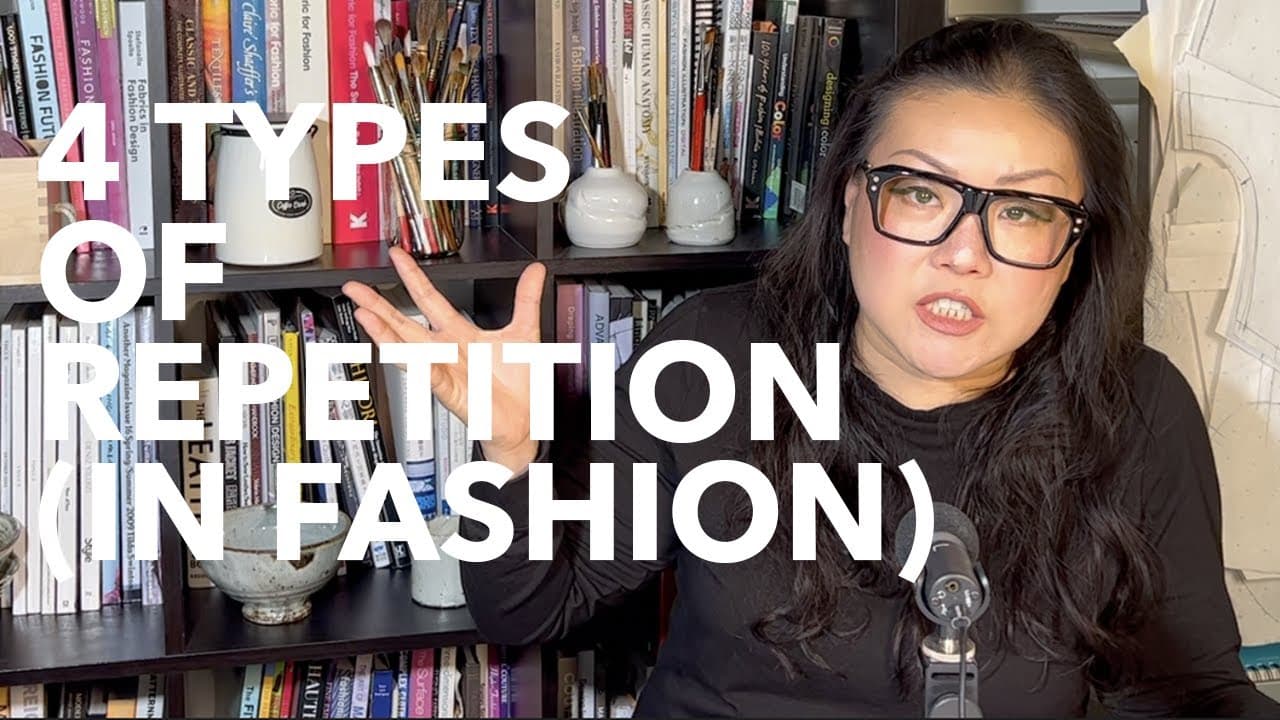
Learn how repetition is used in fashion design, specifically in Alexander McQueen's creations, to create visual interest and guide the viewer's gaze across the garment.
Transcript
hey hey party people welcome back to my super geeky series on principles of design as applied to Fashion the first in this series we discussed emphasis and how to use the design principle of emphasis in fashion design using scaparelli as a case study today we are going to discuss repetition and how repetition can be applied to fashion design and us... Read More
Key Insights
- 🫵 Repetition in fashion design creates visual interest by repeating elements over a garment's surface, guiding the viewer's gaze.
- 👣 McQueen's designs showcase different types of repetition, including print patterns, lace trims, and motif elements like feathers.
- 🎨 Tessellation, such as the houndstooth pattern, is a common type of repetition used in fashion design.
- 😃 Ambiguity in design adds an element of surprise and intrigue, with various unrelated elements strategically placed to engage the viewer's eye.
- 🎨 Understanding design principles, such as repetition, motif, tessellation, and ambiguity, can enhance appreciation for fashion design and help identify these elements in the world around us.
Install to Summarize YouTube Videos and Get Transcripts
Explore YouTube Video Summarizer or Get YouTube Transcript Extractor
Questions & Answers
Q: How does repetition create visual interest in fashion design?
Repetition in fashion design allows for elements to be repeated over a garment's surface, capturing the viewer's attention and guiding their gaze across the entire design. It creates a sense of visual interest and dynamism.
Q: What are some examples of repetition in McQueen's designs?
McQueen utilized repetition through various print patterns, such as mushroom and flower prints, as well as lace trims that repeated in a grid formation. These elements were strategically placed to create visual interest across the garment.
Q: What is the difference between repetition and motif in fashion design?
Repetition involves repeating the same element over and over again, while motif involves using multiple closely related elements arranged in a non-perfect grid. Motif allows for more variation and dynamic visual texture compared to repetition.
Q: How does ambiguity contribute to the overall design aesthetic?
Ambiguity in fashion design incorporates various elements that are not necessarily related, creating a sense of discordance and visual interest. It leads the viewer's eye to continuously move across the garment, exploring different elements and details.
Summary & Key Takeaways
-
Repetition in fashion design focuses on repeating elements over a garment's surface, creating nonfocal point designs that encourage the viewer to look all over.
-
McQueen's garments showcase repetition through prints, such as mushroom and flower prints, as well as lace trims that repeat in a grid formation.
-
Motif in fashion design involves using multiple closely related elements, such as graffiti lines or feathers, arranged in a non-perfect grid across a garment.
-
Tessellation is a type of repetition where all the pieces of a print perfectly interlock, such as the iconic houndstooth pattern frequently used by McQueen.
-
Ambiguity in fashion design involves incorporating various elements that are not necessarily related or similar, creating visual interest and making the viewer's eye move across the garment.
Read in Other Languages (beta)
Share This Summary 📚
Summarize YouTube Videos and Get Video Transcripts with 1-Click
Try YouTube Summary with ChatGPT & Claude or YouTube Transcript Generator
Explore More Summaries from Zoe Hong 📚

Summarize YouTube Videos and Get Video Transcripts with 1-Click
Try YouTube Summary with ChatGPT & Claude or YouTube Transcript Generator