Can we choose to fall out of love? | Dessa

TL;DR
In this content, the speaker, Dessa, discusses her experience using neurofeedback to overcome the fixation and intense emotions associated with a past romantic relationship.
Transcript
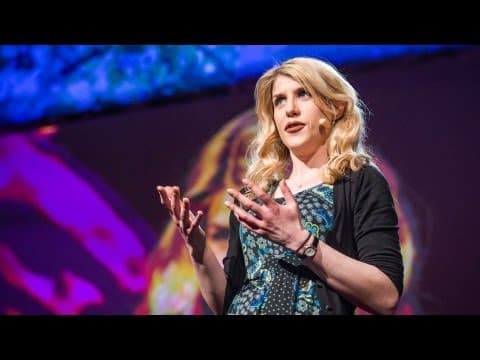
Hello, my name is Dessa, and I'm a member of a hip-hop collective called Doomtree. I'm the one in the tank top. (Laughter) And I make my living as a performing, touring rapper and singer. When we perform as a collective, this is what our shows look like. I'm the one in the boots. There's a lot of jumping. There's a lot of sweating. It's loud. It's ... Read More
Key Insights
- 🎤 Dessa's music as a solo artist tends to be more melancholy compared to when she performs with her hip-hop collective Doomtree.
- 📚 Fans often turned to Dessa's sad love songs for comfort and assistance during breakups.
- 💔 Dessa struggled to move on from a long-term relationship and sought a scientific solution to help her forget her ex.
- 🧠 Using fMRI technology, Dessa was able to identify the specific regions in her brain associated with love and romantic feelings.
- 🔎 Through neurofeedback, Dessa trained her brain to regulate and reduce activity in the areas linked to her romantic attachment.
- 💔 After completing the treatment, Dessa found that her fixation on her ex had diminished and more positive feelings had emerged.
- 🙌 Dessa felt a sense of accomplishment and a deeper understanding of love after witnessing her brain activity shift.
- 💡 Dessa's experience highlights the complex and multidimensional nature of love, challenging conventional notions of romance and Valentine's hearts.
Install to Summarize YouTube Videos and Get Transcripts
Explore YouTube Video Summarizer or Get YouTube Transcript Extractor
Questions & Answers
Q: How does Dessa describe her experience as a performer in the hip-hop collective Doomtree?
Dessa describes their shows as high-energy, loud, and filled with jumping and sweating. She also mentions the occasional unintentional and intentional body checks on stage, comparing the atmosphere to a hybrid between an intramural hockey game and a concert.
Q: Why did Dessa's mom comment on the melancholy sound of her solo music?
Dessa's mom commented on the sadness in her solo music because she had often written sad love songs. Dessa's mom expressed concern and wondered why her music was consistently on the melancholy side.
Q: How did Dessa's fans respond to her sad love songs?
Dessa's fans responded to her sad love songs by reaching out to her for help with their own breakups. They requested new music or a book to assist them in coping with their own romantic devastation.
Q: What sparked Dessa's interest in studying the coordinates of love in the brain?
Dessa became interested in studying the coordinates of love in the brain after watching a TED Talk by Dr. Helen Fisher. Dr. Fisher mentioned her ability to map the coordinates of love in the human brain, which inspired Dessa to explore if she could use this information to overcome her own romantic struggles.
Q: How did Dessa use fMRI technology to study her own brain in love?
Dessa reached out on Twitter to find access to an fMRI lab and connected with Dr. Cheryl Olman from the University of Minnesota's Center for Magnetic Resonance Research. They recreated Dr. Fisher's protocol, with Dessa being the participant. The fMRI machine tracked the progress of deoxygenated iron in her blood, providing high-resolution images of her brain and identifying the regions associated with love.
Q: What treatment did Dessa undergo to change her brain's response to love?
Dessa underwent a treatment called "neurofeedback" to train her brain. This involved using electrodes to detect her brainwaves and displaying real-time visuals indicating hyperactive, hypoactive, and healthy threshold brain regions. By staying within the healthy threshold, Dessa aimed to train her brain to respond appropriately to her circumstances, particularly in long-term, loving relationships.
Q: What emotions did Dessa feel after completing the neurofeedback treatment?
After completing the neurofeedback treatment, Dessa felt that the benevolent feelings in her relationships had risen to the surface, while feelings of fixation and less-generous emotions became less present. Though her feelings remained complex, she felt the resequencing of her emotions was significant and valued the opportunity to better understand love through the treatment and research process.
Q: How did Dessa creatively commemorate her understanding of love?
Dessa had the opportunity to 3D-print her caudate, a region associated with love in the brain. She turned it into a necklace and sold it at her shows. Additionally, she and her friends created an enormous disco ball of the 3D-printed caudate that could descend from the ceiling during her performances, symbolizing her unique understanding of love and the journey she had undergone.
Summary & Key Takeaways
-
The speaker is a member of a hip-hop collective called Doomtree and performs high-energy shows with lots of jumping and sweating.
-
The speaker wrote many sad love songs and decided to use an fMRI machine to track the activity in her brain when looking at pictures of her ex-boyfriend.
-
Through neurofeedback training, the speaker was able to regulate her brain activity and reduce her fixation on her ex-boyfriend.
Read in Other Languages (beta)
Share This Summary 📚
Summarize YouTube Videos and Get Video Transcripts with 1-Click
Try YouTube Summary with ChatGPT & Claude or YouTube Transcript Generator
Explore More Summaries from TED 📚




Summarize YouTube Videos and Get Video Transcripts with 1-Click
Try YouTube Summary with ChatGPT & Claude or YouTube Transcript Generator