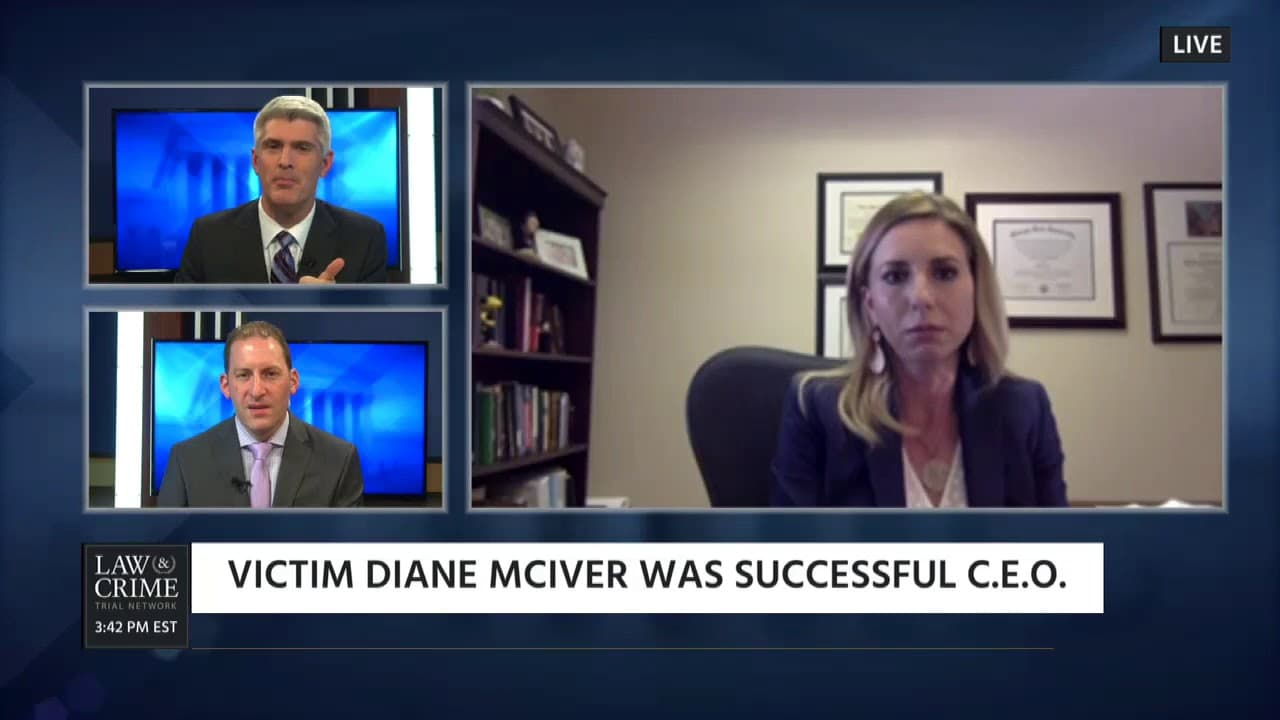
McIver Defense Lawyer Amanda Clark Palmer Talks Tex McIver Verdict On Law & Crime Network
TL;DR
Defense attorney Amanda Clarke Palmer reacts to the surprising verdict in the Tex McIver murder case, expressing her belief that the jury's verdict is logically inconsistent.
Transcript
welcome back everybody we are gonna break out of testimony in the shaun grade case in ohio if you would like to continue watching that you can always go to our raw feed on law and crime comm click on the live tab or look on the right hand side of your screen and there you'll see all the raw feeds as they come in to us the reason we're gonna break o... Read More
Key Insights
- 💼 The jury's verdict in the Tex McIver murder case is surprising and appears to be inconsistent.
- 👏 The use of an Allen charge and the jury's experiments with evidence raise legal concerns.
- 🧑🏭 Intent and the distinction between intent to injure and intent to kill are essential factors in the case.
Install to Summarize YouTube Videos and Get Transcripts
Explore YouTube Video Summarizer or Get YouTube Transcript Extractor
Questions & Answers
Q: Why was defense attorney Amanda Clarke Palmer surprised by the verdict?
Palmer was surprised because the jury's not guilty verdict on malice murder charges, combined with their guilty verdict on aggravated assault and felony murder charges, appeared to be logically inconsistent.
Q: How is the intent to injure in the aggravated assault charge different from intent to kill in the malice murder charge?
According to Palmer, the intent to injure implies reckless conduct, while intent to kill would require a different level of intent. The jury's not guilty verdict on malice murder suggests they did not believe Tex McIver intended to kill his wife.
Q: Why did the judge leave the aggravated assault charge on the indictment?
Palmer explains that the judge had no option to exclude the aggravated assault charge from the indictment unless they were granting a directed verdict on the malice murder charge, which they did not.
Q: How did the jury conduct their own experiments and how does it impact the confrontation clause and burden of proof?
The jury requested to examine the car and the gun involved in the case, which defense attorneys objected to. This raises issues with the confrontation clause as jurors become expert witnesses that cannot be cross-examined. It also suggests that the state did not prove its case beyond a reasonable doubt.
Summary & Key Takeaways
-
Defense attorney Amanda Clarke Palmer expresses surprise at the jury's not guilty verdict on malice murder charges and guilty verdict on aggravated assault and felony murder charges.
-
She believes the jury's verdict is inconsistent and unfair to Tex McIver, her client.
-
Palmer discusses the legal implications, including the issue of intent, reckless conduct, and the use of an Allen charge.
Read in Other Languages (beta)
Share This Summary 📚
Summarize YouTube Videos and Get Video Transcripts with 1-Click
Try YouTube Summary with ChatGPT & Claude or YouTube Transcript Generator
Explore More Summaries from Law&Crime Network 📚


Summarize YouTube Videos and Get Video Transcripts with 1-Click
Try YouTube Summary with ChatGPT & Claude or YouTube Transcript Generator