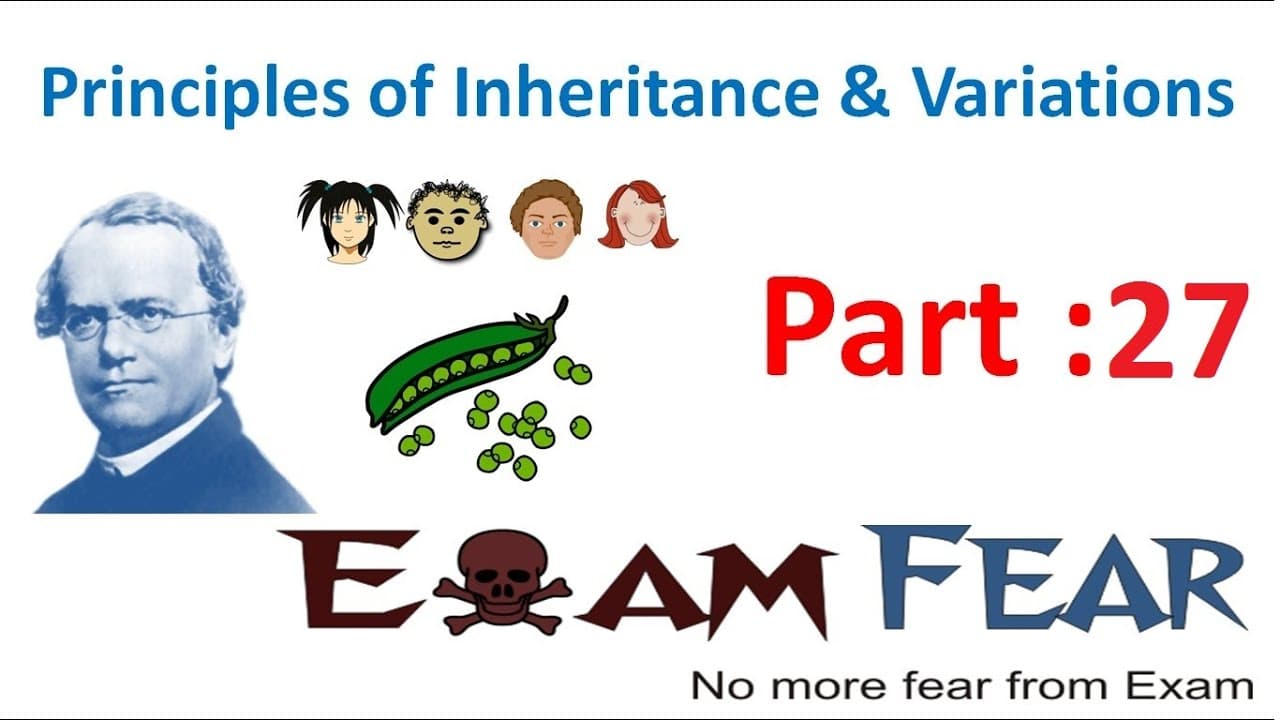
Biology Inheritance Principle part 27 (Linkage) class 12 XII
TL;DR
Linkage in genetics refers to the physical association between genes located on the same chromosome, resulting in the inheritance of linked genes together and affecting the independent assortment of traits.
Transcript
hello friends this video on principles of inheritance part 27 is brought to you by example.com no more fear from exam so let us try to understand what is linkage so what is linkage the word link what does it tell you you see a small image which i have put on the top of the screen what does that tell you that all these people are linked to each othe... Read More
Key Insights
- ❓ Linkage in genetics refers to the physical association between genes on the same chromosome.
- 🍻 Linked genes do not show independent assortment and are always inherited together.
- ❓ Unlinked genes can independently assort and produce diverse combinations of traits.
- 🥳 The F2 ratio in Morgan's experiment was different from Mendel's experiment due to the presence of linkage.
- ❓ Linkage results in more parental combinations and fewer recombinations.
- ❓ The concept of linkage challenges Mendel's principle of independent assortment.
- ❓ The physical association between genes in linkage prevents their separation during inheritance.
Install to Summarize YouTube Videos and Get Transcripts
Explore YouTube Video Summarizer or Get YouTube Transcript Extractor
Questions & Answers
Q: What is linkage in genetics?
Linkage in genetics refers to the physical association between genes located on the same chromosome, resulting in the inheritance of linked genes together.
Q: How do linked genes differ from unlinked genes?
Linked genes do not show independent assortment and are always inherited together, while unlinked genes can independently assort and show a variety of combinations.
Q: How does linkage affect the inheritance of traits?
With linked genes, specific traits always come together in inheritance, while unlinked genes allow for more diverse combinations of traits.
Q: Why did the F2 ratio in Morgan's experiment differ from Mendel's experiment?
Morgan's experiment involved linked genes, resulting in more parental combinations and fewer recombinations, while Mendel's experiment involved unlinked genes, producing more recombinations and new combinations of traits.
Summary & Key Takeaways
-
Linkage in genetics refers to the physical association between genes on the same chromosome.
-
Linked genes do not show independent assortment and are always inherited together.
-
Unlinked genes are located on different chromosomes or far apart on the same chromosome and show independent assortment.
Read in Other Languages (beta)
Share This Summary 📚
Summarize YouTube Videos and Get Video Transcripts with 1-Click
Try YouTube Summary with ChatGPT & Claude or YouTube Transcript Generator
Explore More Summaries from LearnoHub - Class 11, 12 📚


Summarize YouTube Videos and Get Video Transcripts with 1-Click
Try YouTube Summary with ChatGPT & Claude or YouTube Transcript Generator