What Are Ion Dipole and Ion Induced Dipole Interactions?
TL;DR
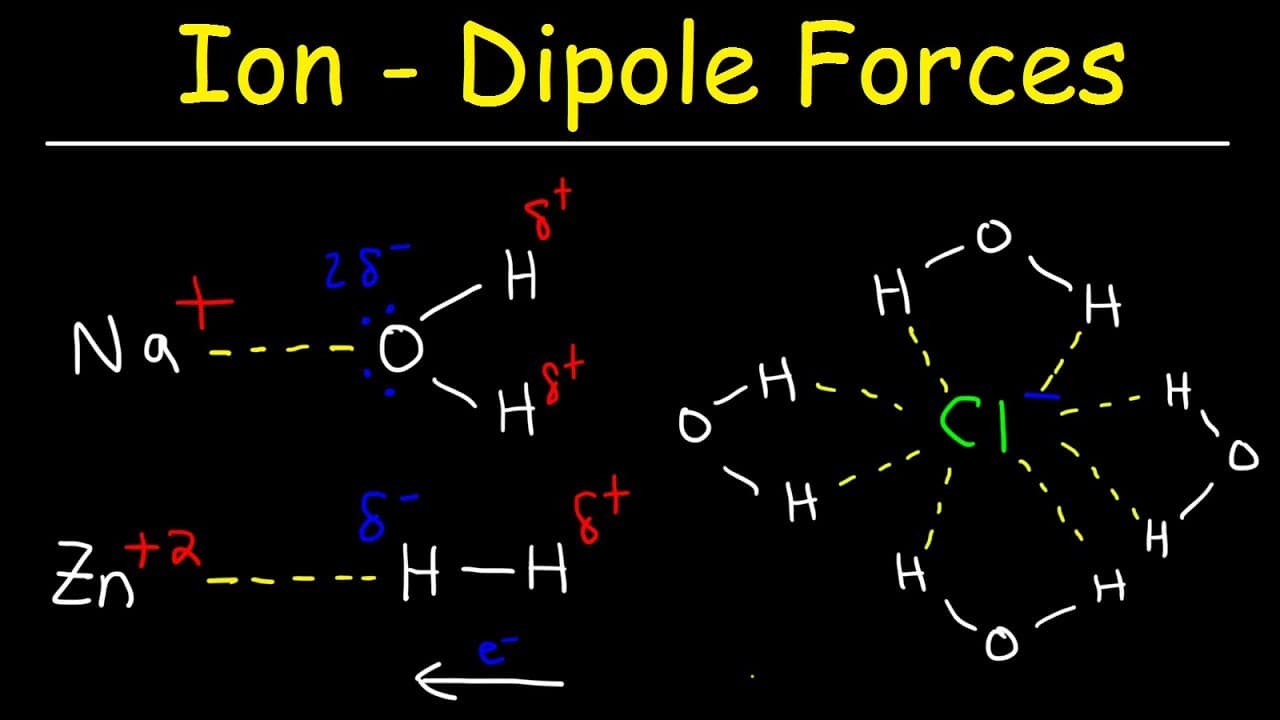
Ion dipole interactions occur when an ion is attracted to the charged regions of a polar molecule, like sodium ions in water. Ion induced dipole interactions happen when an ion distorts a nonpolar molecule's electron cloud, temporarily polarizing it. These interactions are crucial for understanding the behavior of ionic compounds in different solvents.
Transcript
in this video we're going to talk about ion dipole forces and ion-induced dipole interactions so let's use the sodium ion as an example when you place sodium chloride in water what's going to happen water is going to separate the sodium ions from the chloride ions the oxygen part of water is going to be attracted to the sodium ions oxygen has a neg... Read More
Key Insights
- 😑 Ion-dipole interactions occur between ions and polar molecules, while ion-induced dipole interactions occur between ions and nonpolar molecules.
- 😑 Water is a common example of a polar substance that participates in ion-dipole interactions.
- 😑 Ion-induced dipole interactions involve the polarization of nonpolar molecules by ions, resulting in temporary dipoles.
- 😑 Permanent dipoles exist in polar molecules, while induced dipoles are temporary and only present in the presence of an ion.
- 😑 Ion-induced dipole interactions can occur between ions and nonpolar molecules, depending on the ability of the ion to distort the electron cloud.
- 😑 Polarized nonpolar molecules are attracted to ions through ion-induced dipole interactions.
- 😑 The presence of hydrogen bonds in a molecule indicates the absence of nonpolar character, making ion-induced dipole interactions less likely.
Install to Summarize YouTube Videos and Get Transcripts
Explore YouTube Video Summarizer or Get YouTube Transcript Extractor
Questions & Answers
Q: What is an ion-dipole interaction?
An ion-dipole interaction occurs when an ion is attracted to the charged regions of a polar molecule, resulting in a force of attraction between them. This happens due to the opposite charges between the ion and the polar molecule.
Q: How do ion-induced dipole interactions occur?
Ion-induced dipole interactions occur when an ion distorts the electron cloud of a neutral, nonpolar molecule. This distortion causes a separation of charges, creating a temporary dipole within the nonpolar molecule.
Q: Can ion-dipole interactions occur with any polar substance?
Yes, ion-dipole interactions can occur whenever you mix an ionic compound with a polar substance. The polar substance provides the dipole, and the ionic compound provides the ion for the interaction to take place.
Q: Are ion-induced dipole interactions permanent?
No, ion-induced dipole interactions are temporary and last only in the presence of the ion. Once the ion is removed, the electrons in the nonpolar molecule will redistribute, and the temporary dipole will disappear.
Summary & Key Takeaways
-
Ion-dipole interactions occur when an ion is attracted to the partially charged regions of a polar molecule, such as the attraction between sodium ions and water molecules in saltwater.
-
Ion-induced dipole interactions occur when an ion causes a nonpolar molecule to become polarized, creating temporary dipoles. This happens when an ion distorts the electron cloud of a neutral atom or molecule.
Read in Other Languages (beta)
Share This Summary 📚
Summarize YouTube Videos and Get Video Transcripts with 1-Click
Try YouTube Summary with ChatGPT & Claude or YouTube Transcript Generator
Explore More Summaries from The Organic Chemistry Tutor 📚




Summarize YouTube Videos and Get Video Transcripts with 1-Click
Try YouTube Summary with ChatGPT & Claude or YouTube Transcript Generator