What is the shape of the universe? | Brian Keating and Lex Fridman
TL;DR
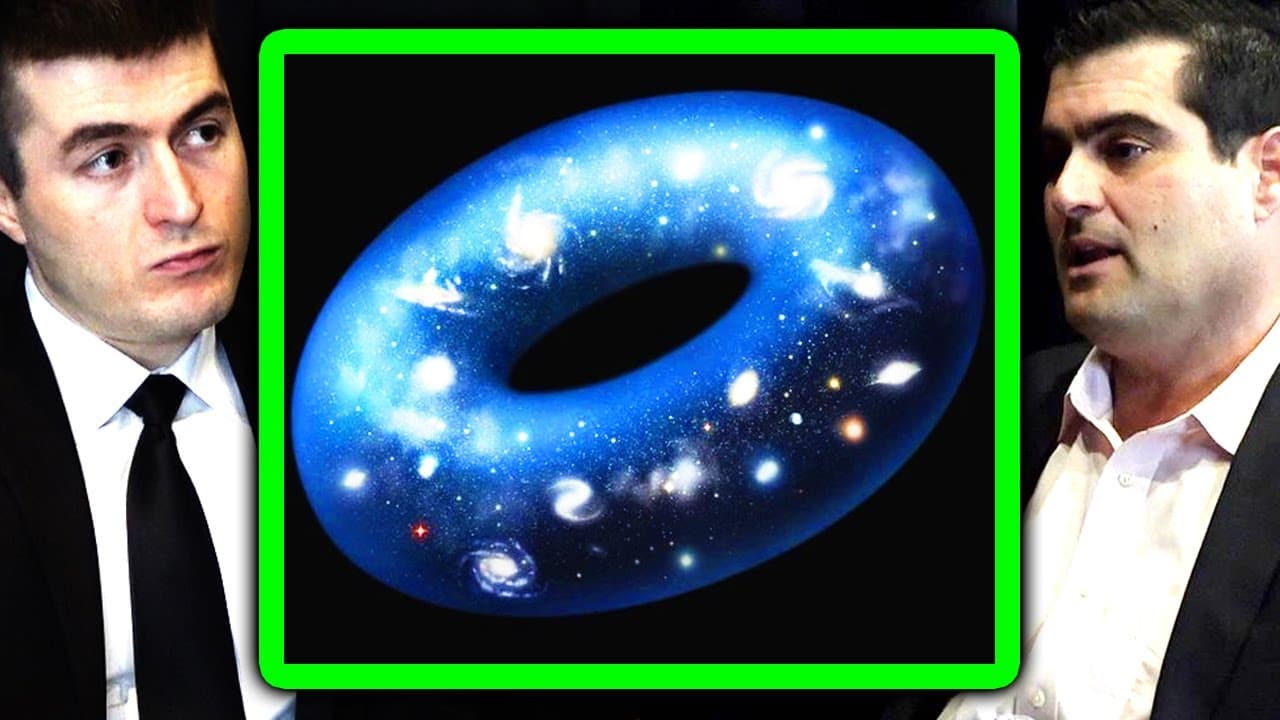
The Boomerang experiment used the cosmic microwave background to measure triangles in the universe, leading to the discovery that the shape of the universe is flat.
Transcript
i ended up working for another person in caltech which is in pasadena and um and she my original boss sarah church she got me the job with her former advisor a man by the name andrew lang and andrew was like he was like this i don't know like um it's like any steve jobs or elon you know charismatic handsome a persuasive idea man not the guy always ... Read More
Key Insights
- 🖐️ Andrew Lang, a charismatic and visionary scientist, played a crucial role in measuring the flatness of the universe using the Boomerang experiment.
- 🆘 Triangles made from proto-galaxy-sized objects in the cosmic microwave background helped determine the shape of the universe.
- 🫓 Accurate measurements and statistical analysis of approximately 44,000 patches on the sky provided evidence of the universe's flat geometry.
- ❓ The data collected during the Boomerang experiment underwent complex analysis techniques, such as Fourier analysis and image analysis, to extract meaningful conclusions.
- ❓ Mitigating statistical and systematic errors was crucial in obtaining accurate measurements and reducing uncertainties.
- 😒 The Boomerang experiment contributed to advancements in data analysis techniques, including the use of hierarchical equal area triangles and machine learning.
- ❓ The experiment's findings supported a simple cosmological model with six parameters, one of which determined the flatness of the universe.
Install to Summarize YouTube Videos and Get Transcripts
Explore YouTube Video Summarizer or Get YouTube Transcript Extractor
Questions & Answers
Q: How did Andrew Lang measure the flatness of the universe?
Lang used the cosmic microwave background to create triangles using proto-galaxy-sized objects. By accurately measuring the interior angle, he showed that it added up to 180 degrees, providing evidence for a flat universe.
Q: Can the patches in the cosmic microwave background be localized accurately?
While the exact location of the patches can be known, there are approximately 44,000 square degree-sized patches on the sky. This allows for extensive measurements and statistical analysis to build up a comprehensive understanding of the universe's flatness.
Q: What techniques were used to analyze the data collected during the Boomerang experiment?
The data went through various analysis techniques such as Fourier analysis, power spectrum filtration, and image analysis. These processes helped decompose the data, compare it with cosmological parameters, and make predictions about the geometry of the universe.
Q: What were the sources of error in the Boomerang experiment?
The two predominant sources of error in any measurement are statistical and systematic errors. The Boomerang team mitigated these errors by collecting a large number of measurements over the sky, utilizing advanced statistical techniques, and ensuring precise measurement devices.
Summary & Key Takeaways
-
The narrator explains how they ended up working for a charismatic and visionary scientist named Andrew Lang at Caltech.
-
Lang and his colleagues used the cosmic microwave background to measure triangles in the universe and determine its shape.
-
The experiment, known as Boomerang, accurately measured the interior angle of proto-galaxy-sized objects in the cosmic microwave background, proving that the universe is flat.
Read in Other Languages (beta)
Share This Summary 📚
Summarize YouTube Videos and Get Video Transcripts with 1-Click
Try YouTube Summary with ChatGPT & Claude or YouTube Transcript Generator
Explore More Summaries from Lex Clips 📚



Summarize YouTube Videos and Get Video Transcripts with 1-Click
Try YouTube Summary with ChatGPT & Claude or YouTube Transcript Generator