Is That My Real Hand? | Breakthrough
TL;DR
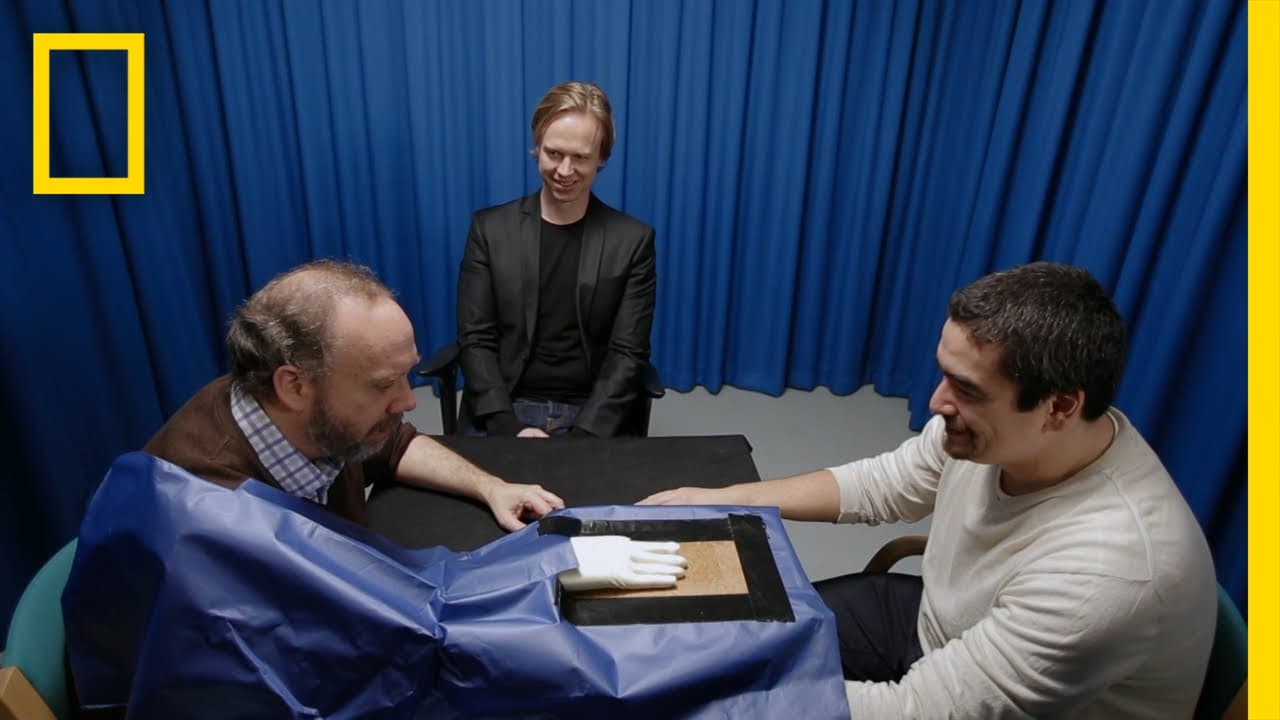
Scientists conduct an experiment to test the integration of a rubber hand with the human body, raising questions about the blurred lines between human and robotic components.
Transcript
well there's a lot of interest in robotics community how can we extend the human body not only with advanced prosthetic limbs for amputees but maybe for exoskeletons and then of course the question is of at what point do these external devices become part of your own body representation one point do you start to feel that this is really me sitting ... Read More
Key Insights
- 🧗 Robotics offer possibilities for extending the human body beyond prosthetic limbs with advancements like exoskeletons.
- 🤗 The rubber hand experiment demonstrates the potential for external devices to become integrated with one's body representation.
- 🥳 Synchrony between real and artificial body parts can lead to a perceptual shift, making it challenging to differentiate between the two.
- 🧠 Incorporating movement enhances the illusion of body integration, suggesting the brain's plasticity in adapting to sensory feedback.
Install to Summarize YouTube Videos and Get Transcripts
Explore YouTube Video Summarizer or Get YouTube Transcript Extractor
Questions & Answers
Q: How do robotics contribute to extending the human body beyond prosthetic limbs?
Robotics offer the potential to go beyond prosthetic limbs by exploring exoskeletons and other external devices that can enhance human capabilities. This includes possibilities for increased strength, mobility, and functionality.
Q: At what point does an external device become part of one's own body representation?
The experiment with the rubber hand demonstrates that when external devices are autonomously synchronized with a person's body movements and sensations, they can start to feel like a genuine part of their body representation. However, the threshold for this integration may vary among individuals.
Q: What does the perception shift during the rubber hand experiment reveal about the brain's interpretation of sensory input?
The synchrony between the participant's real finger and the stroked finger on the rubber hand causes the brain to conflate the sensations, leading to a perceptual shift. It highlights the brain's flexibility and ability to incorporate external inputs into one's sense of self.
Q: How does the inclusion of movement intensify the illusion during the experiment?
Adding movement to the experiment amplifies the illusion because it further aligns the sensory feedback from the rubber hand with the participant's expectations. The brain adapts to this sensory information, further blurring the distinction between the real hand and the rubber hand.
Summary & Key Takeaways
-
Researchers delve into expanding the human body with advanced prosthetic limbs and exoskeletons, blurring the distinction between external devices and one's own body representation.
-
The rubber hand experiment involves synchronously stroking both the real index finger and the corresponding finger on a rubber hand, causing a perception shift where the rubber hand feels like a part of the participant's body.
-
Adding movement to the experiment intensifies the illusion, highlighting the potential of seamlessly integrating artificial components with the human body.
Read in Other Languages (beta)
Share This Summary 📚
Summarize YouTube Videos and Get Video Transcripts with 1-Click
Try YouTube Summary with ChatGPT & Claude or YouTube Transcript Generator
Explore More Summaries from National Geographic 📚




Summarize YouTube Videos and Get Video Transcripts with 1-Click
Try YouTube Summary with ChatGPT & Claude or YouTube Transcript Generator