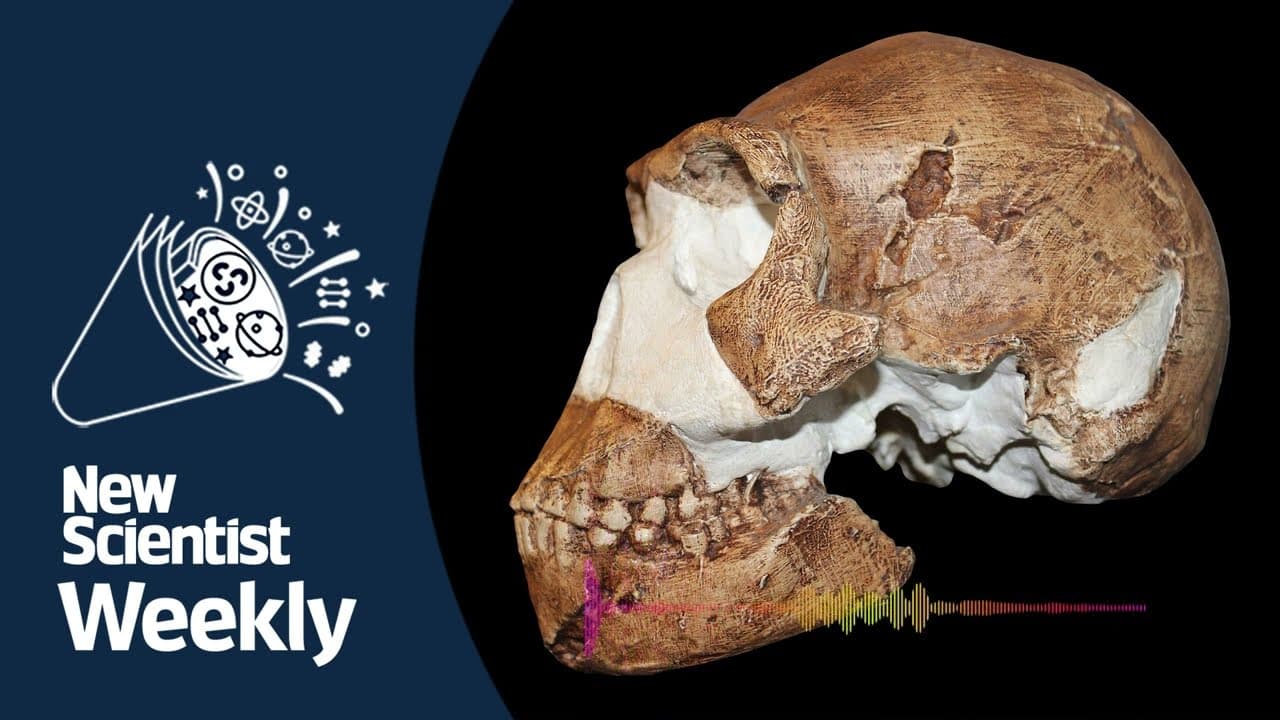
Did Homo naladi control fire? | New Scientist Weekly podcast 152
TL;DR
New Scientist reports on the discovery of the last known thylacine specimen, the mapping of the brain of a fruit fly, and evidence of active geology on Mars.
Transcript
new scientists award-winning journalism brings you the latest on science technology the environment and human health from across the globe in print online in the app on audio and video This Christmas discover the joy and learning new things every day with 50 offer digital New Scientist subscription 50 offer digital subscription is an amazing deal g... Read More
Key Insights
- 🙂 The discovery of the last known thylacine specimen provides a tangible link to its extinction and sheds light on the mistreatment and mismanagement of the animal.
- 🧠 The mapping of the fruit fly brain challenges previous assumptions about its simplicity and highlights the need for further research to understand its complexity.
- 🤗 The evidence of active geology on Mars suggests that the planet is not as geologically dead as previously thought and opens up possibilities for future volcanic activity.
Install to Summarize YouTube Videos and Get Transcripts
Explore YouTube Video Summarizer or Get YouTube Transcript Extractor
Questions & Answers
Q: What is the significance of the discovery of the last known thylacine specimen?
The discovery of the thylacine specimen allows scientists to have physical remains of the species, providing a palpable connection to its extinction. The specimen was found in a museum collection after being illegally trapped and mistreated.
Q: What insights does the fruit fly brain mapping provide?
The mapping of the fruit fly brain shows a high level of interconnectivity among neurons and the ability to integrate different streams of information. This challenges previous assumptions about the simplicity of the fruit fly brain and highlights the need for further study to understand its functioning and behavior.
Q: What evidence is there of active geology on Mars?
Researchers have found evidence of active geology in the Cerberus Fossae region of Mars, characterized by deep trenches. The trenches are believed to be caused by a mantle plume, indicating the presence of volcanic activity and the possibility of magma motion in the future.
Q: Is it possible to bring back extinct species like the thylacine?
From a technical perspective, it is challenging to bring back extinct species like the thylacine. The genetic and technological issues involved, as well as ethical considerations, make the resurrection of extinct species unlikely.
Summary & Key Takeaways
-
Thylacine Discovery: The last known thylacine specimen, which had been missing for 80 years, has been found in a museum collection. The thylacine, also known as the Tasmanian Tiger, was illegally trapped and placed in the museum's education collection instead of the research collection, leading to its disappearance.
-
Fruit Fly Brain Mapping: Scientists have produced the largest complete map of the brain of a fruit fly larva, which consists of 3013 neurons. The map reveals a high level of interconnectivity within the brain and the ability to integrate different streams of information.
-
Active Geology on Mars: Researchers have discovered evidence of active geology on Mars, specifically in the Cerberus Fossae region. The trenches in the region are believed to be caused by a mantle plume, which suggests that volcanic activity and magma motion could occur in the future.
Read in Other Languages (beta)
Share This Summary 📚
Summarize YouTube Videos and Get Video Transcripts with 1-Click
Try YouTube Summary with ChatGPT & Claude or YouTube Transcript Generator
Explore More Summaries from New Scientist weekly podcast 📚


Summarize YouTube Videos and Get Video Transcripts with 1-Click
Try YouTube Summary with ChatGPT & Claude or YouTube Transcript Generator