the right way to organise your code
TL;DR
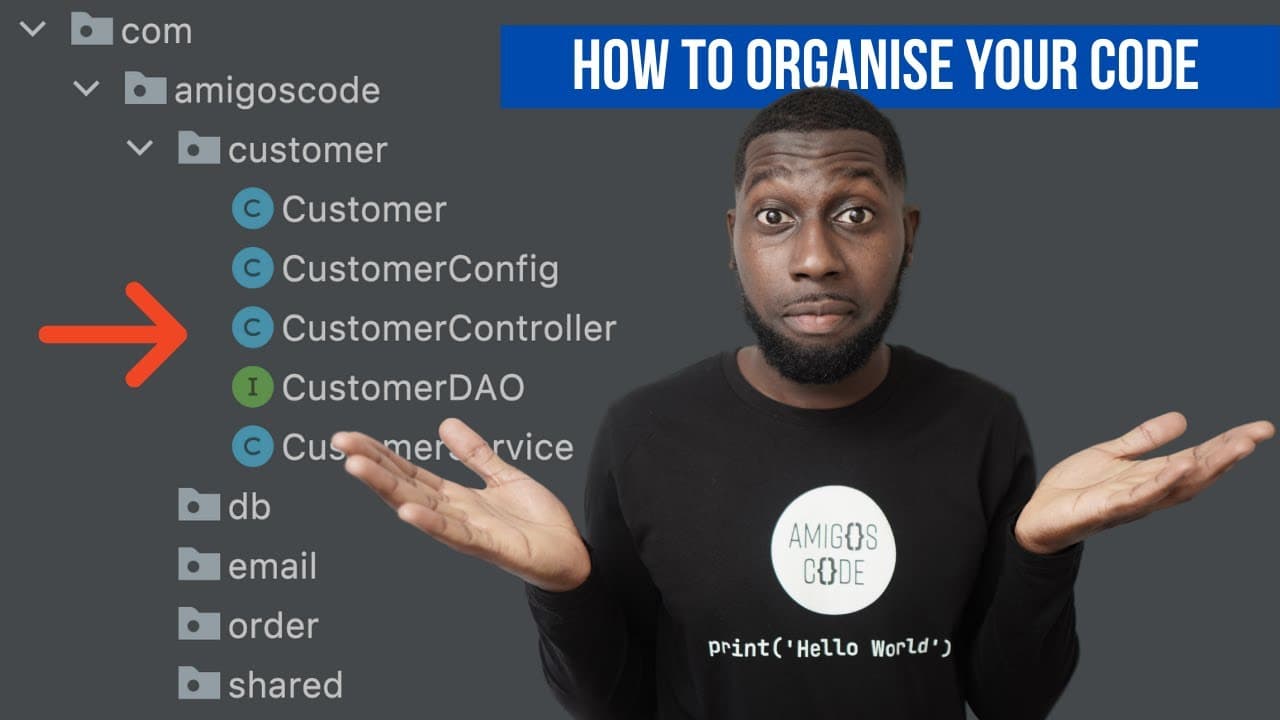
This video explains how to organize and structure backend applications using packages and folders in Java, with examples for other languages like Node and Python.
Transcript
What's going on, guys? Assalamualaikum, I welcome to Amigoscode. In this video, I want to show you how to properly structure your backend applications. So usually I get a lot of questions on how to properly structure the application, what packages you'd like to create, what classes. And basically, I just want to give you an example of how you shoul... Read More
Key Insights
- 👨💻 Properly structuring backend applications improves code organization, maintainability, and scalability.
- 👨💻 Testing code is crucial to ensure deployed code works as intended, and learning more about testing is recommended.
- 👻 Following a modular approach allows for the creation of self-contained microservices, making applications more manageable and scalable.
- 👨🔬 Different languages may have specific guidelines for structuring applications, so it's important to research and follow those standards.
Install to Summarize YouTube Videos and Get Transcripts
Explore YouTube Video Summarizer or Get YouTube Transcript Extractor
Questions & Answers
Q: Why is it important to structure backend applications properly?
Proper structure allows for easy organization and maintenance of code, making it more efficient and less prone to errors. It also helps with scalability and modularity.
Q: Can the same approach be applied to languages other than Java?
Yes, while the examples are shown in Java, the concept of organizing code into packages and folders is applicable to other languages like Node and Python.
Q: What is the benefit of using packages for each entity within an application?
Using packages for each entity allows for better organization and separation of concerns. It makes it easier to locate and work with specific classes related to a particular entity.
Q: How does structuring applications into microservices benefit development?
Structuring applications into microservices allows for more flexibility and scalability. Each microservice can focus on a specific task, making it easier to modify and enhance without affecting other parts of the application.
Summary & Key Takeaways
-
The video provides guidance on properly structuring backend applications, including creating packages and organizing code.
-
It emphasizes the importance of testing code and offers a recommendation to learn more about testing.
-
The video suggests using a modular approach to structuring applications, which allows for the creation of self-contained microservices.
Read in Other Languages (beta)
Share This Summary 📚
Summarize YouTube Videos and Get Video Transcripts with 1-Click
Try YouTube Summary with ChatGPT & Claude or YouTube Transcript Generator
Explore More Summaries from Amigoscode 📚

![Git and GitHub Tutorial For Beginners | Full Course [2021] [NEW] thumbnail](/_next/image?url=https%3A%2F%2Fi.ytimg.com%2Fvi%2F3fUbBnN_H2c%2Fhqdefault.jpg&w=750&q=75)
![Java Full Course [NEW] thumbnail](/_next/image?url=https%3A%2F%2Fi.ytimg.com%2Fvi%2FQgl81fPcLc8%2Fhqdefault.jpg&w=750&q=75)
![Docker Tutorial for Beginners | Full Course [2021] thumbnail](/_next/image?url=https%3A%2F%2Fi.ytimg.com%2Fvi%2Fp28piYY_wv8%2Fhqdefault.jpg&w=750&q=75)


Summarize YouTube Videos and Get Video Transcripts with 1-Click
Try YouTube Summary with ChatGPT & Claude or YouTube Transcript Generator