What Are the Key Changes in Japanese Military Uniforms?
TL;DR
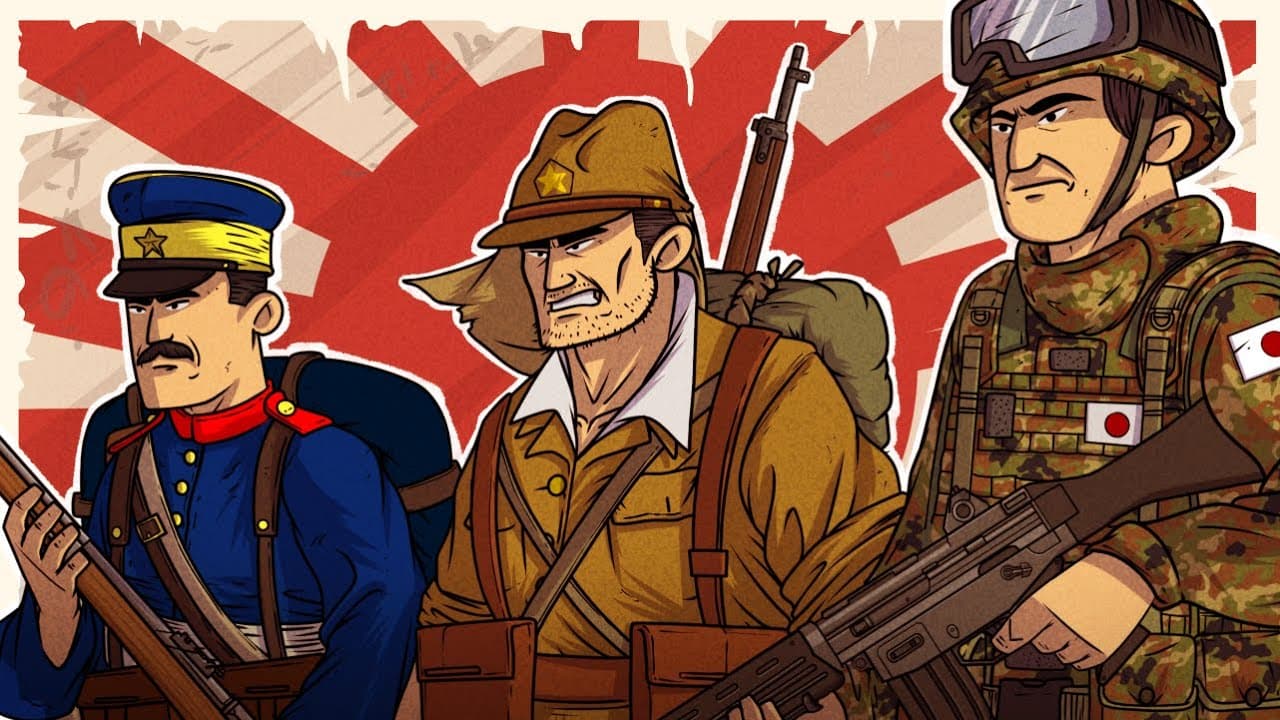
Japanese military uniforms evolved significantly from the Tokugawa shogunate's European-inspired designs to the highly modernized uniforms of the Meiji Restoration. Various conflicts saw continued adaptation, culminating in the establishment of the Japan Self-Defense Forces with borrowed U.S. uniforms, while modern camouflage patterns reflect Japan's role in global security efforts.
Transcript
the evolution of japanese uniforms poster is available now in its dying years the ailing tokugawa shogunate attempted to reform and modernize its military force shogun tokugawa yoshinobu introduced new european style uniforms modeled after those of britain and france but these retained japanese influences such as the traditional gingasa war hats so... Read More
Key Insights
- 👑 The Tokugawa shogunate attempted to modernize its military force with European style uniforms, but it was too little too late as the Emperor Meiji and his allies seized power, restoring the supremacy of the emperor.
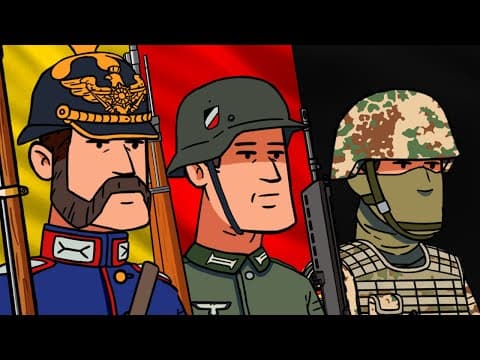
- 💂 The Imperial Japanese Army went through various uniform changes, adopting a mixture of English and French styles, introducing a full dress uniform, adopting a modified dark blue uniform, and ultimately adopting a khaki version influenced by the utility of khaki over blue.
- 🌸 Japan played a role in both World Wars, capturing German possessions in the Pacific during World War I and intervening in Siberia and expanding into China during World War II. The military uniforms evolved to reflect these periods.
- 🇯🇵 The Imperial Japanese Army's standard uniform during World War II was the M98, made of cotton and colored olive or khaki. Officers had some variations in their uniforms, with privately purchased and tailored options.
- ☠️ The Imperial Guard, based in Japan throughout the war, was involved in war crimes and an attempted military coup. Supply problems led to soldiers wearing older uniforms, while officers had more customized uniforms.
- 🌸 After Japan's surrender, the Japanese military was abolished, and the Japan Self-Defense Forces were established. Initially, their uniforms were borrowed from the US military. In 1965, the first camouflage pattern was introduced.
- 🌍 Japan's military relationship with the United States was significant during the Cold War. In the 1970s, a new dress uniform was introduced, and a second camouflage pattern, influenced by the German army's design, was adopted.
- 🌐 Japan's military future is uncertain, with debates about its role in the world. Some envision Japanese uniforms being seen on security and peacekeeping operations globally.
Install to Summarize YouTube Videos and Get Transcripts
Explore YouTube Video Summarizer or Get YouTube Transcript Extractor
Questions & Answers
Q: How did the Meiji Restoration impact the evolution of Japanese military uniforms?
The Meiji Restoration played a crucial role in the evolution of Japanese military uniforms as it brought about the restoration of the emperor's power and led to the adoption of highly modernized, Western-style uniforms.
Q: What were some key changes in Japanese military uniforms during the Russo-Japanese War?
During the Russo-Japanese War, Japanese soldiers adopted a new khaki uniform, demonstrating the understanding of the utility of khaki over blue. This uniform was designated for hot and cold weather, made either of cotton or surge material.
Q: What role did the Japanese military play in World War I?
In World War I, Japan played a small role by capturing German possessions in the Pacific to assist its ally, Britain. Japanese soldiers wore the new Type 45 uniform, which featured a flat-topped peaked cap and tunic collars with red swallow-tailed gorget patches.
Q: How did the Imperial Japanese Army adapt to supply problems during World War II?
As supply problems plagued the Japanese military during World War II, many soldiers continued to wear older M90 uniforms due to a shortage of M98 uniforms. The M98 uniforms that were produced used cheaper materials, and firearms were increasingly produced at substitute standards.
Q: When did the modern Japan Self-Defense Force introduce its first camouflage pattern?
The modern Japan Self-Defense Force introduced its first camouflage pattern, called Type 1 Kunai camouflage, in 1965. It featured black, brown, and green woodland shapes on a pale green background and was initially issued to members of the first airborne brigade.
Summary & Key Takeaways
-
In the dying years of the Tokugawa shogunate, attempts were made to modernize the military with European-style uniforms, but it was too late.
-
The Meiji Restoration brought about the restoration of the emperor's power, leading to highly modernized forces with Western-style uniforms.
-
The Japanese military continued to adapt and modify their uniforms throughout various conflicts, eventually becoming a well-organized modern military force.
Read in Other Languages (beta)
Share This Summary 📚
Summarize YouTube Videos and Get Video Transcripts with 1-Click
Try YouTube Summary with ChatGPT & Claude or YouTube Transcript Generator
Explore More Summaries from The Armchair Historian 📚
Summarize YouTube Videos and Get Video Transcripts with 1-Click
Try YouTube Summary with ChatGPT & Claude or YouTube Transcript Generator