Flesh-Destroying Chromic Acid - Periodic Table of Videos
TL;DR
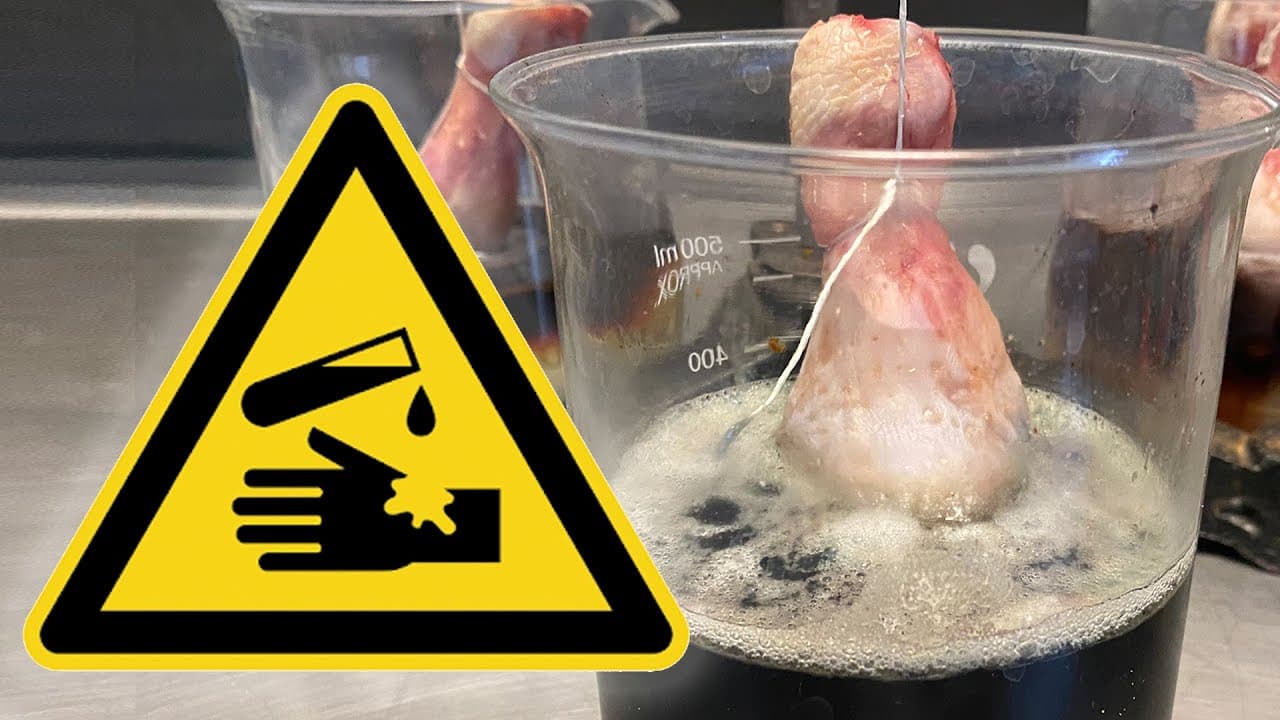
Chromic acid destroyed the chicken-leg flesh more efficiently than concentrated or diluted sulfuric acid in the overnight comparison. The chromic acid turned green as it formed a chromium III salt, while it and the diluted sulfuric acid both reached more than 80 degrees Celsius. Read on to see how water affected sulfuric acid, what happened overnight, and why the samples fizzed during neutralization.
Transcript
one of our more gruesome videos was trying to dissolve chickens legs which I bought at the butcher in hydrofluoric acid and comparing it with hydrochloric acid and sulfuric acid and the hydrofluoric acid HF made the chicken leg look deader than I've ever seen anything and so we thought that was all there was and then I got an email from a guy calle... Read More
Key Insights
- 🍗 The use of different acids on chicken legs reveals varying levels of efficiency in dissolving flesh.
- ❓ Hydrofluoric acid is highly corrosive and particularly effective at destroying organic matter.
- ✋ Diluted sulfuric acid and chromic acid also show dissolution effects but at higher temperatures.
- 🖤 Concentrated sulfuric acid may be less efficient due to reduced ionization caused by the lack of water.
- 👍 Chromic acid proves to be the most efficient acid for flesh dissolution in this experiment.
- 🥵 The addition of water to sulfuric acid releases heat due to the ionization process.
- ❓ Diluting sulfuric acid causes a significant temperature increase.
Install to Summarize YouTube Videos and Get Transcripts
Explore YouTube Video Summarizer or Get YouTube Transcript Extractor
Questions & Answers
Q: Which acid was most effective at destroying the chicken-leg flesh?
Chromic acid was clearly the most efficient acid in the overnight comparison. Its chicken leg suffered much more damage than the legs placed in concentrated or diluted sulfuric acid.
Q: Which acids were compared on the chicken legs?
The new experiment compared concentrated sulfuric acid, diluted sulfuric acid, and chromic acid. A spare chicken leg was left on the bench as a control.
Q: What is the chromic acid mixture used in the experiment?
The chromic acid was described as a mixture of dichromate and concentrated sulfuric acid. It had previously been used for cleaning glassware because it removes almost all stains.
Q: Why did the chromic acid turn from orange to green?
The chromic acid began turning green when the chicken leg was added. The transcript explains that this was expected because reacting chromic acid forms a green chromium III salt.
Q: How hot did the diluted sulfuric acid and chromic acid become?
Both the diluted sulfuric acid and the chromic acid measured more than 80 degrees Celsius. The concentrated sulfuric acid remained close to room temperature.
Q: Why does adding water make sulfuric acid heat up and attack the chicken leg?
Water helps sulfuric acid ionize into H+ and HSO4−, and that interaction releases heat. The explanation given is that sulfuric acid needs to dissociate before it can attack the chicken leg, while the pure concentrated acid probably has less ionization.
Q: What happened to the chicken legs after they were left in acid overnight?
The concentrated and diluted sulfuric acid samples showed little difference: both legs lost quite a bit of meat and turned brown. The chicken leg in chromic acid was damaged much more severely.
Q: Why did the chicken legs fizz when placed in sodium carbonate?
Neil placed the chicken legs in sodium carbonate solution to neutralize the acid remaining on them. That residual acid released carbon dioxide from the sodium carbonate, producing more fizzing.
Summary & Key Takeaways
-
The video explores the dissolution of chicken legs in various acids, including hydrofluoric acid, hydrochloric acid, sulfuric acid, and chromic acid.
-
A viewer's suggestion prompts further experiments using diluted sulfuric acid and chromic acid, which resulted in bubbling and color changes.
-
Chromic acid proved to be the most effective at dissolving flesh, with the chicken legs losing meat and turning brown.
Read in Other Languages (beta)
Share This Summary 📚
Summarize YouTube Videos and Get Video Transcripts with 1-Click
Try YouTube Summary with ChatGPT & Claude or YouTube Transcript Generator
Explore More Summaries from Periodic Videos 📚



Summarize YouTube Videos and Get Video Transcripts with 1-Click
Try YouTube Summary with ChatGPT & Claude or YouTube Transcript Generator