Davos 2016 - The Year Ahead: The Economic Outlook for the Eurozone
TL;DR
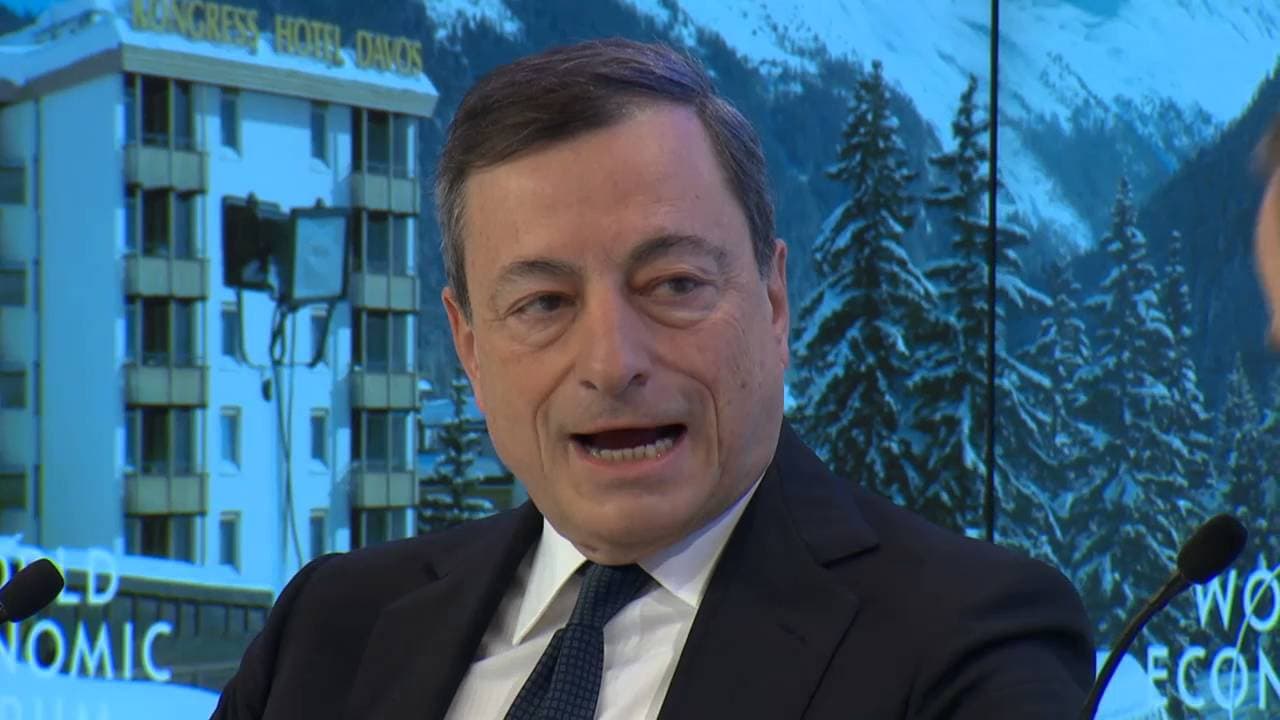
Mario Draghi, President of the European Central Bank, discusses the improvement in the global economic situation, the diverging paths of US and European monetary policies, the impact of lower oil prices on inflation, and the challenges and opportunities presented by the refugee crisis.
Transcript
ladies and gentlemen it gives me a great pleasure to be here at Davos with Mario Draghi President of the European Central Bank on a personal note I should say that I've known Mario for more than 20 years when I first met him he was a senior official at the Italian Treasury one of a group of European technocrats if I could use that word sure who wer... Read More
Key Insights
- 🧘 Different monetary policies reflect the different positions of the economies in their recovery cycles.
- 🛢️ The recovery is driven by consumption and supported by oil prices and fiscal policy.
- 😘 Lower oil prices and downward revisions in growth prospects have impacted inflation.
- 🌍 The refugee crisis presents both challenges and opportunities for Europe.
- ❓ Cooperation and determination are necessary to transform the refugee crisis into an opportunity.
- 🇬🇷 Greece has made progress in reforms and negotiations to address its economic challenges.
- 🇨🇫 The European Central Bank has ample instruments and determination to address economic recovery and inflation.
Install to Summarize YouTube Videos and Get Transcripts
Explore YouTube Video Summarizer or Get YouTube Transcript Extractor
Questions & Answers
Q: How did the Federal Reserve's interest rate hike impact the global economic situation?
The interest rate hike signaled the improvement of the US economy and was appropriate for its recovery cycle. The decision was well-communicated and flawlessly executed.
Q: Are you concerned about the misalignment between US and European monetary policies?
Different monetary policies reflect the different positions of the economies in their recovery cycles. While the US recovery is more advanced, it is natural for monetary policies to differ. As long as the monetary policy decisions are right, spill overs between the two jurisdictions can be adequately coped with.
Q: Has sentiment changed in 2016 regarding economic prospects?
It is too early to say if sentiment has changed. There are market vibrations and heightened sensitivity to risk, but the overall outlook for recovery remains modest and driven by consumption, supported by monetary and fiscal policies.
Q: How are lower oil prices impacting inflation?
The collapse in oil prices, along with downward revisions in growth prospects of emerging market economies, has affected inflation. The extent and persistence of these effects, as well as any second-round effects on other components of the price index, such as services and manufacturing, are significant factors to consider.
Summary & Key Takeaways
-
Mario Draghi emphasizes the appropriateness and success of the Federal Reserve's interest rate hike, reflecting the improvement of the US economy.
-
He acknowledges the slight misalignment between US, European, and Japanese monetary policies, attributing it to the different positions of the economies in their recovery cycles.
-
Draghi believes that although there are uncertainties in the economic outlook, the recovery is continuing at a modest pace, driven by consumption and supported by oil prices and fiscal policy.
Read in Other Languages (beta)
Share This Summary 📚
Summarize YouTube Videos and Get Video Transcripts with 1-Click
Try YouTube Summary with ChatGPT & Claude or YouTube Transcript Generator
Explore More Summaries from World Economic Forum 📚
Summarize YouTube Videos and Get Video Transcripts with 1-Click
Try YouTube Summary with ChatGPT & Claude or YouTube Transcript Generator