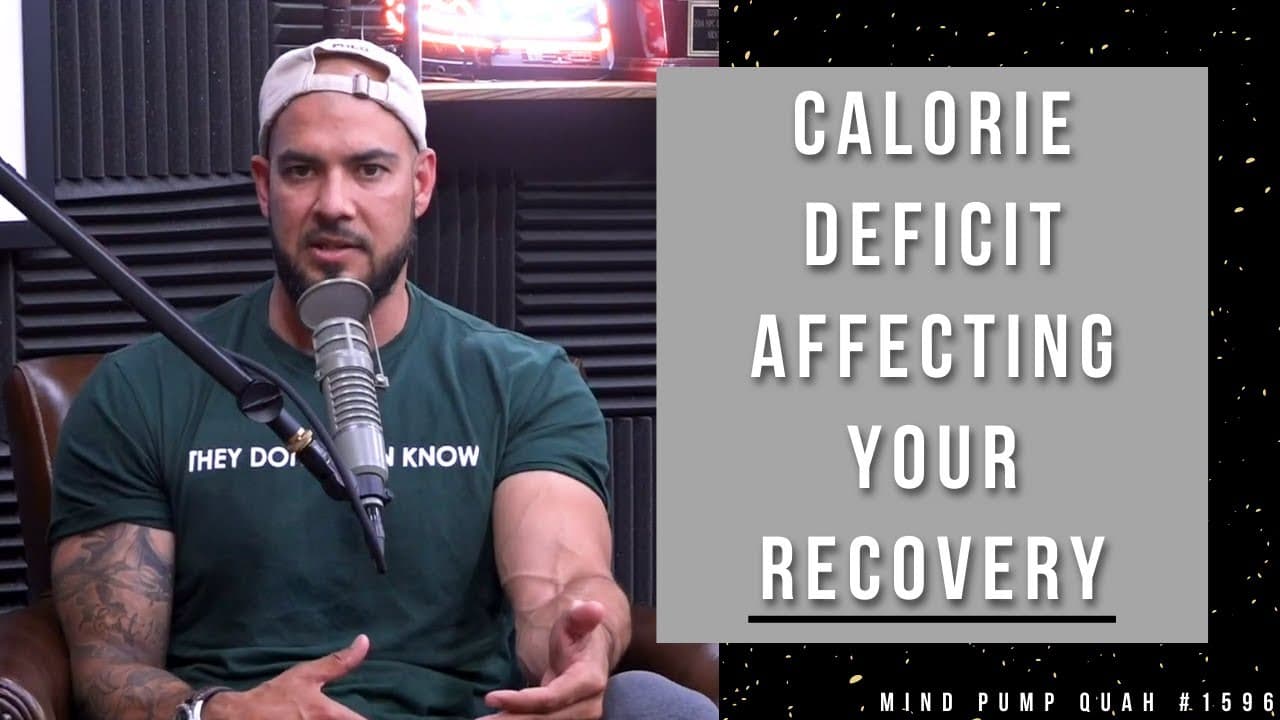
How a Calorie Deficit Affects Recovery
TL;DR
Calorie deficits can hinder muscle recovery and increase soreness.
Transcript
next question is from taylor louise if you're in a calorie deficit would you expect to experience more muscle soreness and a longer recovery time if so should you reduce intensity or volume or increase calories for a couple of weeks good question yeah so so let's talk about soreness for a second because this is something that's uh uh interesting i ... Read More
Key Insights
- Calorie deficits can lead to increased muscle soreness and longer recovery times due to reduced energy and nutrient resources.
- Training intensity and volume may need to be adjusted when in a calorie deficit to avoid excessive soreness and slow recovery.
- Adequate protein intake is crucial for muscle recovery, especially when in a calorie deficit, as it helps repair and build muscle tissue.
- Muscle soreness and recovery are related but not synonymous; soreness can increase with higher calorie intake due to increased training intensity.
- A common sign of under-eating, particularly protein, is prolonged muscle soreness and difficulty recovering from workouts.
- Over-training cannot be offset by simply increasing calorie intake; excessive training can lead to fatigue and potential weight gain.
- Listening to your body's recovery signals is important; persistent soreness may indicate insufficient nutrients or over-training.
- Intuitive eating without tracking can lead to under-consumption of essential nutrients, affecting recovery and performance.
Install to Summarize YouTube Videos and Get Transcripts
Explore YouTube Video Summarizer or Get YouTube Transcript Extractor
Questions & Answers
Q: How does a calorie deficit affect muscle soreness and recovery?
A calorie deficit can lead to increased muscle soreness and longer recovery times because the body has fewer energy and nutrient resources to draw from. This makes it harder to repair and build muscle tissue, potentially hindering performance and recovery.
Q: Should training intensity be adjusted when in a calorie deficit?
Yes, training intensity and volume may need to be reduced when in a calorie deficit to prevent excessive muscle soreness and prolonged recovery times. The body has less energy to support intense workouts, making it crucial to adjust exercise routines accordingly.
Q: Why is protein intake important during a calorie deficit?
Protein intake is vital during a calorie deficit because it provides the necessary building blocks for muscle repair and growth. Adequate protein helps ensure that the body can effectively recover from workouts, even when overall calorie intake is reduced.
Q: Are soreness and recovery the same thing?
No, soreness and recovery are related but not synonymous. Soreness can increase with higher calorie intake due to more intense training, but recovery can be hindered by a calorie deficit because the body has fewer resources to repair and build muscle tissue.
Q: Can over-training be offset by increasing calorie intake?
No, over-training cannot be offset by simply increasing calorie intake. Excessive training can lead to fatigue and potential weight gain, regardless of calorie consumption. Listening to the body's recovery signals and ensuring adequate nutrition are important for preventing over-training.
Q: What are common signs of under-eating in terms of recovery?
Common signs of under-eating, particularly protein, include prolonged muscle soreness, difficulty recovering from workouts, and a general feeling of fatigue. These symptoms indicate that the body may not be receiving sufficient nutrients to support effective recovery.
Q: How can intuitive eating affect recovery?
Intuitive eating without tracking can lead to under-consumption of essential nutrients, such as protein, which can negatively impact recovery and performance. It's important to ensure that nutritional needs are met to support the body's recovery processes.
Q: What should be done if persistent soreness occurs during a calorie deficit?
If persistent soreness occurs during a calorie deficit, it may indicate insufficient nutrient intake or over-training. Adjusting training intensity, ensuring adequate protein and calorie intake, and listening to the body's recovery signals are important steps to address this issue.
Summary & Key Takeaways
-
Calorie deficits can affect muscle recovery and increase soreness due to reduced energy and nutrient availability. Adjusting training intensity and ensuring adequate protein intake are essential for effective recovery.
-
Soreness and recovery are not the same; increased calorie intake can lead to more soreness due to higher training intensity. However, a calorie deficit can hinder recovery due to limited resources.
-
Over-training is not solely mitigated by increased calorie intake. Listening to your body's recovery signals and ensuring adequate nutrition, especially protein, are crucial for optimal performance and recovery.
Read in Other Languages (beta)
Share This Summary 📚
Summarize YouTube Videos and Get Video Transcripts with 1-Click
Try YouTube Summary with ChatGPT & Claude or YouTube Transcript Generator
Explore More Summaries from Mind Pump Show 📚


Summarize YouTube Videos and Get Video Transcripts with 1-Click
Try YouTube Summary with ChatGPT & Claude or YouTube Transcript Generator