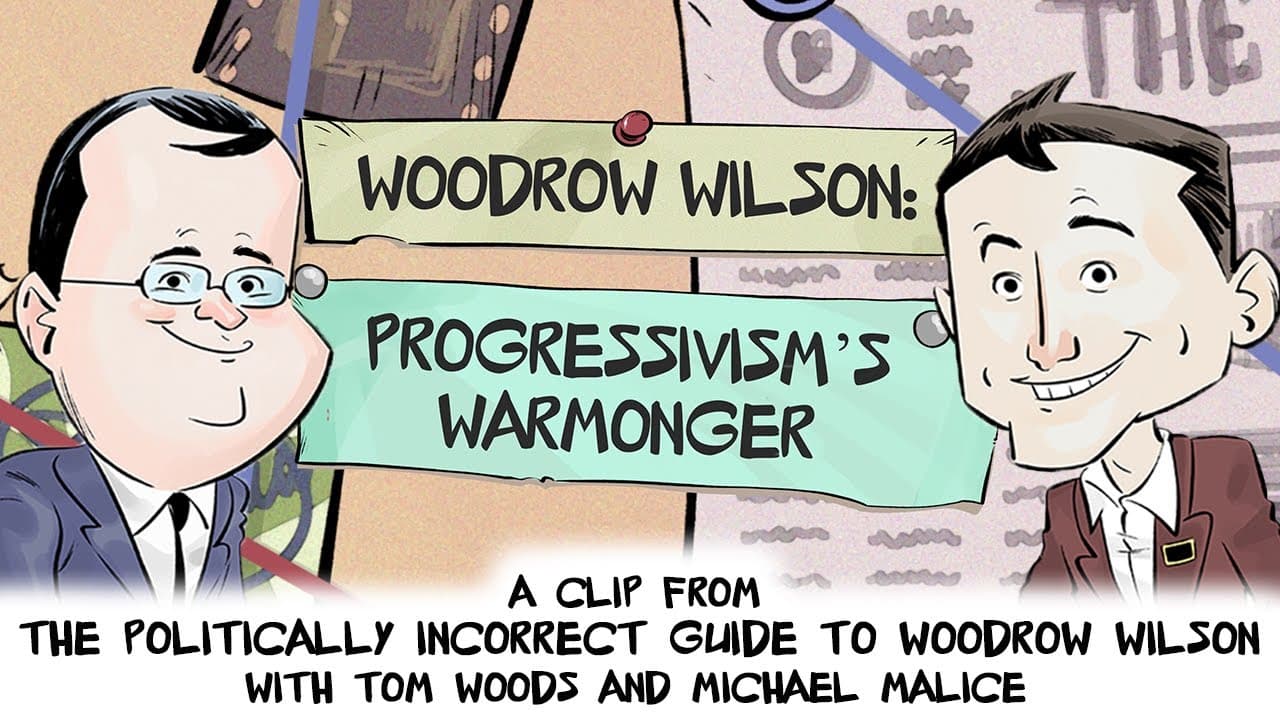
Woodrow Wilson: Progressivism's Warmonger | Politically Incorrect Guide to Woodrow Wilson
TL;DR
Woodrow Wilson's progressive friends saw American entry into World War 1 as an opportunity to push for greater federal control and a more socialized economic and social order, leading to negative long-term consequences.
Transcript
Woodrow Wilson. Entering the Great War to make the world safe for democracy. Woodrow Wilson. Preparing Americans for greater federal control! Why is there a narrator? Michael, it's not just that Wilson made a terrible strategic mistake getting the U.S. involved in World War 1. There's another aspect of it that's actually pretty sinister, and that i... Read More
Key Insights
- 🌍 Woodrow Wilson's decision to enter World War 1 had both strategic consequences and a sinister motive for his progressive friends, who saw it as an opportunity to push for greater government control and a more socialized economic and social order.
- 🏭 The progressives' vision was to treat America like a giant factory, with constant government control and limited individual liberties, which was not well-received by the majority of the population.
- 📜 John Dewey, a prominent progressive intellectual, believed that the war could be the end of business and saw it as an opportunity for permanent socialization and the replacement of private interests with public and social ones.
- 🍻 Progressives also promoted efficiency in leisure activities, which led to the association between progressivism and prohibition, discouraging certain forms of entertainment and consumption.
- 🕰️ The idea of wartime planning extending to peacetime gained traction during the 1930s, further solidifying the belief that society should mobilize all its resources for significant undertakings.
- 🌐 The precedent set by America's involvement in World War 1, where it felt a responsibility to intervene and stop any bad leaders, has had a lasting effect, as the U.S. continues to engage in conflicts around the world today.
- 🔪 There is a need to challenge the progressive idea and declare war on war itself, eliminating the notion that America should intervene in the affairs of other nations by force.
- ⚔️ The conversation concludes with the rejection of the idea that war is necessary or desirable, emphasizing the importance of exploring alternatives and pursuing peace.
Install to Summarize YouTube Videos and Get Transcripts
Explore YouTube Video Summarizer or Get YouTube Transcript Extractor
Questions & Answers
Q: How did Woodrow Wilson's progressive allies view American entry into World War 1 and why were they enthusiastic about it?
Woodrow Wilson's progressive friends saw American entry into World War 1 as an opportunity to advance their vision of a more socialized economic and social order. They believed that the war would allow for greater federal control and a shift away from limited government and private property.
Q: What was the role of John Dewey, a prominent progressive intellectual, in shaping the progressive agenda during World War 1?
John Dewey was thrilled about American entry into the war and saw it as a chance to bring an end to business and replace private interests with public and social interests. He believed that wartime conditions would necessitate government planning and economic regulation, which could be extended permanently.
Q: How did the progressive vision of efficiency and control extend to leisure activities during World War 1?
Progressives in the early 20th century believed in maximizing productivity and frowned upon leisure activities like drinking. The prohibition movement aligned with progressivism, as it discouraged behaviors that were not considered productive, such as socializing and enjoying certain forms of entertainment.
Q: What lasting legacy did World War 1 leave in terms of American foreign policy?
Woodrow Wilson's belief in American interventionism to fight against bad leaders and bad actions set a precedent that remains to this day. The idea that the United States should involve itself in conflicts around the world to stop perceived wrongdoing can be traced back to Wilson's progressive ideas and his view of American global responsibility.
Summary & Key Takeaways
-
Woodrow Wilson's progressive allies were excited about American entry into World War 1 because they saw it as a chance to move towards a more socialized form of economic and social order.
-
John Dewey, a prominent progressive intellectual, believed that the war could lead to the end of business and the replacement of private interests with public and social interests.
-
This progressive vision of efficiency and control extended to leisure activities, such as the prohibition movement, and created a lasting legacy of government intervention and planning during peacetime.
Read in Other Languages (beta)
Share This Summary 📚
Summarize YouTube Videos and Get Video Transcripts with 1-Click
Try YouTube Summary with ChatGPT & Claude or YouTube Transcript Generator
Explore More Summaries from Capital Research Center 📚

Summarize YouTube Videos and Get Video Transcripts with 1-Click
Try YouTube Summary with ChatGPT & Claude or YouTube Transcript Generator