Why Do We Keep Needing New "G"s?
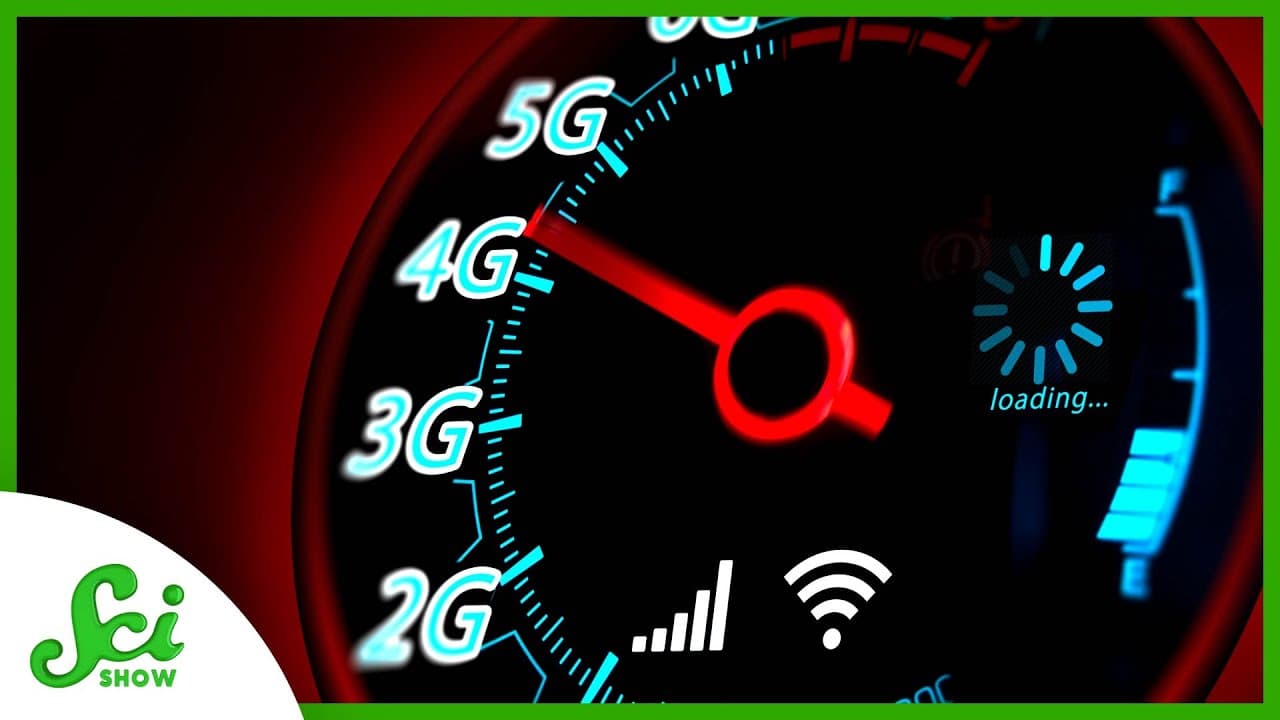
TL;DR
Cell phone interference occurs when multiple phones use the same frequencies, leading to signal overlap and garbled communication.
Transcript
[♪ INTRO] By now, it seems like we’d have ironed out all the kinks in cell phone communication. But sometimes, we still find ourselves on a call or browsing our phones somewhere with plenty of reception when suddenly, the call drops or the internet slows way down. While that might seem like just another puzzling failure of technology, the reason mi... Read More
Key Insights
- 📣 Cell phone interference occurs when multiple phones use the same frequencies, leading to signal overlap and garbled communication.
- ❓ Different techniques like FDMA, TDMA, and CDMA are used to allocate frequencies, maximize bandwidth utilization, and prevent interference.
- 😀 2G, 3G, and 4G technologies have improved bandwidth and data capabilities, while also addressing interference challenges.
Install to Summarize YouTube Videos and Get Transcripts
Explore YouTube Video Summarizer or Get YouTube Transcript Extractor
Questions & Answers
Q: Why do cell phone signals sometimes drop or become slow, even with sufficient reception?
Cell phone interference, caused by multiple phones using the same frequencies, can lead to signal overlap and communication issues.
Q: How do engineers deal with interference in cell phone networks?
Engineers allocate different bands of frequencies to each phone, use techniques like FDMA, TDMA, and CDMA to maximize bandwidth utilization, and implement strategies like cell combining and signal coordination between towers.
Q: What are the key differences between 2G, 3G, 4G, and 5G in terms of addressing interference and increasing bandwidth?
Each generation of technology introduces new techniques to tackle interference and increase bandwidth. 2G introduced TDMA, 3G utilized CDMA, 4G used OFDM, and 5G is currently being developed with the goal of expanding bandwidth without creating excessive interference.
Q: Will the implementation of 5G networks exacerbate interference issues?
The deployment of smaller cells in ultra-dense networks for 5G could potentially increase interference due to the higher number of boundaries between cells. However, engineers are actively working on developing techniques to prevent excessive interference.
Summary & Key Takeaways
-
Cell phones rely on radio waves to transmit signals between phones and cell towers.
-
Interference occurs when multiple phones use the same band of frequencies, causing signal overlap and garbled communication.
-
To mitigate interference, engineers allocate different bands of frequencies to each phone and use techniques like FDMA, TDMA, and CDMA to maximize bandwidth utilization.
Read in Other Languages (beta)
Share This Summary 📚
Summarize YouTube Videos and Get Video Transcripts with 1-Click
Try YouTube Summary with ChatGPT & Claude or YouTube Transcript Generator
Explore More Summaries from SciShow 📚


Summarize YouTube Videos and Get Video Transcripts with 1-Click
Try YouTube Summary with ChatGPT & Claude or YouTube Transcript Generator