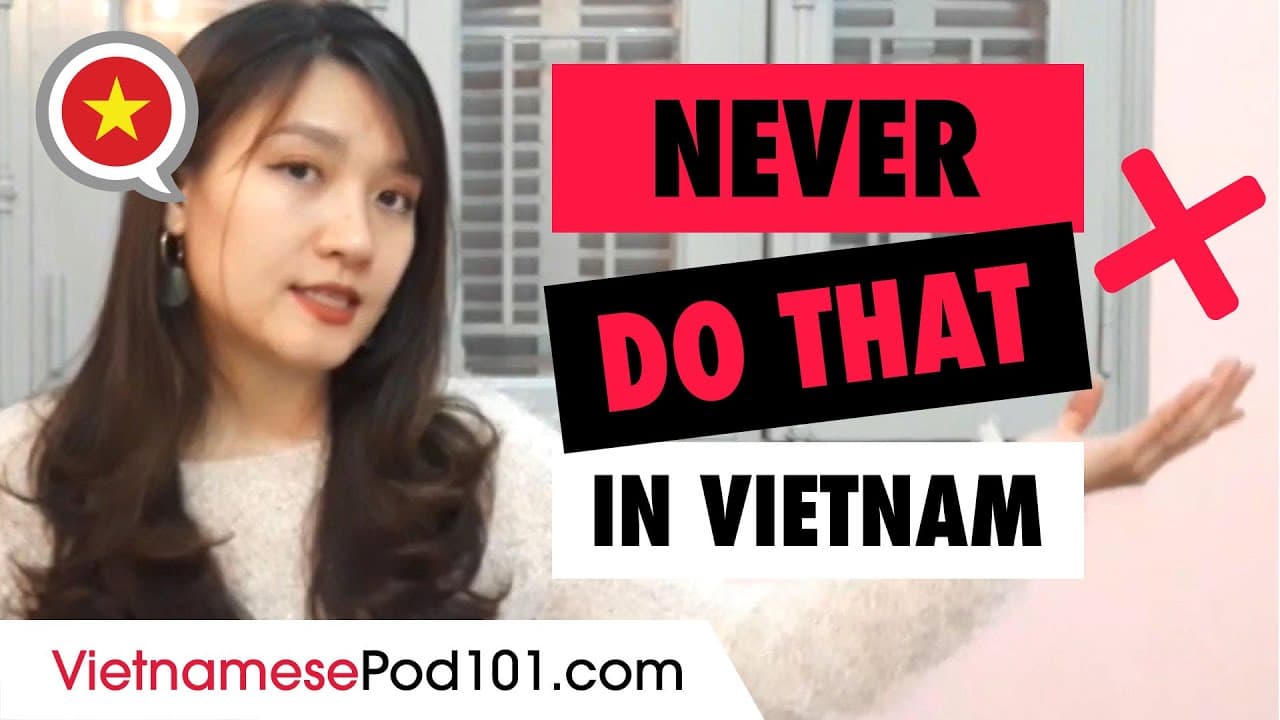
Things You Should NEVER Do in Vietnam
TL;DR
Learn key cultural don'ts for a respectful visit to Vietnam.
Transcript
want to speak real vietnamese from your first lesson sign up for your free lifetime account at vietnamesepod101.com hello everyone welcome back to vidmyspot101.com the fact is easiest and most fun way to learn vietnamese my name is lin and welcome back to the channel the reason why i just like this today is because it's freezing here yes in hanoi a... Read More
Key Insights
- Vietnam is a Buddhist country, so wearing shorts or tank tops in temples is seen as disrespectful. Visitors should dress modestly to show respect for local customs.
- While Hanoi is relatively safe, cities like Ho Chi Minh City may pose risks for theft. Tourists should be cautious with personal belongings, especially in crowded areas.
- Waiting for food is common in Vietnam, particularly in Hanoi. Patience is advised, as the culinary experience is worth the wait, even if it takes 15-30 minutes.
- Public displays of affection are generally frowned upon in northern Vietnam, especially among older generations. Holding hands is acceptable, but kissing should be avoided.
- Relying on recommendations from strangers, particularly taxi drivers, for restaurants or hotels can be misleading. It's better to trust online reviews and personal research.
- The video provides practical advice for tourists to navigate Vietnam's cultural nuances, enhancing their travel experience and ensuring they respect local traditions.
- Understanding local customs, such as appropriate attire and public behavior, is crucial for foreigners to integrate respectfully into Vietnamese society.
- The video emphasizes the importance of cultural sensitivity and awareness, helping tourists avoid common pitfalls and enjoy a more authentic experience in Vietnam.
Install to Summarize YouTube Videos and Get Transcripts
Explore YouTube Video Summarizer or Get YouTube Transcript Extractor
Questions & Answers
Q: Why should visitors avoid wearing shorts in temples?
Visitors should avoid wearing shorts, short skirts, or tank tops in temples because Vietnam is a predominantly Buddhist country. Dressing modestly in these religious sites is a sign of respect for the local culture and religious beliefs, which value modesty and reverence in sacred spaces.
Q: What precautions should tourists take in Ho Chi Minh City?
Tourists should be vigilant about their belongings in Ho Chi Minh City due to the higher risk of theft. It's advisable to keep wallets and phones secure, especially in crowded or tourist-heavy areas, to avoid being targeted by pickpockets or thieves, ensuring a safer travel experience.
Q: Is it normal to wait for food in Vietnamese restaurants?
Yes, it is normal to wait for food in Vietnamese restaurants, particularly in Hanoi. Waiting times of 15 to 30 minutes are common, especially in popular or small establishments. Despite the wait, the food quality is often worth it, and it's a part of the local dining culture to be patient.
Q: How is public affection viewed in northern Vietnam?
In northern Vietnam, public displays of affection, such as kissing, are generally frowned upon, especially by older generations. While holding hands or hugging is more acceptable, tourists should be mindful of local sensitivities and avoid more intimate gestures to respect cultural norms.
Q: Why should tourists be cautious of restaurant referrals from strangers?
Tourists should be cautious of restaurant referrals from strangers, especially taxi drivers, as they may be motivated by commissions rather than genuine recommendations. It's safer to rely on online reviews and personal research to ensure a more authentic and satisfactory dining experience.
Q: What cultural insights does the video offer for tourists?
The video offers cultural insights such as the importance of modest attire in religious sites, caution with personal belongings, patience in dining, and discretion in public displays of affection. These tips help tourists navigate Vietnam respectfully and enhance their travel experience by understanding local customs.
Q: How does the video help Vietnamese language learners?
The video aids Vietnamese language learners by providing practical cultural advice in simple Vietnamese and English. It challenges their listening comprehension skills and helps them progress in their language studies while learning how to behave appropriately in Vietnam, making it an educational resource.
Q: What is the overall aim of the video?
The overall aim of the video is to prepare tourists for a respectful and enjoyable visit to Vietnam by educating them on cultural don'ts and social norms. It emphasizes the importance of cultural sensitivity and awareness, helping visitors avoid common pitfalls and ensuring a more authentic travel experience.
Summary & Key Takeaways
-
The video highlights important cultural practices to observe in Vietnam, such as dressing modestly in religious sites and being cautious with personal belongings in busy cities.
-
It advises against public displays of affection, especially in northern Vietnam, and warns about trusting recommendations from strangers for dining and accommodation.
-
Overall, the video aims to prepare tourists for a respectful and enjoyable experience in Vietnam by understanding and adhering to local customs and social norms.
Read in Other Languages (beta)
Share This Summary 📚
Summarize YouTube Videos and Get Video Transcripts with 1-Click
Try YouTube Summary with ChatGPT & Claude or YouTube Transcript Generator
Explore More Summaries from Learn Vietnamese with VietnamesePod101.com 📚




Summarize YouTube Videos and Get Video Transcripts with 1-Click
Try YouTube Summary with ChatGPT & Claude or YouTube Transcript Generator