How to Use Covey's Time Management Quadrants Effectively
TL;DR
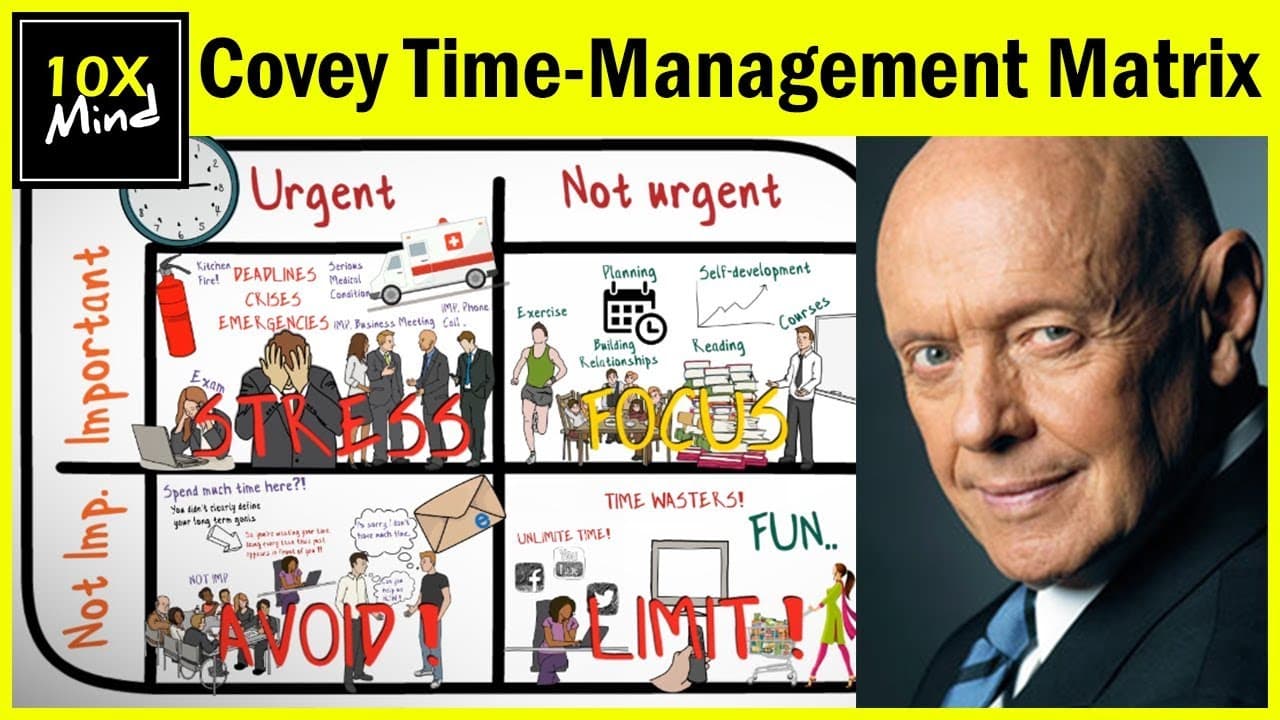
To effectively manage your time, utilize Stephen Covey's four quadrants method. Focus on Quadrant 2, which emphasizes important but non-urgent tasks like setting long-term goals and self-development, while minimizing time spent on urgent but unimportant activities. Regularly assess your time allocation across quadrants to enhance productivity and reduce stress.
Transcript
in the seven Habits of Highly Effective People Stephen Covey teaches a very powerful method to manage your time the four quadrants weekly plan that will help you manage your tasks in a weekly basis instead of daily planning there are two questions you should ask yourself to clearly define your priorities is this task important or not and is it urge... Read More
Key Insights
- 🕒 Time Management: Stephen Covey's Four Quadrants Weekly Plan provides a powerful method for managing tasks on a weekly basis, asking questions to define priorities in terms of importance and urgency. ⏰ Urgent & Important: Tasks such as exams, business meetings, crises, and emergencies require immediate attention and can cause high levels of stress if not managed effectively. ⏰ Urgent but Not Important: Being stuck in this quadrant may indicate a lack of clearly defined long-term goals, leading to wasted time on tasks that do not contribute to personal growth and success. ⏳ Not Urgent but Important: Long-term goals, self-development, relationships, and health improvement fall under this quadrant, but many people struggle to spend enough time here due to distractions and interruptions. ⏳ Focus on Quadrant 2: To prioritize life-changing tasks and minimize stress, it is crucial to allocate time and make a schedule to focus on the important and non-urgent activities outlined in Quadrant 2. ⏰ Time Wasters: Activities like excessive social media use, watching TV, shopping, and unnecessary outings are neither urgent nor important but can be enjoyed in moderation.
- 📝 Goal Setting: Planning, reading, taking courses, and setting long-term goals are vital for personal and professional growth but often receive less attention than they deserve.
- 🔄 Assess Time Allocation: Reflect on the percentage of time spent in each quadrant to identify any imbalances. Strive to allocate more time to Quadrant 2, where important but non-urgent tasks reside.
Install to Summarize YouTube Videos and Get Transcripts
Explore YouTube Video Summarizer or Get YouTube Transcript Extractor
Questions & Answers
Q: How does the four quadrants weekly plan help in managing tasks effectively?
The four quadrants weekly plan helps in managing tasks effectively by prioritizing them based on their importance and urgency. By spending more time on important but non-urgent tasks, individuals can focus on their long-term goals and avoid being constantly stressed or distracted.
Q: Why is it important to clearly define long-term goals in order to avoid spending too much time in Quadrant 1 or 3?
Clearly defining long-term goals helps individuals avoid spending too much time in Quadrant 1 (urgent and important tasks) or Quadrant 3 (urgent but not important tasks). By having a clear sense of their goals, individuals can avoid being distracted by tasks that do not align with their long-term objectives.
Q: How can individuals limit time spent in Quadrant 4 while still enjoying leisure activities?
Individuals can limit time spent in Quadrant 4 (not urgent and not important tasks) by setting a specific time limit for leisure activities such as social media, watching TV, or going out. By allocating time for these activities, individuals can still enjoy them without allowing them to become a source of distraction from more important tasks.
Q: Why is it important to allocate time to focus on Quadrant 2 activities?
It is important to allocate time to focus on Quadrant 2 activities (not urgent but important tasks) as these tasks have the potential to be life-changing. Activities such as planning, setting long-term goals, self-development, exercise, and building relationships contribute to personal growth, success, and overall well-being. By prioritizing Quadrant 2 activities, individuals can make progress towards their long-term goals.
Summary & Key Takeaways
-
Stephen Covey teaches the four quadrants weekly plan to manage tasks on a weekly basis instead of daily planning.
-
The plan involves asking two important questions: Is the task important? Is it urgent?
-
The goal is to spend more time in Quadrant 2, which includes activities such as setting long-term goals, self-development, and building relationships.
Read in Other Languages (beta)
Share This Summary 📚
Summarize YouTube Videos and Get Video Transcripts with 1-Click
Try YouTube Summary with ChatGPT & Claude or YouTube Transcript Generator