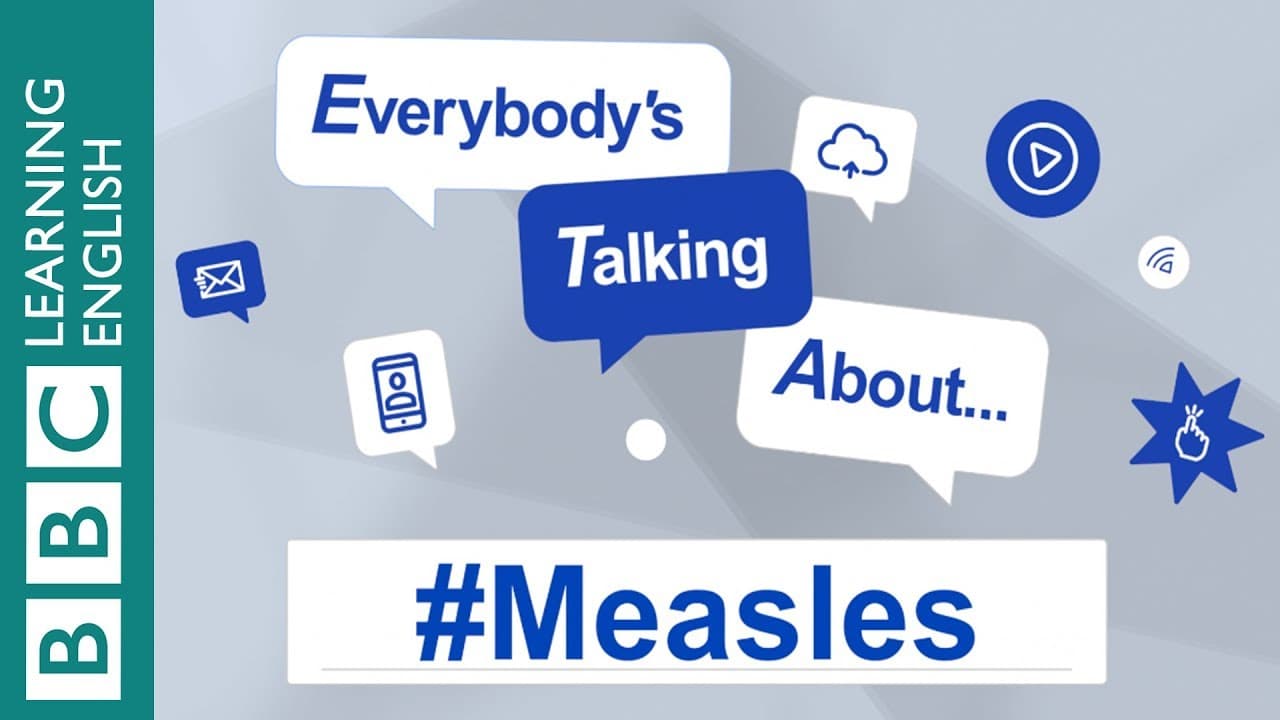
Everybody's Talking About... #Measles
TL;DR
Measles cases rise due to vaccination fears in Europe.
Transcript
Hello everyone! I'm Charlene from BBC Learning English. Today we're talking about measles, a disease which kills thousands of people around the world every year. The World Health Organisation has just announced that the number of measles cases in Europe in 2017 was four times the rate for the previous year. Experts say that this worrying trend is p... Read More
Key Insights
- The World Health Organisation reported a fourfold increase in measles cases in Europe in 2017 compared to the previous year.
- A decline in immunisation rates is partly responsible for the rise in measles cases, linked to public fear about vaccine safety.
- Some people believe that vaccinations should be made compulsory to protect public health and prevent disease spread.
- There are differing opinions on whether people should worry about vaccine safety, with some trusting the proven safety record.
- The debate includes whether individuals should have the right to choose vaccination or if it should be mandated by law.
- BBC Learning English aims to educate the public on trending health topics like measles through engaging content.
- The program encourages discussions on important health issues, helping viewers form informed opinions on vaccination.
- Social media platforms are utilized by BBC Learning English to spread awareness and engage a wider audience on health topics.
Install to Summarize YouTube Videos and Get Transcripts
Explore YouTube Video Summarizer or Get YouTube Transcript Extractor
Questions & Answers
Q: What has caused the rise in measles cases in Europe?
The rise in measles cases in Europe is attributed to a decline in immunisation rates. This decline is partly due to public fear about the safety of vaccinations, which has led to fewer people getting vaccinated and consequently, a higher incidence of measles.
Q: What is the public's perception of vaccine safety?
Public perception of vaccine safety is mixed. Some individuals believe that vaccines are safe, citing their proven safety record, while others express concerns about their necessity and the risks involved. This fear has contributed to the decline in vaccination rates and the rise in measles cases.
Q: Should measles vaccinations be made compulsory?
Opinions on making measles vaccinations compulsory vary. Some people support mandatory vaccinations to protect public health and prevent disease outbreaks. Others believe that vaccination should remain a personal choice, though they acknowledge the potential benefits of increased vaccination rates for community health.
Q: How does BBC Learning English contribute to the vaccination debate?
BBC Learning English contributes to the vaccination debate by providing educational content that presents various public opinions on health issues like measles. The program encourages informed discussions and helps viewers understand the importance of vaccinations through engaging videos and social media interactions.
Q: What are the key messages from the BBC Learning English program?
The key messages from the program include the importance of vaccinations in preventing diseases like measles, the need for public awareness about vaccine safety, and the encouragement of informed discussions on health topics. The program also highlights the role of social media in spreading awareness and engaging the public.
Q: How does the program engage with its audience on health topics?
The program engages with its audience on health topics by using social media platforms such as Facebook, Instagram, Twitter, and YouTube. It provides accessible and informative content that encourages viewer interaction, comments, and discussions, fostering a community of informed individuals who can share their perspectives on health issues.
Q: What role does public fear play in vaccination rates?
Public fear plays a significant role in vaccination rates as concerns about vaccine safety lead to hesitancy and refusal to vaccinate. This fear, often fueled by misinformation, contributes to declining immunisation rates and subsequent outbreaks of diseases like measles, highlighting the need for public education and reassurance about vaccine safety.
Q: How does the program address trending health issues?
The program addresses trending health issues by exploring current topics like the measles outbreak and vaccination concerns. It presents diverse viewpoints, encourages public discourse, and provides educational content to help viewers form informed opinions. By leveraging various media platforms, the program reaches a wide audience and raises awareness on important health matters.
Summary & Key Takeaways
-
The World Health Organisation has reported a significant increase in measles cases in Europe, attributing it to declining immunisation rates. Public fear about vaccine safety is a contributing factor to this decline, sparking debates on whether vaccinations should be compulsory.
-
BBC Learning English explores public opinions on the measles outbreak and vaccination concerns, presenting diverse viewpoints on the necessity and safety of vaccines. Some advocate for mandatory vaccinations, while others emphasize individual choice.
-
The program aims to educate viewers on trending health issues, encouraging informed discussions. By leveraging social media, BBC Learning English reaches a broad audience, promoting awareness and understanding of important topics like measles.
Read in Other Languages (beta)
Share This Summary 📚
Summarize YouTube Videos and Get Video Transcripts with 1-Click
Try YouTube Summary with ChatGPT & Claude or YouTube Transcript Generator
Explore More Summaries from BBC Learning English 📚
Summarize YouTube Videos and Get Video Transcripts with 1-Click
Try YouTube Summary with ChatGPT & Claude or YouTube Transcript Generator