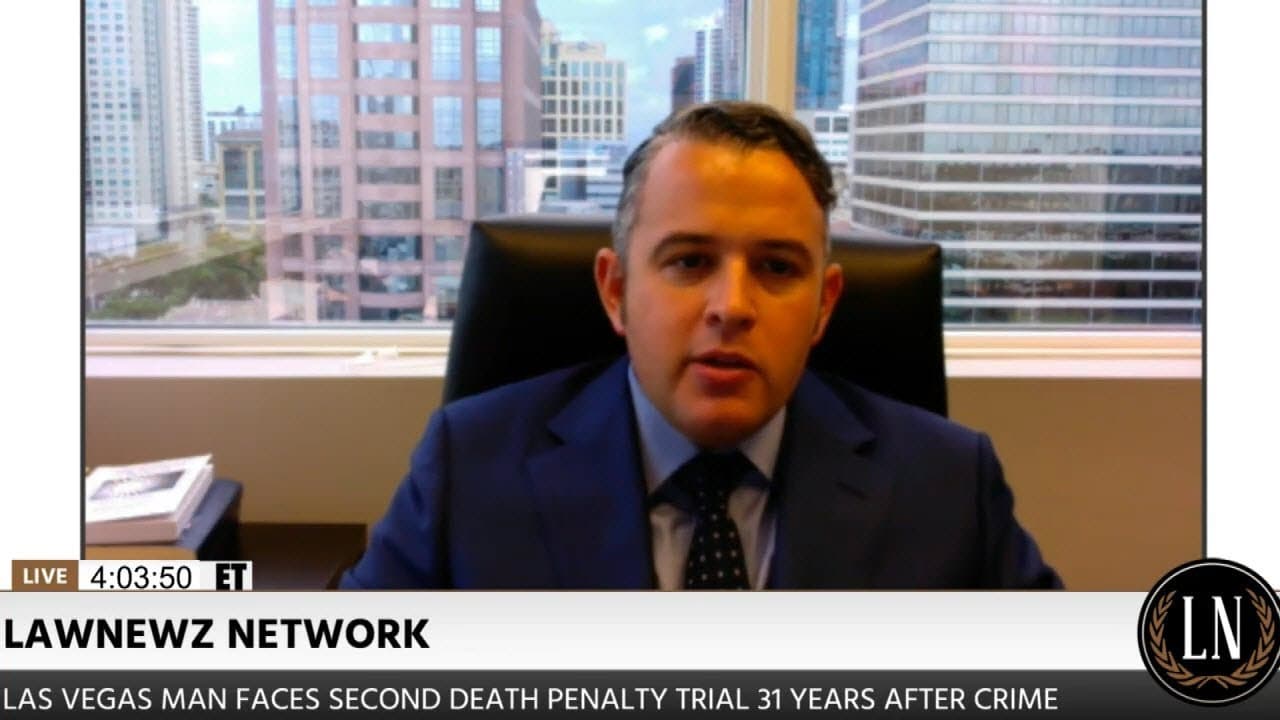
David Di Pietro Talks John Valerio Death Penalty Retrial on LawNewz Network
TL;DR
A man in Nevada is facing a death penalty trial 29 years after his original trial, raising questions about parole eligibility and possible retrial.
Transcript
welcome back to the LA news network everybody Aaron Keller here along with you for the afternoon and we're in the midst of about an hour long lunch break in the case we're covering out of Las Vegas Nevada it's the Valero case and valerio excuse me and he's facing another death penalty trial some 29 years after the original one David di Pietro is a ... Read More
Key Insights
- 🤨 The case's prolonged timeline raises questions about the fairness and efficiency of the criminal justice system.
- 💄 The possibility of parole eligibility after a 30-year sentence adds complexity to the decision-making process for the jury.
- 😒 The use of hearsay in the trial and the potential impact on the defendant's right to confront witnesses could be a significant legal issue for appeal.
Install to Summarize YouTube Videos and Get Transcripts
Explore YouTube Video Summarizer or Get YouTube Transcript Extractor
Questions & Answers
Q: Why is the defendant facing a death penalty trial after 29 years?
The prosecution has decided to proceed with a death penalty trial, despite the trend towards unanimous verdicts and the possibility of life sentences. The Nevada statute allows for parole eligibility, leading to the question of why the government would risk the defendant potentially walking out of prison.
Q: What factors can the jury consider when determining the defendant's sentence?
The jury can consider four possibilities: a 50-year prison term, life with parole, life without parole, or the death penalty. The jury must weigh the aggravating and mitigating factors presented by the prosecution and defense.
Q: Is the current statute being used in the trial?
It is uncertain whether the trial is operating under the current statute or an older version. If it is the current statute, parole eligibility after a 30-year sentence could play a significant role in the defendant's potential release.
Q: How do aggravating and mitigating factors affect the jury's decision?
The prosecution must prove the aggravated nature of the crime, while the defense can present mitigating factors such as the defendant's history, mental state, or addiction issues. The jury must weigh these factors when determining the appropriate sentence for the defendant.
Summary & Key Takeaways
-
The case involves a man who is facing a death penalty trial 29 years after the original case and 31 years after the crime.
-
The government's decision to go forward with a death penalty trial is unusual, considering the trend towards unanimous recommendations for death penalty cases.
-
The Nevada statute offers four possible outcomes for the jury, including a definite prison term of 50 years, life with or without parole, or the death penalty.
Read in Other Languages (beta)
Share This Summary 📚
Summarize YouTube Videos and Get Video Transcripts with 1-Click
Try YouTube Summary with ChatGPT & Claude or YouTube Transcript Generator
Explore More Summaries from Law&Crime Network 📚





Summarize YouTube Videos and Get Video Transcripts with 1-Click
Try YouTube Summary with ChatGPT & Claude or YouTube Transcript Generator