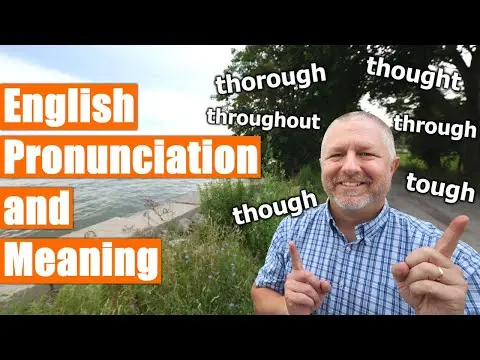
Do You Have Questions about the English Language? In this English Lesson I'll Try to Answer Them!

TL;DR
Teacher Bob answers questions and provides clear and concise explanations on various English language topics.
Transcript
hi everybody we'll start in about 32 seconds hopefully everything is working properly uh it's a beautiful day outside and it reminds me that eventually i will start doing these lessons outside again not yet it'll probably be another month or two it needs to be a little bit warmer i will start in about 13 seconds in about 12 seconds sounds like ever... Read More
Key Insights
- 🧑🏫 Teacher Bob prefers teaching lessons spontaneously rather than reading from prepared texts.
- ⌛ Investing has gained popularity in Canada, especially in recent times.
- 🔇 English language learners should practice speaking with native speakers to improve their conversational skills.
- ❓ "Closure" refers to the feeling of resolution after a traumatic experience.
- 🔬 Investing culturally differs in various countries such as Russia and Canada.
- ⛅ "Partly" and "partially" are used interchangeably, although "partly" is used more commonly.
- 🧑🎓 Students in Canadian schools learn spelling as a subject.
- 🪡 "Knitting," "sewing," and "weaving" each involve different techniques for different purposes.
- 🍝 The past tense of the verb "to be" depends on the subject but usually follows the pattern of "was" or "were."
- 👶 It is better to learn new vocabulary through visual images and context rather than relying solely on dictionaries.
- 🧑 "Dynamic" can describe either a person who is energetic or an object capable of change.
- ❓ "Geek" refers to someone who is passionate about technology and related subjects.
- 👶 The word "young" typically applies to individuals up until their teenage years or to describe someone who is relatively new to a certain area of expertise.
- 💭 "Must" and "have to" have similar meanings, while "ought to" has a less forceful tone.
- 🧑🏭 Being "upitty" refers to someone acting superior or arrogant.
- 🔑 Filler words like "however" provide emphasis and connect sentences, similar to "but."
- 🧘 "In it" refers to something contained within an object, while "on it" means something is positioned on the surface of an object.
- 🙂 There are slight differences in accent and spelling between American and Canadian English, but they are generally mutually intelligible.
- 😑 "Lonely" expresses a feeling of solitude or lack of companionship, while "alone" simply refers to being by oneself.
- 😋 "Take out" usually refers to food from a restaurant, while "bring out" suggests to move something from one place to another.
- ❓ "Mundane" refers to something ordinary or commonplace.
- 🧍 "Stand by" means to wait, often used in official contexts or during technical difficulties.
- 🔑 The pronunciation of words with multiple syllables depends on practice and exposure to the language.
- 🤘 "Signal" generally refers to traffic lights, while "sign" refers to messages displayed on signs.
- 🔑 It is possible to pluralize the word "experience" depending on the context.
- ❓ "However" can be used as an alternative to "but" in some situations.
- 😀 The pronunciation of combining two words starting with "gr" or "gl" depends on practice and exposure to the language.
- 🙂 There is hardly any difference between American and Canadian English, except for slight accent and spelling variations.
- 😋 "Takeout" can refer to both food from a restaurant and taking someone out on a date.
- 😒 Students are allowed to call Teacher Bob by his first name, but they often use his last name or "sir."
- 👮 Learning formal English as an immigration officer requires specialized vocabulary and practice.
- 📏 Pronunciation of words depends on exposure and repetition, rather than a specific rule.
- 🥳 "Aol" is a less common way of saying "at the end of the day" or "ultimately."
- ❓ Using phrasal verbs is essential in everyday English communication.
Install to Summarize YouTube Videos and Get Transcripts
Explore YouTube Video Summarizer or Get YouTube Transcript Extractor
Questions & Answers
Q: What does the word "closure" mean?
Closure refers to the feeling of resolution or satisfaction after something has ended, often associated with a traumatic experience.
Q: Is investing popular in Canada?
Yes, investing is quite popular in Canada, especially in recent years.
Q: Can you explain the difference between "partly" and "partially"?
Both words imply a similar meaning of something being almost complete, but "partly" is used more commonly.
Q: What is the difference between "to knit," "to sew," and "to weave"?
Knitting involves using two long needles and yarn to create fabric, sewing is done with a needle and thread to create or repair garments, and weaving is mainly used in the creation of carpets or rugs.
Summary & Key Takeaways
-
Teacher Bob starts the live lesson by greeting viewers and mentioning the possibility of doing lessons outside in the future.
-
He reminds viewers to ask questions through the provided form instead of the chat for better attention.
-
Questions cover topics such as word meanings, grammar rules, pronunciation, language learning strategies, and personal experiences.
Read in Other Languages (beta)
Share This Summary 📚
Summarize YouTube Videos and Get Video Transcripts with 1-Click
Try YouTube Summary with ChatGPT & Claude or YouTube Transcript Generator
Explore More Summaries from Learn English with Bob the Canadian 📚





Summarize YouTube Videos and Get Video Transcripts with 1-Click
Try YouTube Summary with ChatGPT & Claude or YouTube Transcript Generator