How Do Fruit Flies Help Us Understand Mental Illness?
TL;DR
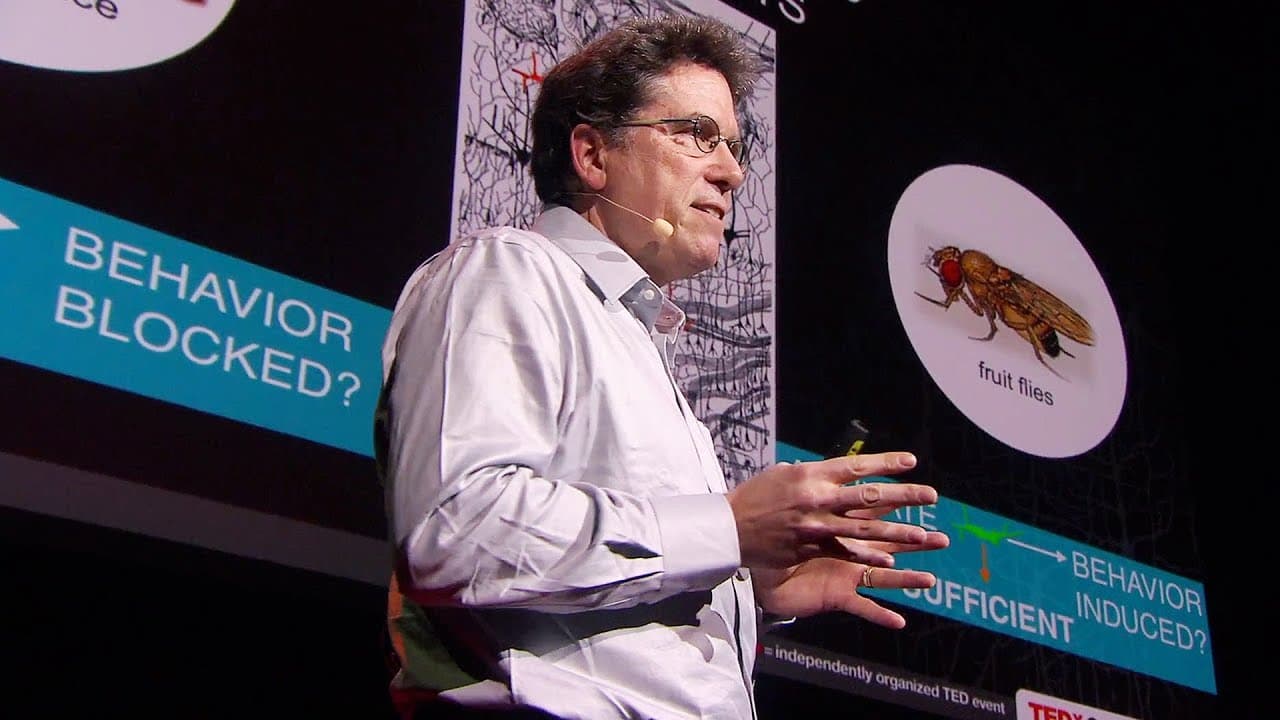
Fruit flies can help us understand mental illness by revealing that psychiatric disorders are linked to specific neural circuits rather than just chemical imbalances. Research shows that manipulating these circuits can shed light on conditions like ADHD, indicating the need for targeted treatments that address the underlying neural mechanisms rather than relying solely on altering brain chemistry.
Transcript
Translator: Joseph Geni Reviewer: Morton Bast So raise your hand if you know someone in your immediate family or circle of friends who suffers from some form of mental illness. Yeah. I thought so. Not surprised. And raise your hand if you think that basic research on fruit flies has anything to do with understanding mental illness in humans. Yeah. ... Read More
Key Insights
- 🧠 Psychiatric disorders are often overlooked in terms of research and understanding, compared to physical diseases. This is largely due to an oversimplified view of the biological basis of these disorders, which assumes they are solely chemical imbalances in the brain.
- 🔬 To gain a better understanding of psychiatric disorders, it is important to focus on the neural circuits that mediate emotion, mood, and affect. These circuits play a critical role in the development of psychiatric disorders.
- 🤖 Model organisms like fruit flies and laboratory mice provide valuable insights into the connection between genes and behavior. By manipulating specific neurons in these organisms, scientists are able to draw cause and effect relationships between neural activity and behavior.
- 😀 Fruit flies can exhibit behavior that resembles emotion-like states, such as persistence, gradations in intensity, and valence. By studying these behaviors, researchers can gain insight into the underlying mechanisms of emotions.
- 🔎 By screening mutant fruit flies, researchers discovered a dopamine receptor gene that affects the duration of hyperactivity in flies. This gene is similar to dopamine receptor genes found in humans and has been associated with mental disorders like ADHD.
- 💡 The relationship between hyperactivity and learning disabilities in both fruit flies and humans is still under investigation. However, by genetically restoring the dopamine receptor in different regions of the fly brain, researchers were able to dissociate these two abnormalities, suggesting that they may have unique underlying mechanisms.
- ⚡️ Treating psychiatric disorders cannot be as simple as altering brain chemistry. Instead, it is crucial to develop targeted treatments that focus on specific neurons and regions of the brain affected by each disorder. This personalized approach may lead to more effective and side effect-free treatments for psychiatric disorders.
- 🌟 The brain is complex and cannot be simplified into a bag of chemical soup. By gaining a deeper understanding of its intricacies, scientists can develop innovative treatments that address the root causes of psychiatric disorders, leading to better outcomes for patients.
Install to Summarize YouTube Videos and Get Transcripts
Explore YouTube Video Summarizer or Get YouTube Transcript Extractor
Questions & Answers
Q: What is the speaker's opinion on the current understanding of mental illness?
The speaker believes that there is an oversimplified and outdated view of the biological basis of psychiatric disorders. He argues that the popular belief of chemical imbalances in the brain, and the use of drugs that globally change brain chemistry, are not effective solutions.
Q: How does the speaker propose overcoming the lack of knowledge regarding the biological basis of psychiatric disorders?
The speaker suggests working on model organisms like fruit flies and laboratory mice. By utilizing powerful genetic techniques, scientists can identify and pinpoint specific classes of neurons, and activate or inhibit their activity to understand their role in specific behaviors and circuits.
Q: Can fruit flies provide insight into emotion-like states?
The speaker initially believed that flies may have emotion-like states due to the behaviors they exhibit. They built a device that delivered air puffs to flies and observed their reactions. The flies showed hyperactivity even after the air puffs stopped, suggesting persistence, gradations in intensity, and valence in their behavior.
Q: What correlation did the speaker find between dopamine and the flies' behavior?
Through a genetic screen of mutant flies, the speaker discovered that a mutation affecting a dopamine receptor caused the flies to take longer to calm down after the air puffs. This suggests that dopamine plays a role in regulating their response to stimuli.
Q: Are the abnormalities observed in the flies similar to those seen in ADHD?
Yes, the dopamine receptor mutant flies displayed both hyperactivity and a learning disability, which are phenotypes commonly associated with ADHD. By genetically restoring the dopamine receptor in specific regions of the flies' brains, the speaker observed that the abnormalities could be dissociated, indicating that dopamine controls different functions in different brain circuits. This raises the possibility that a similar mechanism may be at play in ADHD in humans.
Summary & Key Takeaways
-
Mental illnesses such as autism, depression, and schizophrenia have a significant impact on human suffering, but our understanding of their treatment and mechanisms is limited.
-
The oversimplified view of psychiatric disorders as chemical imbalances in the brain has led to ineffective treatments and unpleasant side effects.
-
By studying model organisms like fruit flies, scientists can identify specific neurons and circuits involved in psychiatric disorders, providing valuable insights for new targeted treatments.
Read in Other Languages (beta)
Share This Summary 📚
Summarize YouTube Videos and Get Video Transcripts with 1-Click
Try YouTube Summary with ChatGPT & Claude or YouTube Transcript Generator
Explore More Summaries from TED 📚





Summarize YouTube Videos and Get Video Transcripts with 1-Click
Try YouTube Summary with ChatGPT & Claude or YouTube Transcript Generator