Mark Leonard: What Does China Think?

TL;DR
China's intellectual community engages in lively debates on capitalism, political reform, and world order, with implications for China's development and the Western world.
Transcript
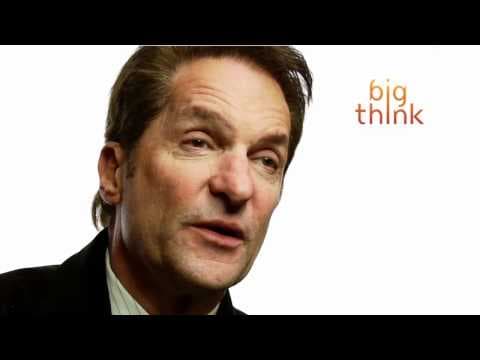
well I was running a foreign policy think tank in London and what I found on issue after issue was that China started popping up on themes which were completely outside of its traditional sphere of influence from climate change to nuclear proliferation to uh what to do to solve genocides in different parts of the world so I decided to to go to Chin... Read More
Key Insights
- 🤔 China's think tanks and universities have a vibrant intellectual community engaging in debates on global issues.
- 🗨️ The differences between China's new left and Reaganomics supporters are more significant than political differences in Western countries.
- 🫵 There are differing views on political reform, including incremental democracy and the development of a deliberative dictatorship.
- ✊ China adopts Western concepts like soft power and multilateralism to strengthen its position and challenge the existing world order.
- 🏛️ Some in China seek to build a parallel system based on their own image rather than fully conforming to the West.
- ✊ China's rise to power raises questions of how it should engage with the international system and balance its own interests with the West's.
- ❓ Chinese intellectuals are concerned about inequality and environmental damage caused by rapid economic growth.
Install to Summarize YouTube Videos and Get Transcripts
Explore YouTube Video Summarizer or Get YouTube Transcript Extractor
Questions & Answers
Q: What are the two groups debating about the model of capitalism in China?
There are two groups; one advocates for Reaganomics and free-market economics, while the other, known as the new left, focuses on addressing inequality and environmental damage caused by China's economic growth.
Q: What are the two contrasting views on political reform in China?
One group supports incremental democracy and experiments with elections, while the other argues for a strong one-party state that understands and fulfills the public's needs through non-electoral measures like focus groups and public consultations.
Q: How is China approaching its rise to power in the world order?
There is a division between those who believe China should adapt to the existing international system and those who seek to create an alternative system based on Chinese values. This debate involves ideas of soft power, multilateralism, and asymmetric warfare.
Q: How does China aim to overthrow the West in the long term without attacking existing structures?
The "neocoms" in China propose using soft power and multilateralism to build a new world order around existing institutions, challenging the Western-dominated international system.
Summary & Key Takeaways
-
The speaker discovered a Hidden World of debates in China on various global issues outside of its traditional sphere of influence.
-
China's intellectual community, consisting of think tanks and universities, is vibrant and larger than any other outside of the United States.
-
Three parallel debates are taking place in China: the model of capitalism, model of political reform, and China's role in world order.
Read in Other Languages (beta)
Share This Summary 📚
Summarize YouTube Videos and Get Video Transcripts with 1-Click
Try YouTube Summary with ChatGPT & Claude or YouTube Transcript Generator
Explore More Summaries from Big Think 📚


Summarize YouTube Videos and Get Video Transcripts with 1-Click
Try YouTube Summary with ChatGPT & Claude or YouTube Transcript Generator